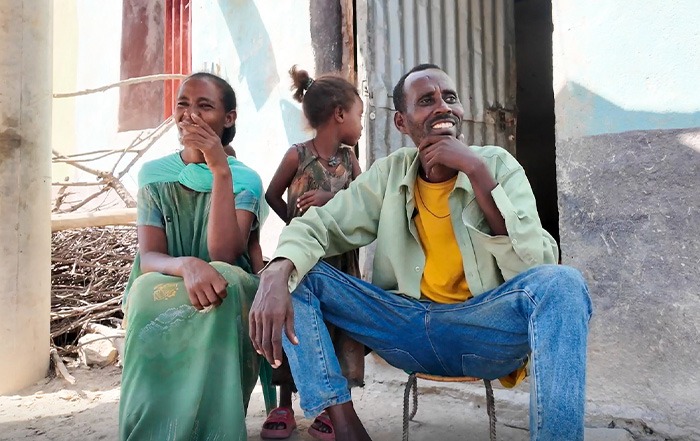
Kassaye’s Story: Restoring a Sense of Home in Ethiopia
Displaced by conflict in Ethiopia, Kassaye is rebuilding his life. Read his story and learn how ShelterBox is supporting families.
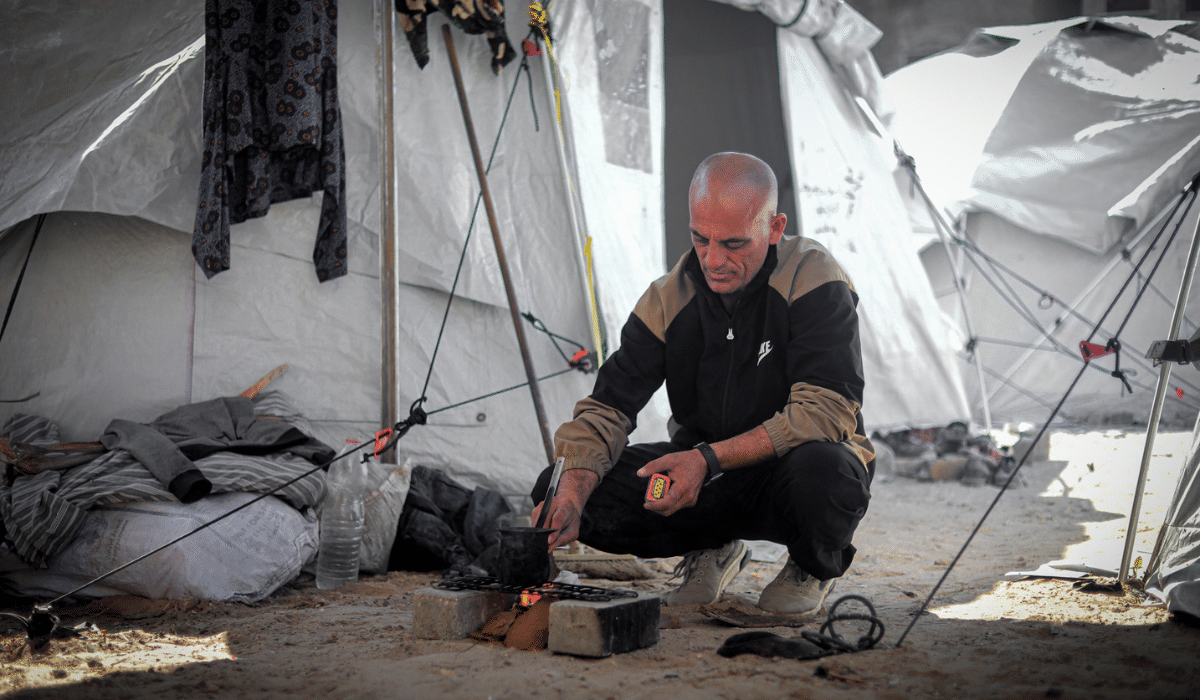

Gaza is one of the most densely populated places on Earth. Since 7 October 2023, more than 1.9 million people have been displaced across the Gaza Strip, many of them multiple times. More than 80% of homes have been damaged or destroyed.
Delivering aid in Gaza remains extremely difficult. Border crossings have frequently closed with little warning, disrupting humanitarian assistance and forcing agencies to adapt delivery routes. Aid convoys have come under attack, while the north of the territory has been cut off from the south for extended periods.
Despite these challenges, ShelterBox has continued to work with local partners to provide emergency shelter and essential aid to people affected by the conflict.
One of the people supported is Khader, a father of nine from northern Gaza who was forced to flee his home with his family. Through our partnership with PARC (Agricultural Development Association), Khader received a tent after being displaced. He spoke with PARC about the challenges his family faces and the difference emergency shelter has made.
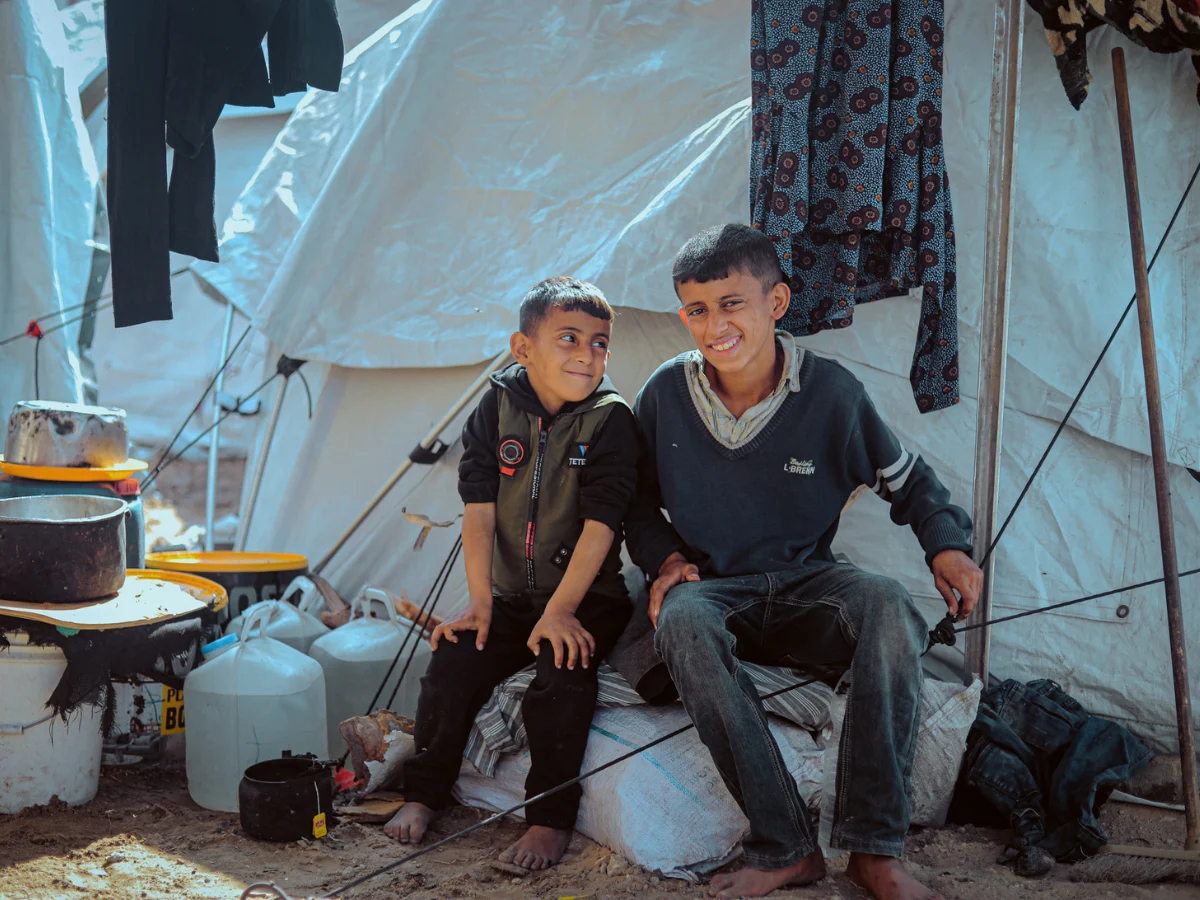
Before the war, Khader and his family lived in northern Gaza.
“We are people of the north,” he said. “Before the war, I had a house. My brother died of cancer and I continued to live there after.”
As the conflict intensified, Khader knew he could not stay. Caring for family members with additional needs meant he had to act quickly.
“I am tired because I have disabled family members,” Khader explained. “I had to resort to leave our home early.”
Like countless other families, Khader left behind his home, belongings and familiar surroundings, hoping to find safety elsewhere.
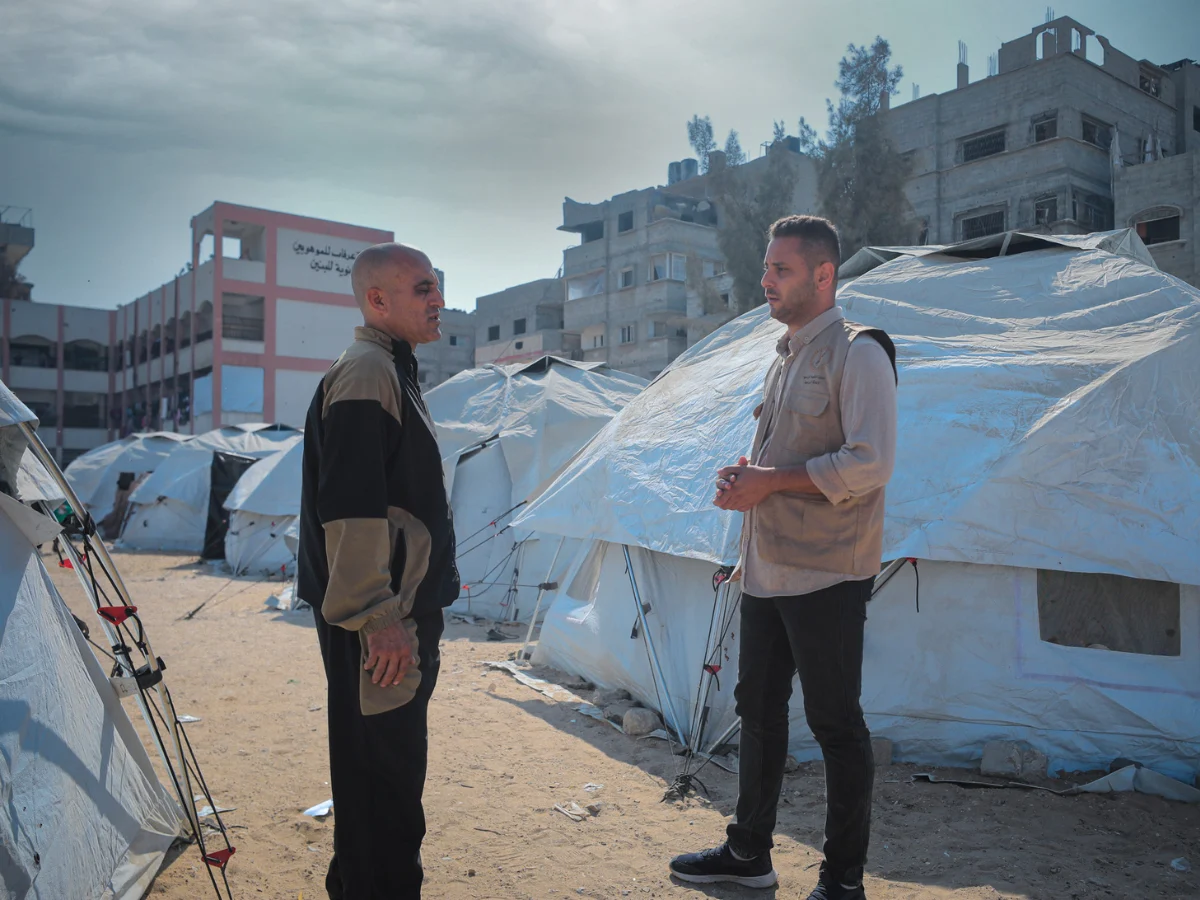
Khader eventually reached southern Gaza with his family. But displacement has not brought security. “Due to the shelling and the war, there is destruction everywhere,” he said.
The constant violence, combined with the responsibility of caring for disabled family members, has left him feeling trapped.
“I don’t know where to go,” Khader explained. “I have no income. I wish I had an income for myself and my children, but there is none. The shelling is everywhere, and there is no safe place.”
The night before Khader spoke with PARC, shelling struck inside the camp where his family was staying. “Last night there was shelling inside the camp, and there are injuries,” he said. “There is no safe place. What do they want from us? Even the disabled are not spared.”
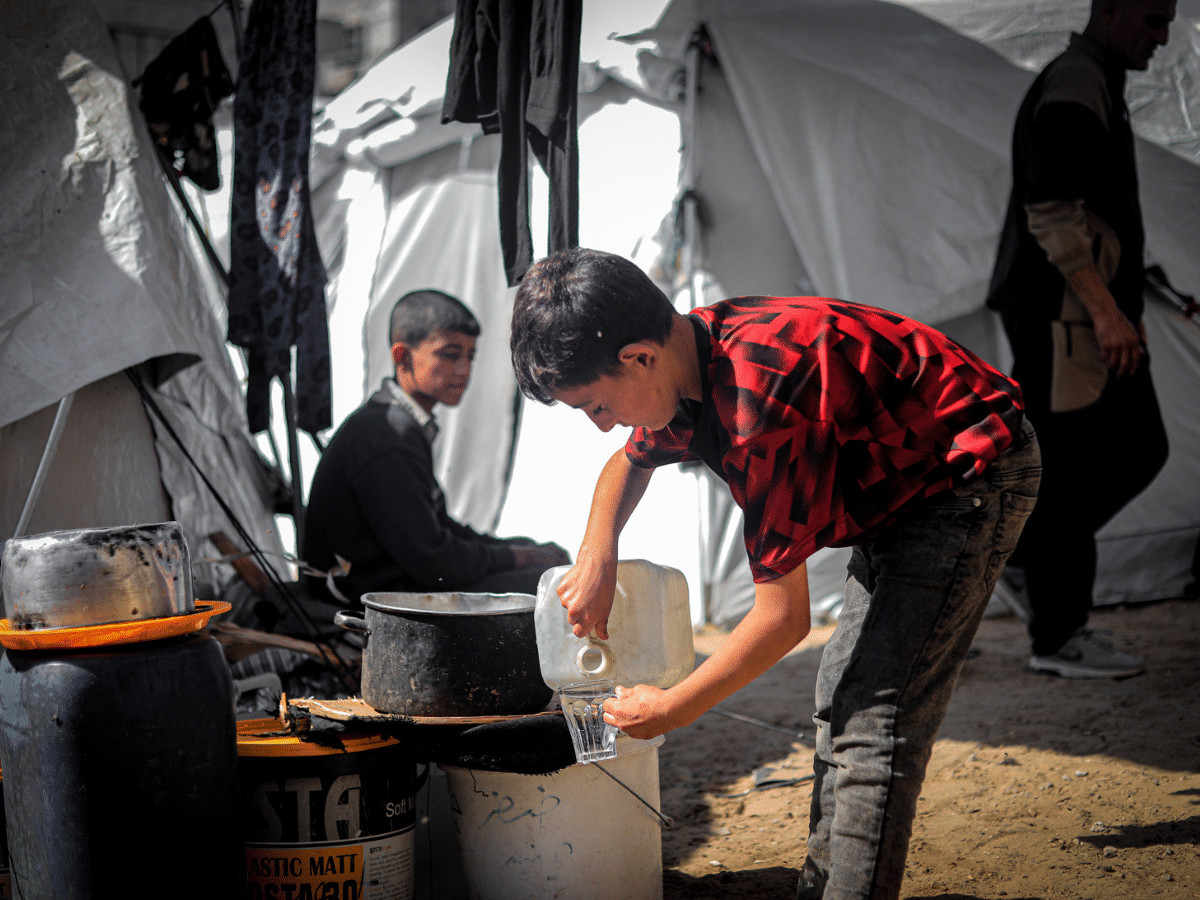
Despite the danger, daily life continues. When PARC met Khader, he was collecting water and trying to provide for his family as best he could.
“We struggle for our daily sustenance, managing to get some bread, and when food comes, we eat,” he explained.
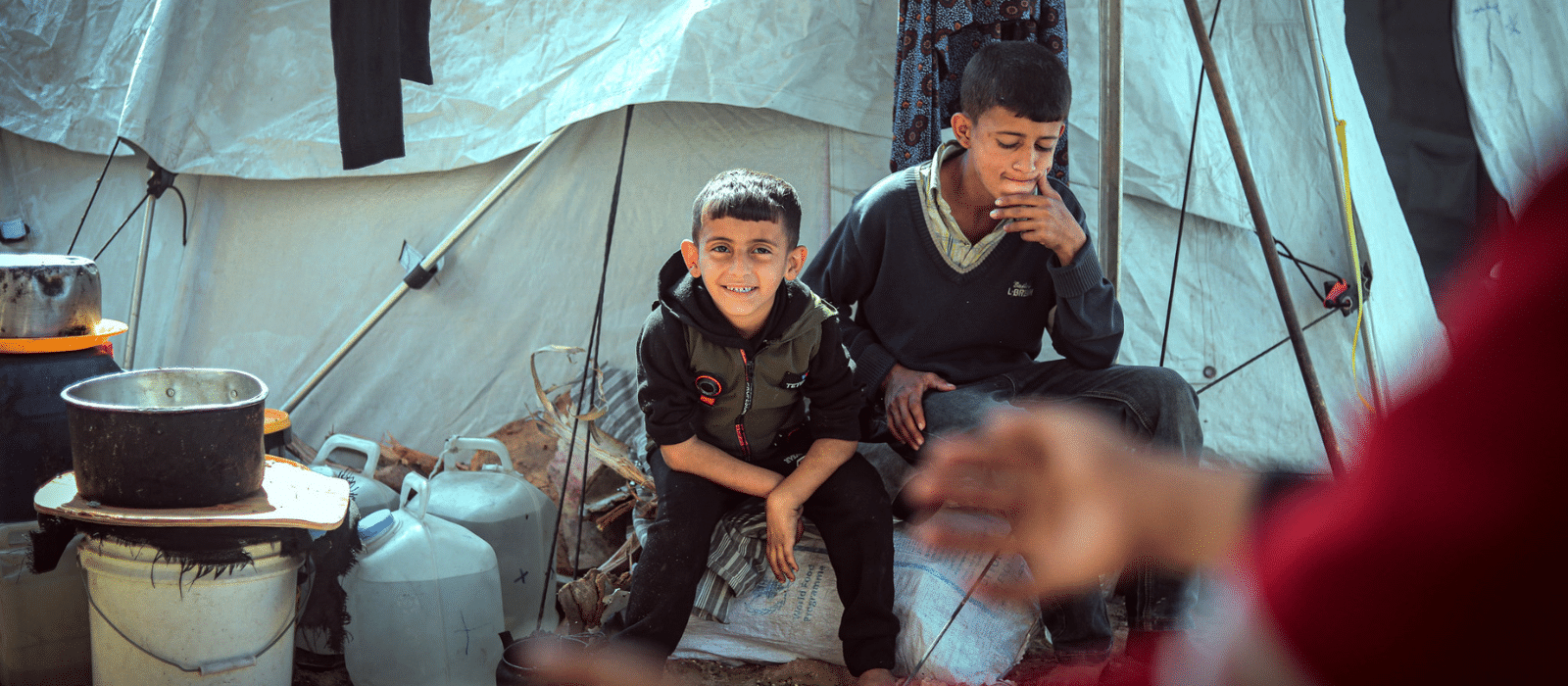
The family now lives in a tent alongside many others who have also been displaced.
“Here we are, sitting inside our tent, peaceful like the rest of those displaced,” Khader said.
Khader rarely speaks about himself. Instead, his focus remains firmly on his children and their wellbeing: “As for me, if I sleep in the street, I don’t care.”
One of Khader’s greatest concerns is caring for his son with disabilities, as well as protecting the rest of his family.
“My child was injured four days ago,” he told our partners PARC. “I spend my day boiling the tea kettle and sitting next to the children, while my wife goes to our son because he is injured.”
Khader makes clear that his worries are not for himself.
I am not afraid, but what scares me is the safety of the disabled children I care for.
Access to treatment has become increasingly difficult, particularly for his son, who requires ongoing medical care.
“My child with a disability needs treatment, especially for his eyes, so they don’t get infected,” Khader explained. “I used to bring him medicine specifically from Jerusalem but I can no longer.”
The tent provided through ShelterBox and PARC has given Khader’s family a place to stay, but it cannot shield them from the reality of the conflict around them.
Life in the camp is comfortable, but the airstrikes prevent us from resting. The shelling is constant.
Like so many others living in Gaza, Khader did not choose to leave home. “I didn’t come here by choice,” he said. “I came because there are children with disabilities, and what is their fault, the children?”
The challenges extend beyond shelter alone. Food, clothing and medical care remain daily concerns.
“All people need, and my children are in need,” Khader explained. “I cannot deprive them of clothes and food. My home was bombed, and everything was destroyed.”
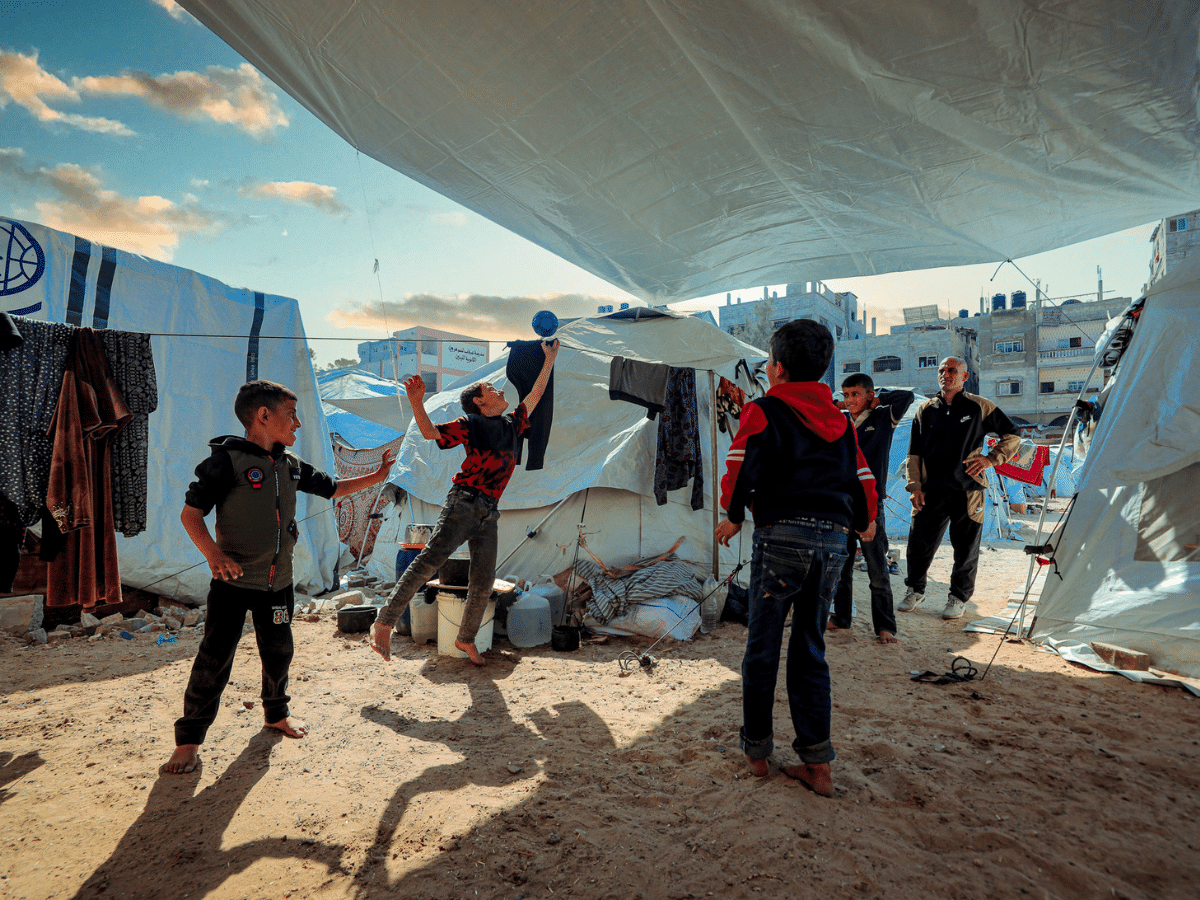
Despite everything his family has endured, Khader remains grateful for the support they have received.
We are happy and grateful for the tent that we received. This is a joy for my people because this tent has provided us with shelter and protected my children. Thank you and bless you.
For him, the tent represents more than shelter. IIt gives his family a place to stay together, offering some protection and stability amid the uncertainty of displacement.
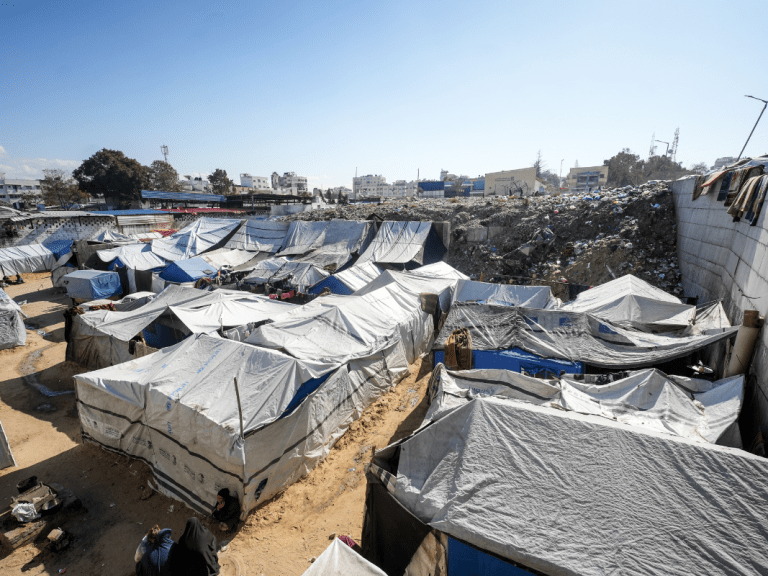
Khader’s family is one of millions affected by the conflict in Gaza. Almost all homes across Gaza have been damaged or destroyed, leaving people living in temporary shelters or overcrowded displacement sites.
For families like Khader’s, shelter is about more than protection from the elements. It provides privacy, security and a place to care for loved ones while communities begin the long process of recovery.
ShelterBox continues to work with local partners to improve shelter conditions and support people living in displacement sites across Gaza.
Learn more about the crisis in Gaza and how ShelterBox is supporting affected communities.
Read more: Gaza conflict