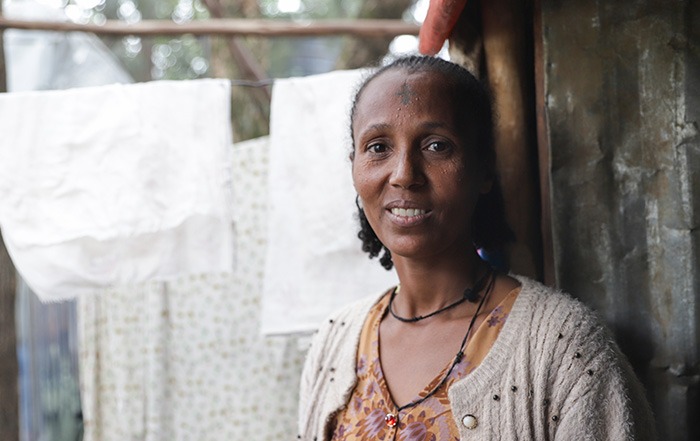
Ethiopia continues to face a severe humanitarian crisis driven by conflict, insecurity and climate shocks. The war that began in Tigray in 2021 spread into the Amhara and Afar regions, displacing millions and destroying homes, livelihoods and essential services.

Although the state of emergency in Amhara ended in June 2024, clashes between armed groups and government forces continue, leaving communities uncertain and vulnerable.

Since 2025, ShelterBox has been working with Positive Action for Development (PAD) to support displaced families in Tigray and Shire through Project 7.

Thousands of people have received shelter materials, essential household items and cash assistance to help them repair or rebuild their homes.

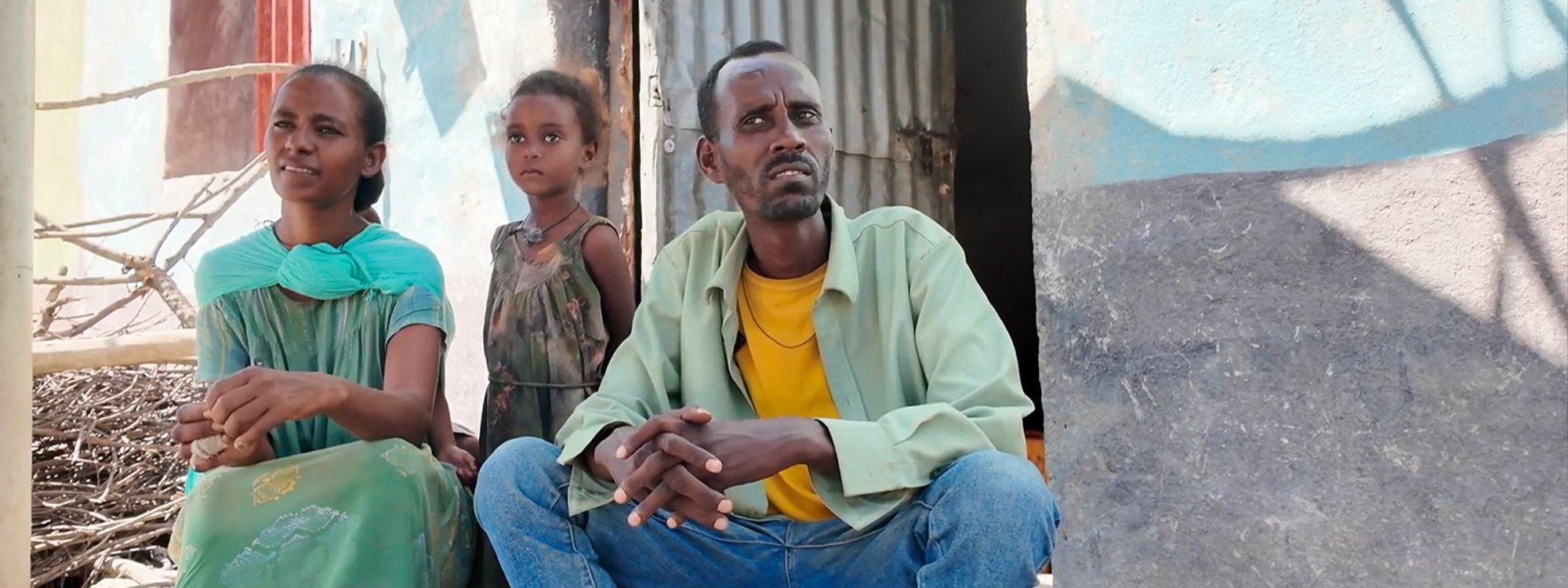
One of the people reached through this project is Kassaye, a father from Sheraro.

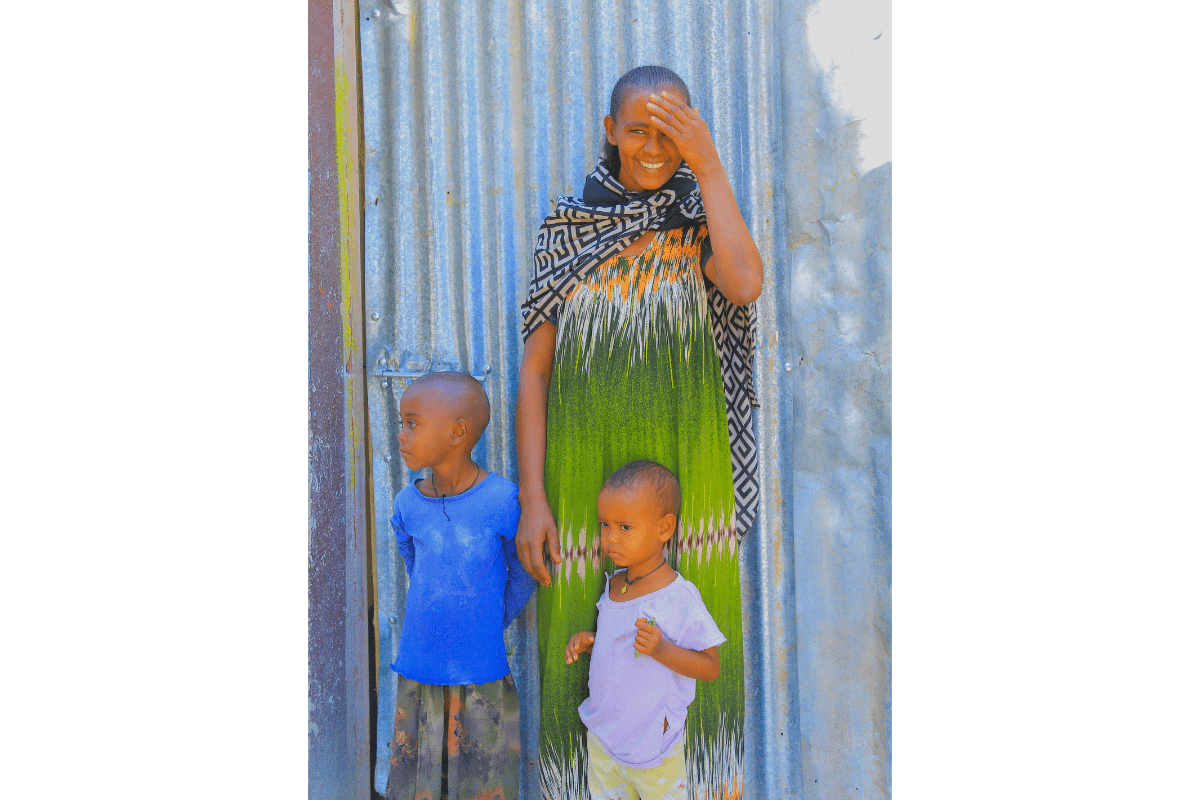
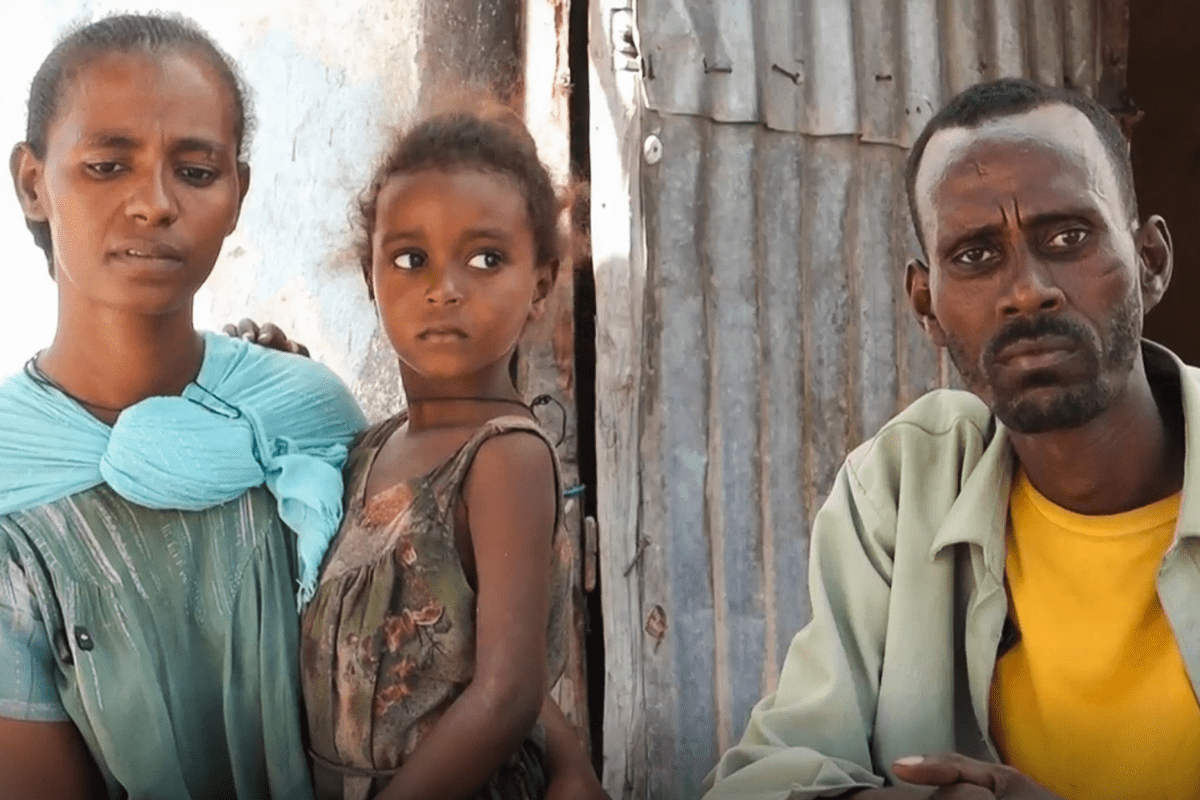
When asked to introduce himself, he says, “My name is Kassaye,” before sharing the names of his family members: “My wife, Masho, and our two children Lewam and Helen.” Together, he explains, “There are four of us living here with my brother too.”

Before the conflict, they lived a stable life: “Oh, we used to have a very good house. But now, it’s gone.” He worked as a daily labourer, while his wife earned income through small trade.

Icon Info
Masho, Kassaye and their young child.
Hide

Forced to flee

Everything changed when the fighting reached their community. “In 2013, soldiers and tanks were stationed all around this area,” Kassaye says.

The family hid wherever they could: “They were firing from here. We spent the time hiding under vehicles. They didn’t kill us, but they forced us out and sent us away.”

They fled on “the 3rd of Hedar, around 4:00 PM.” As he describes it, “When the enemy entered, they threatened to kill us, so we fled that danger. We escaped from that disaster.” Their escape was chaotic: “We left together, though some scattered while others stayed in a group.”

Icon Info
Kassaye's wife, Masho
Hide

A dangerous journey

Kassaye and his family travelled for weeks through exposed terrain. “There was terrible hunger and thirst. We were fleeing into the open wilderness,” he says. “We were hungry on the road and had to beg as we moved along.”

They moved under constant threat: “Heavy shells were falling in front of and behind us. We had to move crouched down. We moved by bending low and sticking to cover. Our lives were in constant peril.”

At times they paused to rest: “We stayed in one place for a while before continuing our journey. After about two months, we reached Shire, and eventually returned to Sheraro.” They arrived during the dry season – “we have been here for four years now.”

But life remained unstable. “You just huddle in one place, then flee when you hear the enemy is coming. It’s a miserable life. We had no work at all.”

Despite the instability, the family made the difficult decision to return to their home. When they finally returned to Sheraro, they found devastation: “When we returned from Sheraro, we looked for work, but we couldn’t afford rent.”

They survived only by relying on others: “We moved in with relatives and used corrugated iron to make a door, we were just existing there in a state of distress.”

Their home offered no safety. “We lacked a place to sleep. The house had no door, and we lived in fear of the soldiers.”

Even basic tasks were difficult: “There were so many problems. Even for water, there was no transport. We had to carry everything on our own backs.”

His children struggled too. “My children were so small then,” he says. “The eldest used to always talk about our old home.” She remembered the life they had lost: “She would talk about the Tekeze river. We had a good life there with our own belongings. Life was full back then by the Tekeze.”

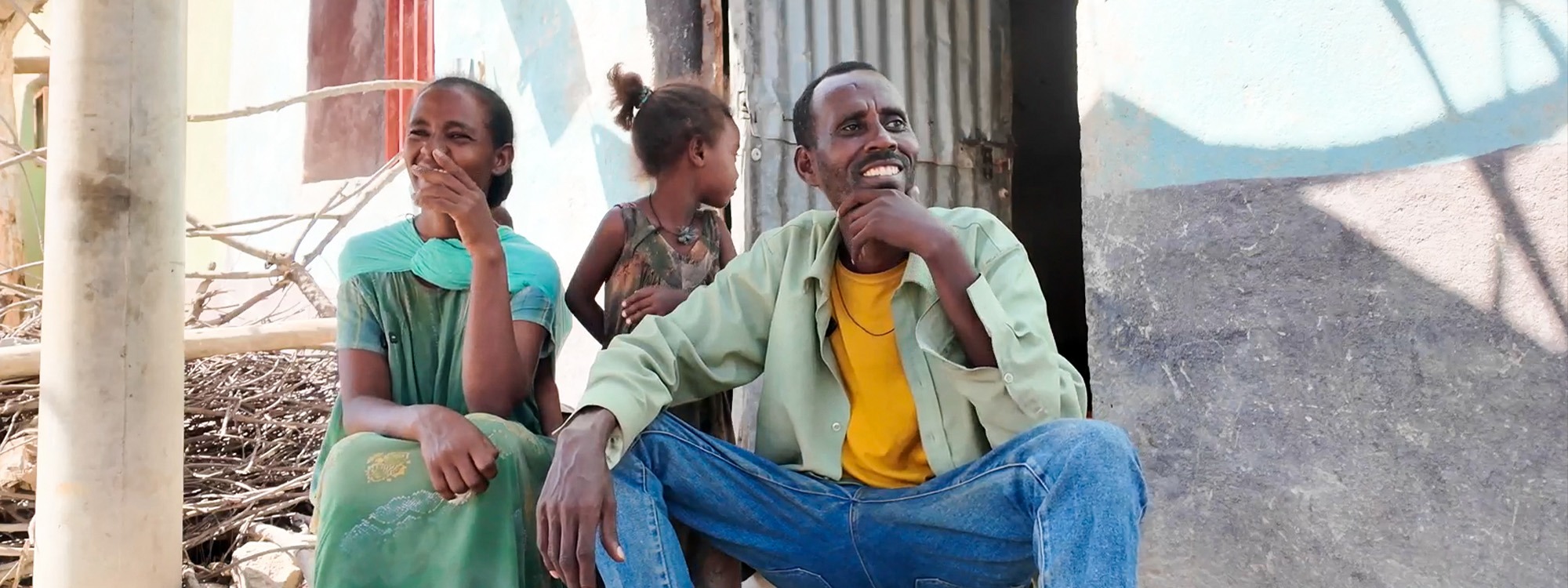
Icon Info
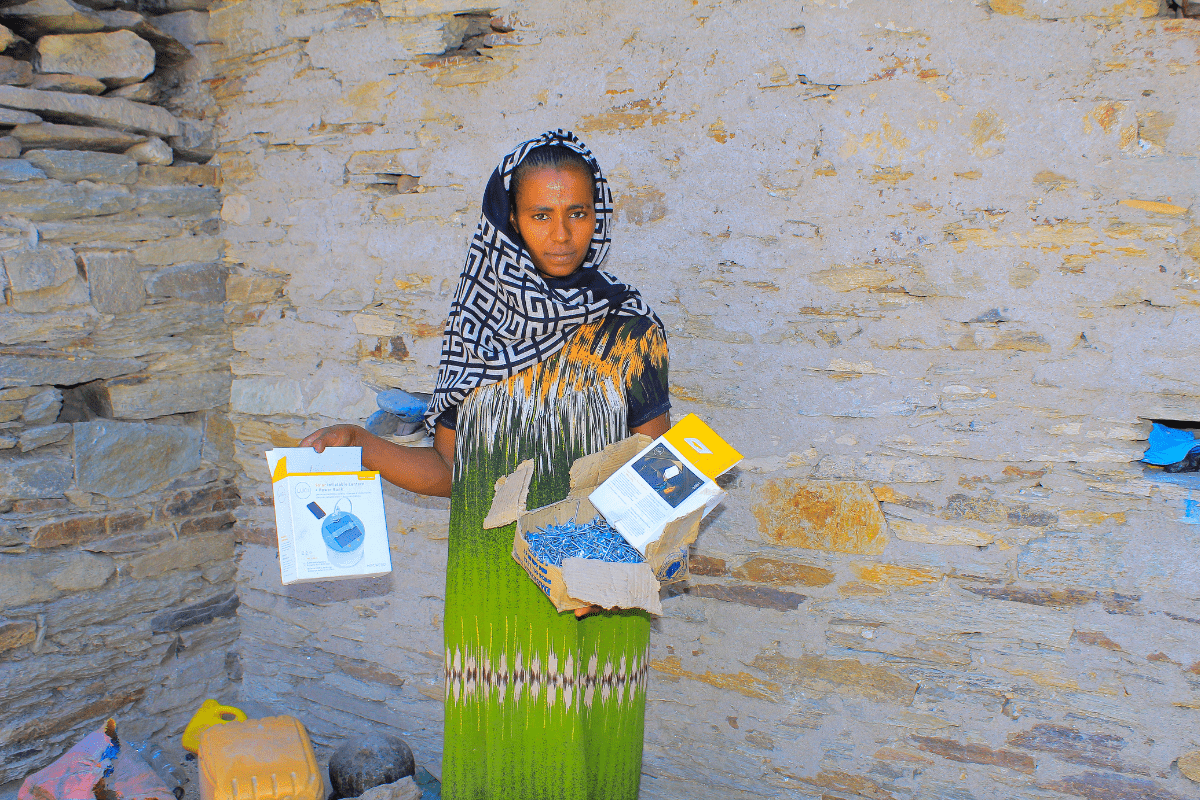
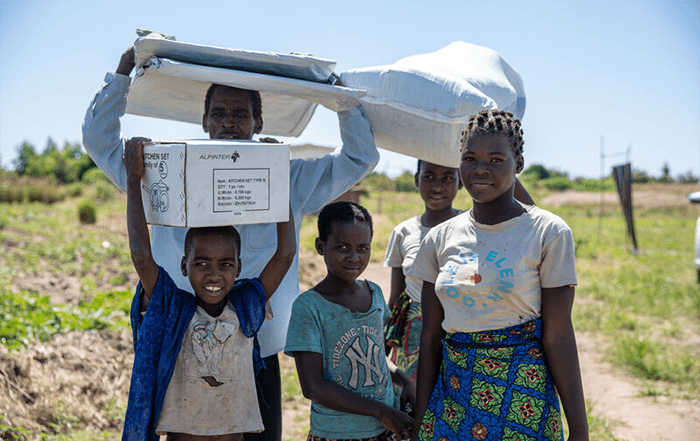
Masho with aid items.
Hide

Rebuilding with support

When PAD and ShelterBox assistance reached Sheraro, things began to change. “Now, it is very good,” he says. “Compared to the wilderness, we have shelter here. We are grateful to be shielded from the sun and cold.”

The family received materials to repair their home, including a shelter repair kit and hygiene items. “We lacked money, but today we managed to cover the roof with the plastic sheeting (Kenda). I haven’t been able to work much due to health, so I asked others to help me roof the house today.”

Completing the shelter brought relief: “Getting this shelter done has given us a sense of hope and courage. We are very happy.”

Icon Info
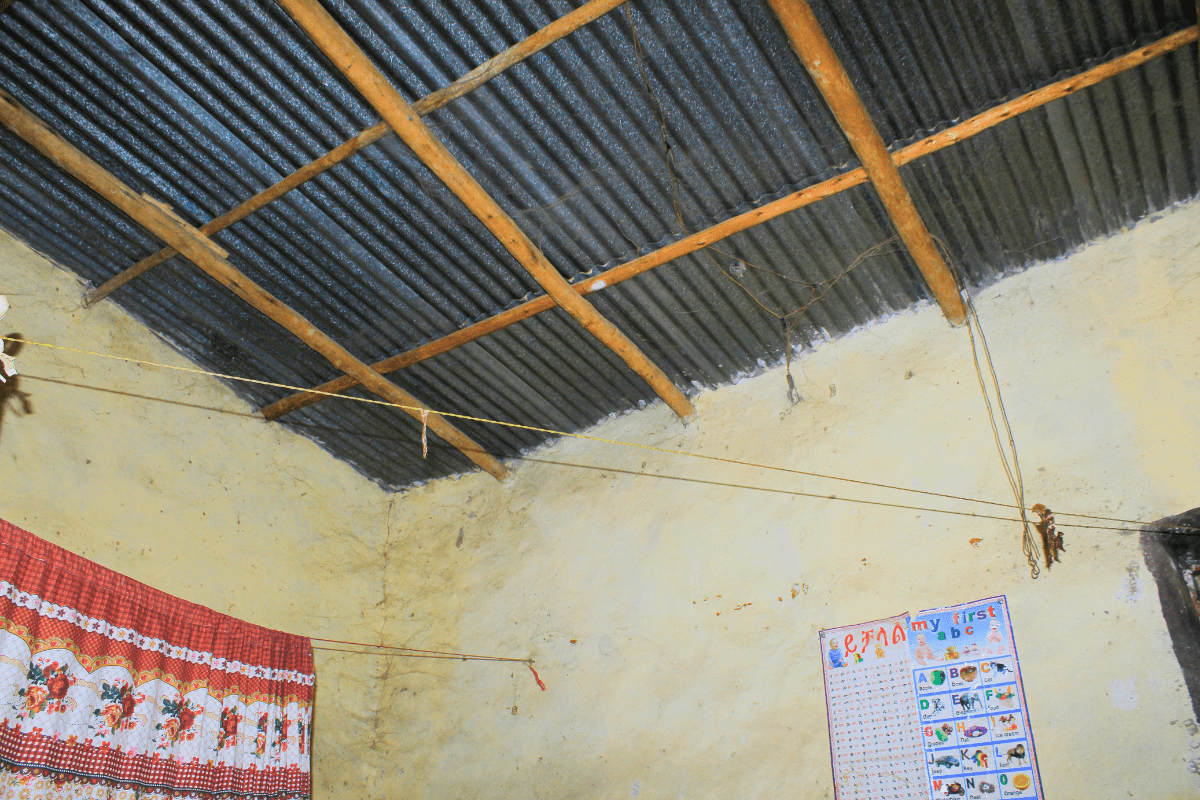
Inside Kassaye and Masho's emergency shelter.
Hide

They rebuilt step by step. “We couldn’t even find a door. The wooden walls were burnt and there was no light.” He adds, “There was no corrugated iron and no electricity. We had the shelter materials, but we still struggled to find a way to make the door.”

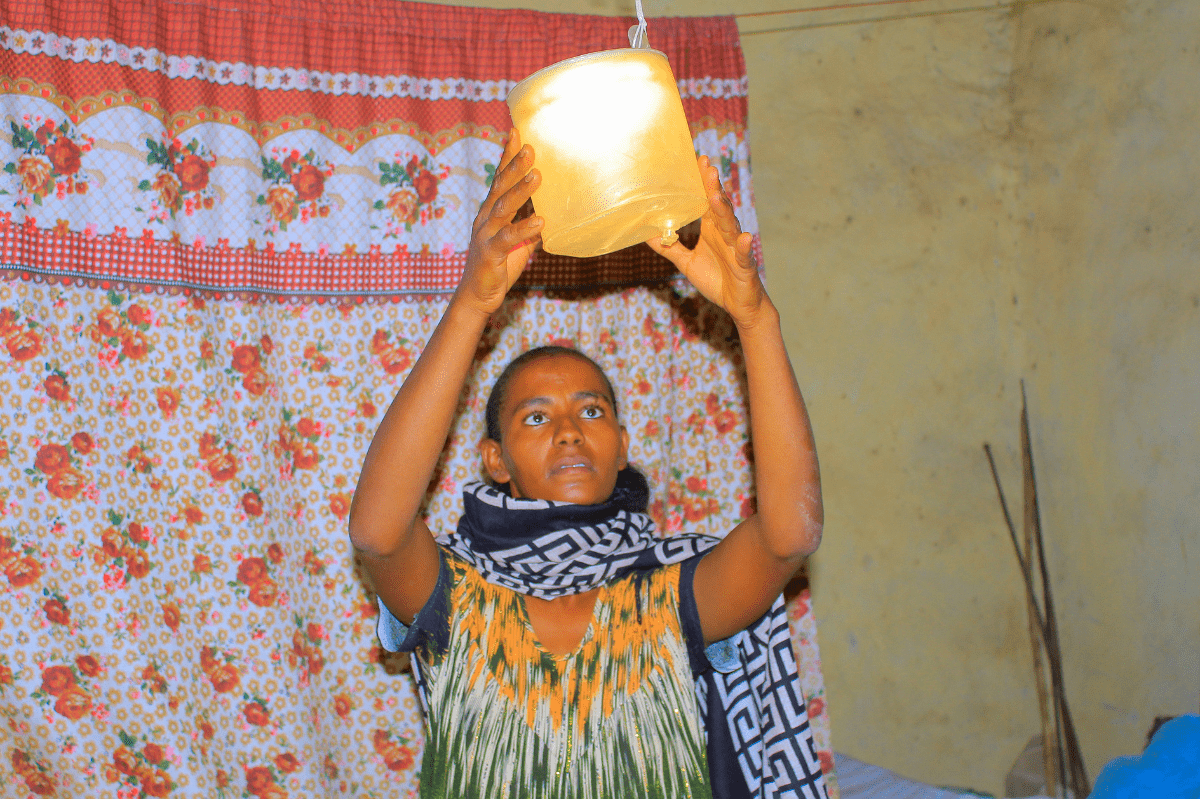
The shelter kit made construction possible. “We used the corrugated iron, nails and eucalyptus wood you provided.” He explains the process: “You take the eucalyptus wood, place the iron on top and secure it with nails, [and] we use the solar lamps for lighting.”

They also hired labourers to help and PAD staff guided them: “They explained to us exactly how the construction should be done.”

Icon Info
Masho installing a solar lamp.
Hide

With a secure home, the family feels a renewed sense of safety. “Compared to that horrible life, your support has helped us leave rented housing,” he says. “We are in a much better situation now than we were in the past.”

Most importantly, “Yes, now we can close our door and rest in peace. We call this a good life now.”

Economic stability is still fragile but improving. “There is a huge difference compared to the time when we had no means of trade. This house protects everything we have. It is a place where we can finally rest.”

He reflects on its importance: “Truly, shelter is one of the most essential things for human beings.”

Icon Info
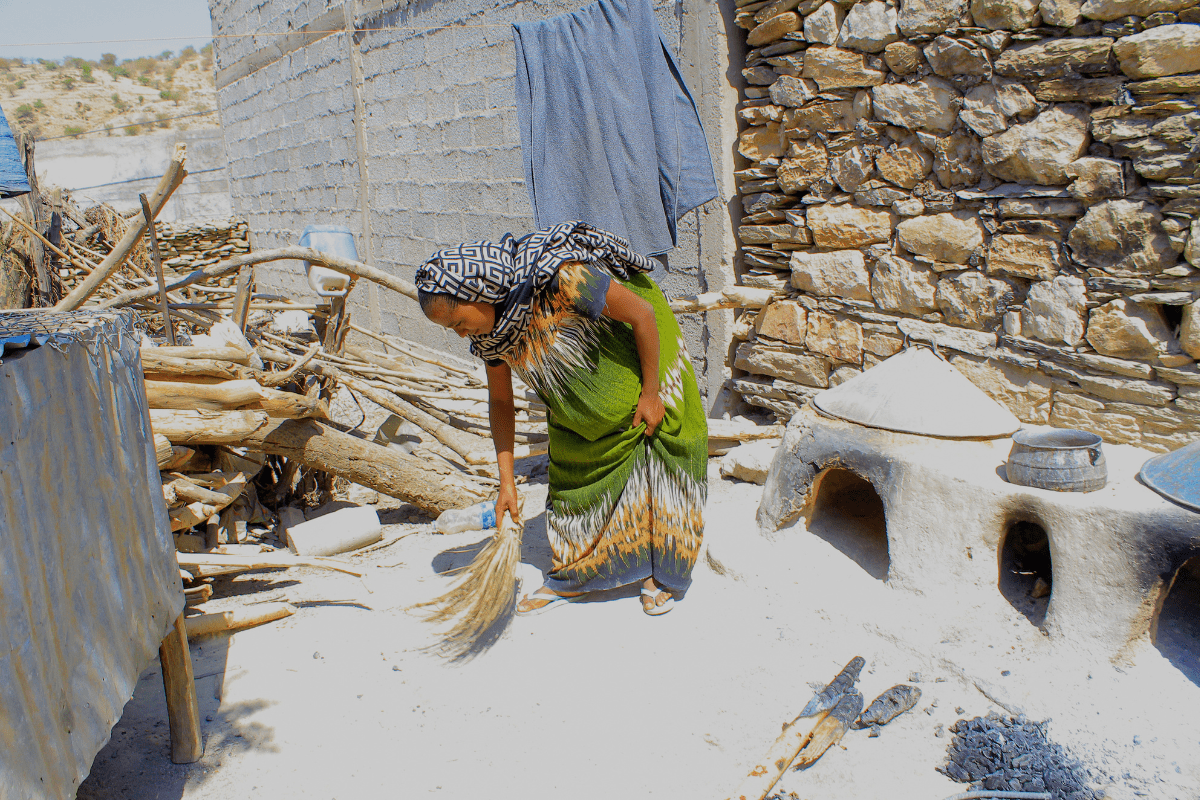
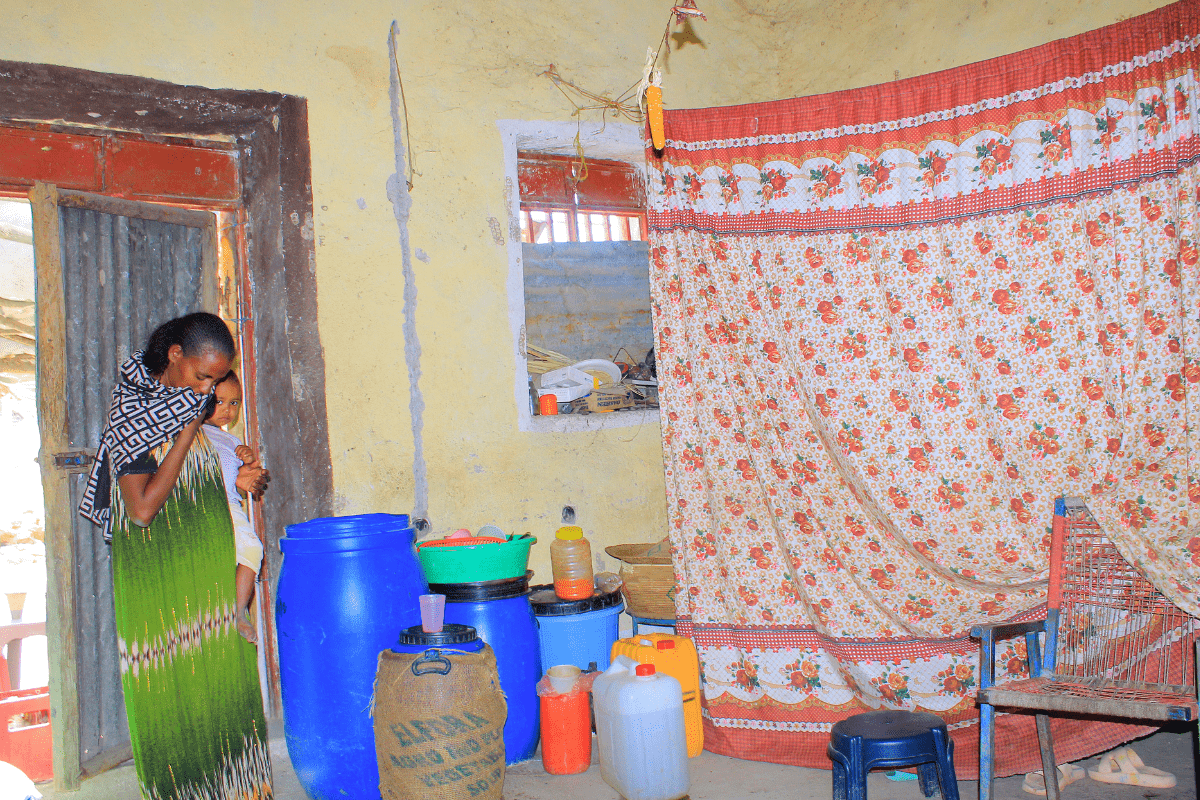
Masho and her child inside their shelter.
Hide

For Kassaye, having a home brings dignity. He says:

Having my own home gives me the freedom to lock my door and go wherever I want. It provides freedom from the constant worry of theft or lack of privacy.

Rebuilding has also restored hope: “In this town, some houses weren’t destroyed – being able to rebuild and enter our home with your help feels wonderful.”

Icon Info
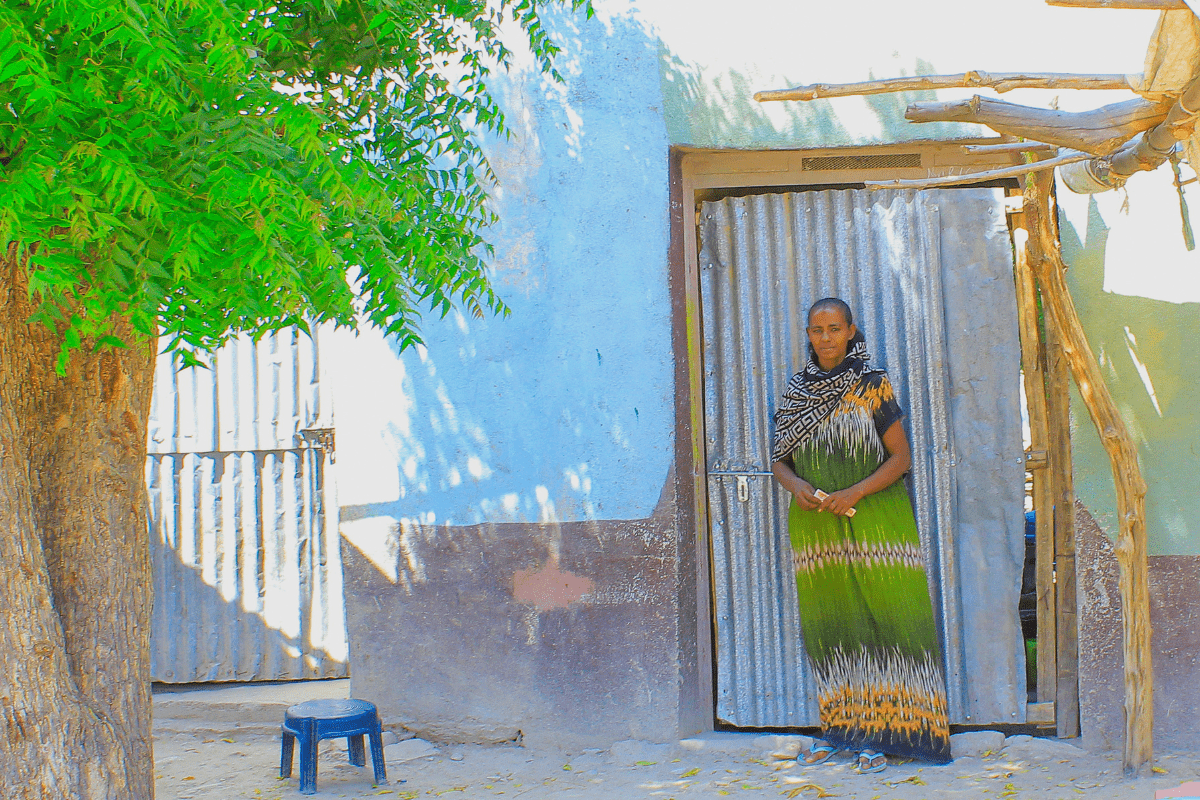
Masho outside her family's shelter.
Hide

The family dreams of returning to their farmland. “If peace continues like this, we dream of returning to our own land,” Kassaye says. “We hope to cross back and work on the irrigated land we once purchased.”

He sees the project’s impact on the wider community. “This project is strong and effective. Those who lived in makeshift huts now have a proper home. We are living a good life now within the community.”

Kassaye concludes, “I especially want to thank the PAD and ShelterBox team and those involved. We are very grateful and hope for continued support. Overall, we say life is good because we have found shelter. We thank you, and we thank PAD for this support.”

Icon Info
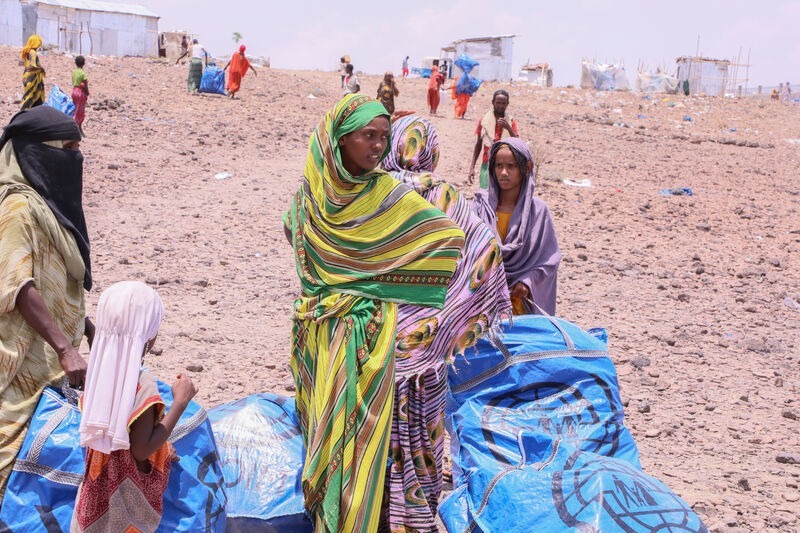
Aid distributions in Ethiopia.
Hide

What’s happening in Ethiopoia?

Conflict, insecurity and the climate crisis have forced millions of people from their homes. Many families continue to live with uncertainty, limited access to shelter, and ongoing risk.

ShelterBox is working with Positive Action for Development (PAD) to support displaced communities with emergency shelter and essential items.

Learn more about the crisis in Ethiopia and how ShelterBox is supporting communities.

Ethiopia crisis explained
How can I help?

Donate now

Support families like Kassaye’s facing conflict and displacement in Ethiopia.