A father’s strength: Mohamed’s story from Somalia
Discover how ShelterBox and Juba Foundation provide durable shelter, disability-inclusive aid, and long-term support for families.
Somalia is facing a severe crisis driven by conflict, drought, poverty and displacement. Millions of people need humanitarian support, and many families have been forced from their homes multiple times. Years of drought have destroyed crops and livestock, while insecurity and violence continue to uproot communities. For many families, finding a safe place to live remains a daily challenge.
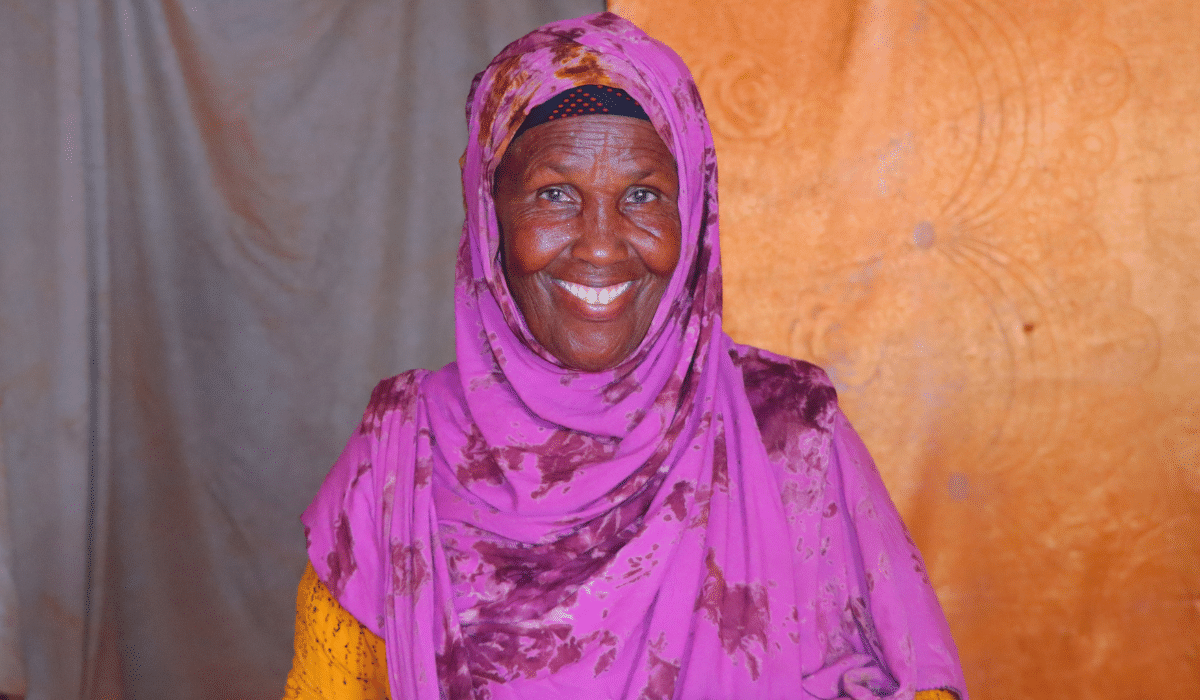
Ambiya knows this reality all too well. At 60 years old, she is the head of her household and cares for her grandchildren. Like many people across Somalia, she has experienced the combined impact of conflict and climate shocks.
When drought and insecurity forced her family to leave their home, they spent four years living in displacement. During that time, they relied on fragile shelters and irregular work to survive while trying to build a future for the next generation. Today, through ShelterBox’s partnership with Juba Foundation, Ambiya and her family have a safer place to live and greater security than they have known for years.
“We are five in a family,” Ambiya explained. “I the grandmother, two boys and two girls.”
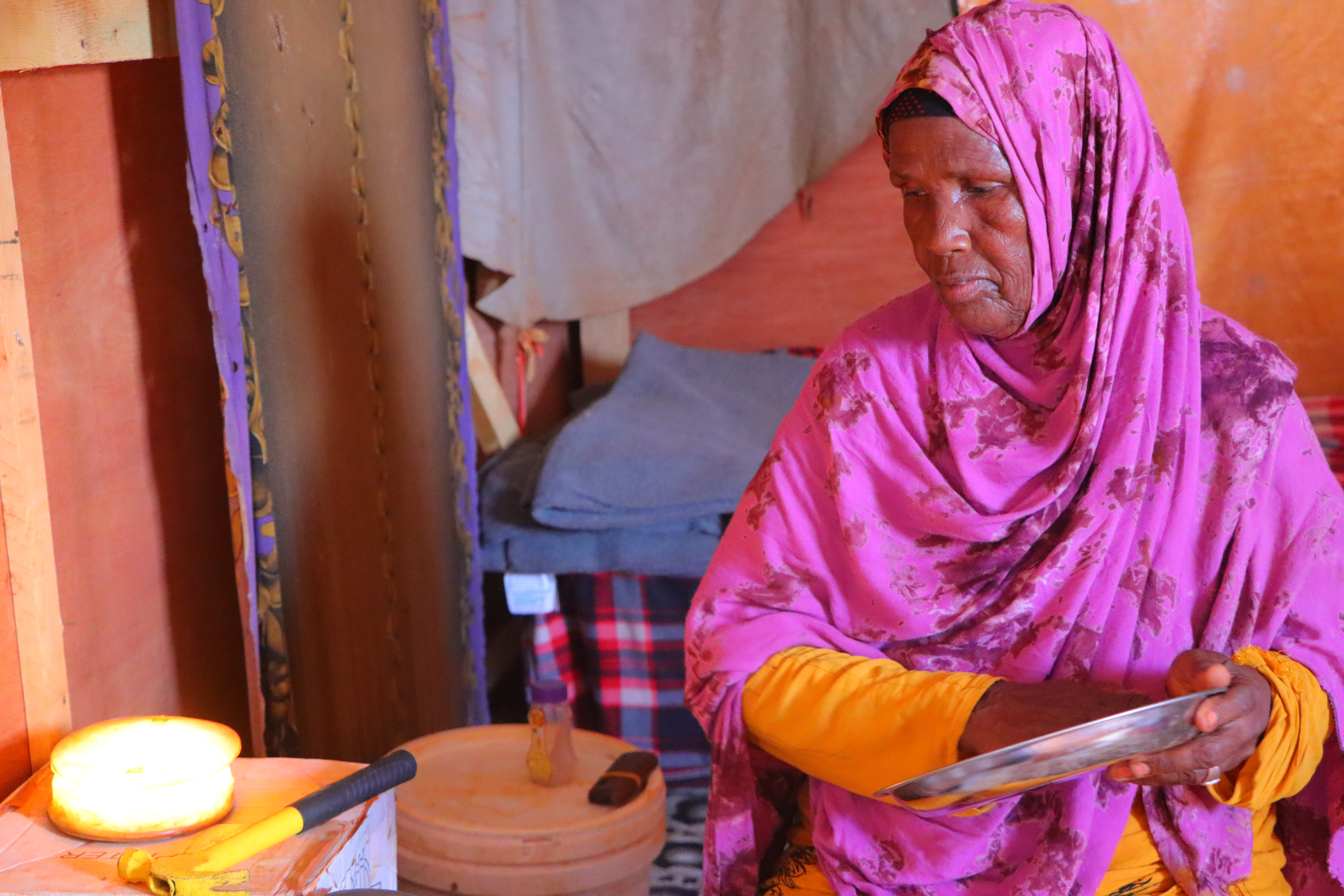
When drought and conflict forced Ambiya’s family to leave their home, they joined thousands of other people searching for safety and a way to survive.
“The situation became even more difficult when non-government actors demanded money and goods that we simply could not afford,” Ambiya recalled.
Arriving at a displacement camp brought new challenges. The family had escaped immediate danger, but they still needed somewhere to live.
“Upon arriving at the IDP camp, a community leader with family ties to us supported the construction of a basic shelter, ensuring that we had a place to live,” she explained. For the next four years, the camp became home.
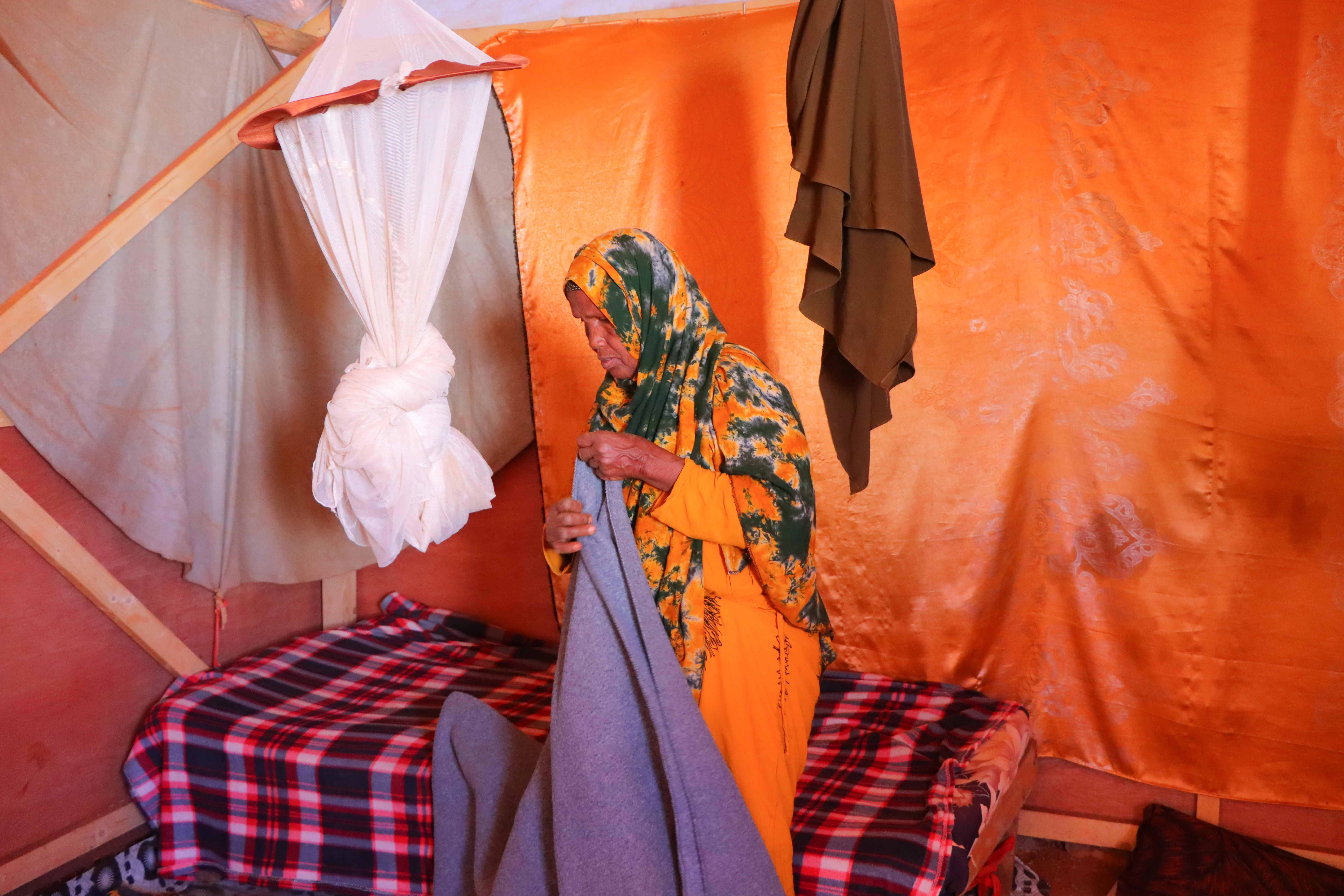

Life in the camp was difficult, and the shelter offered little protection from the weather or security for the family’s belongings.
Our old shelter was only cloth and torn plastic sheets, unsafe and weak. Whenever we left for work, we feared theft and animals destroying our few belongings.
For four years, Ambiya and her grandchildren lived with uncertainty, relying on a fragile shelter and whatever income she could earn to survive.
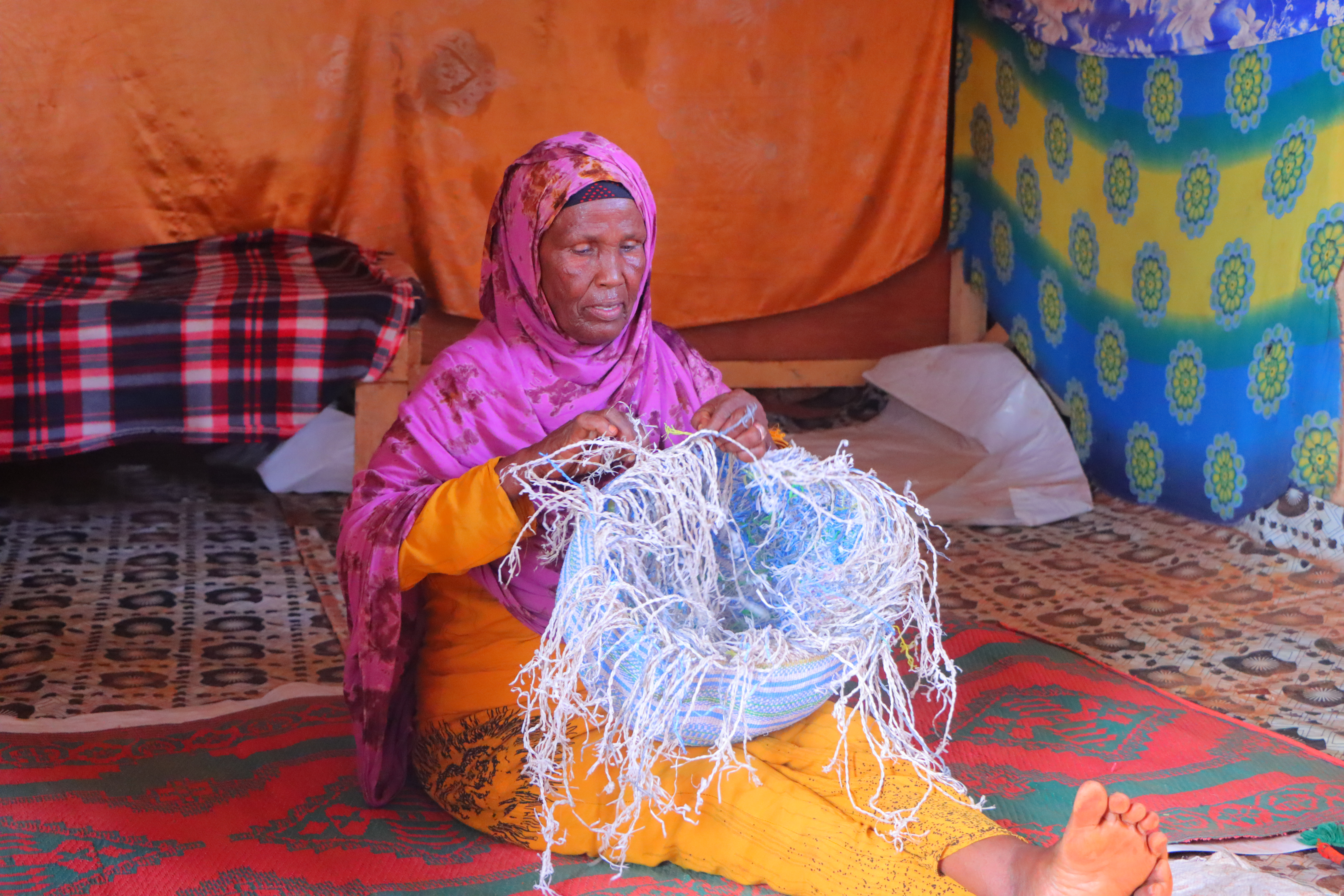
Supporting her family meant finding any work available, but Ambiya’s true passion lies elsewhere.
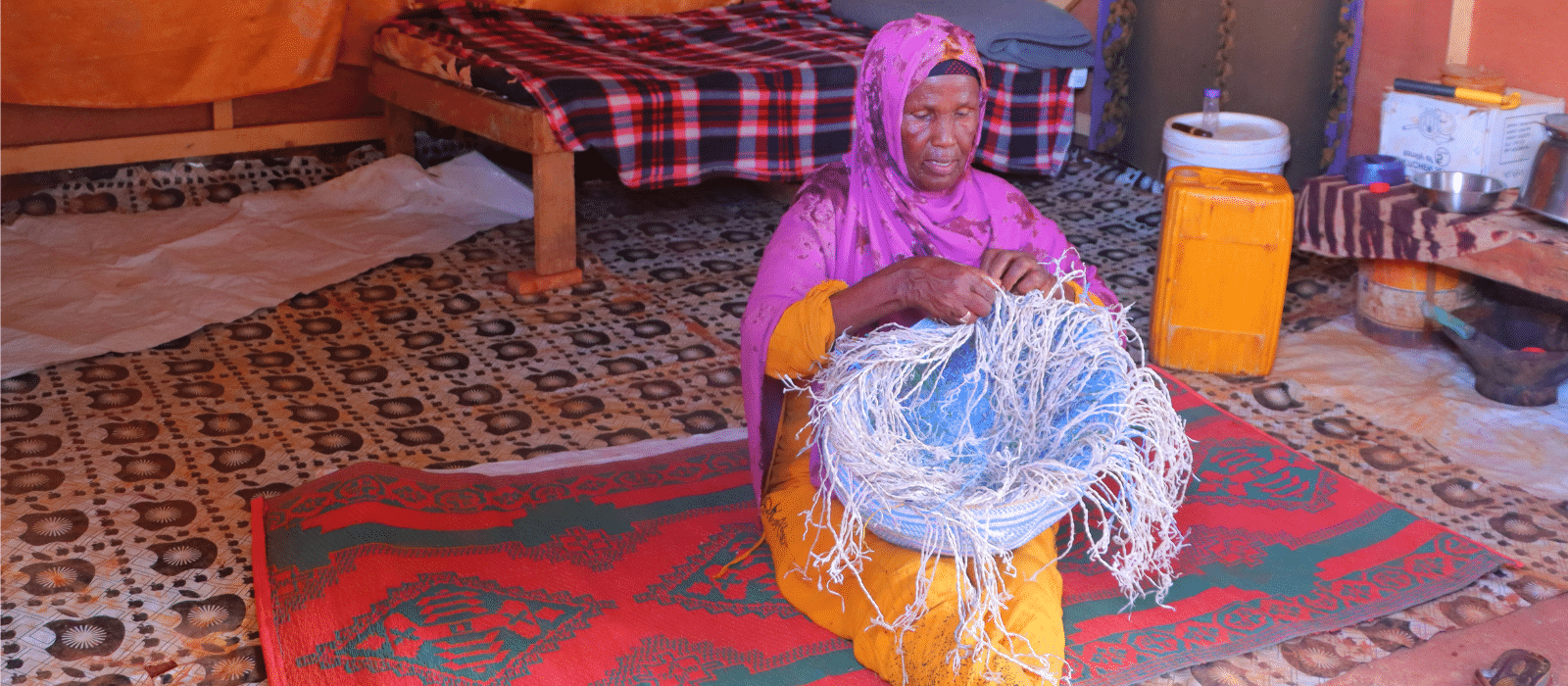
“My talent is basket weaving,” she explained. “After completing each basket, I search for a market to sell it.”
The work is slow and labour-intensive. A single basket can take two to three months to complete, with no guarantee of finding a buyer afterwards.
“The price depends on the market, but I usually earn between 150,000 and 200,000 Somali Shillings – around $3 to $4,” Ambiya said. “It cannot fully support a family – we need a better and more reliable income source.”
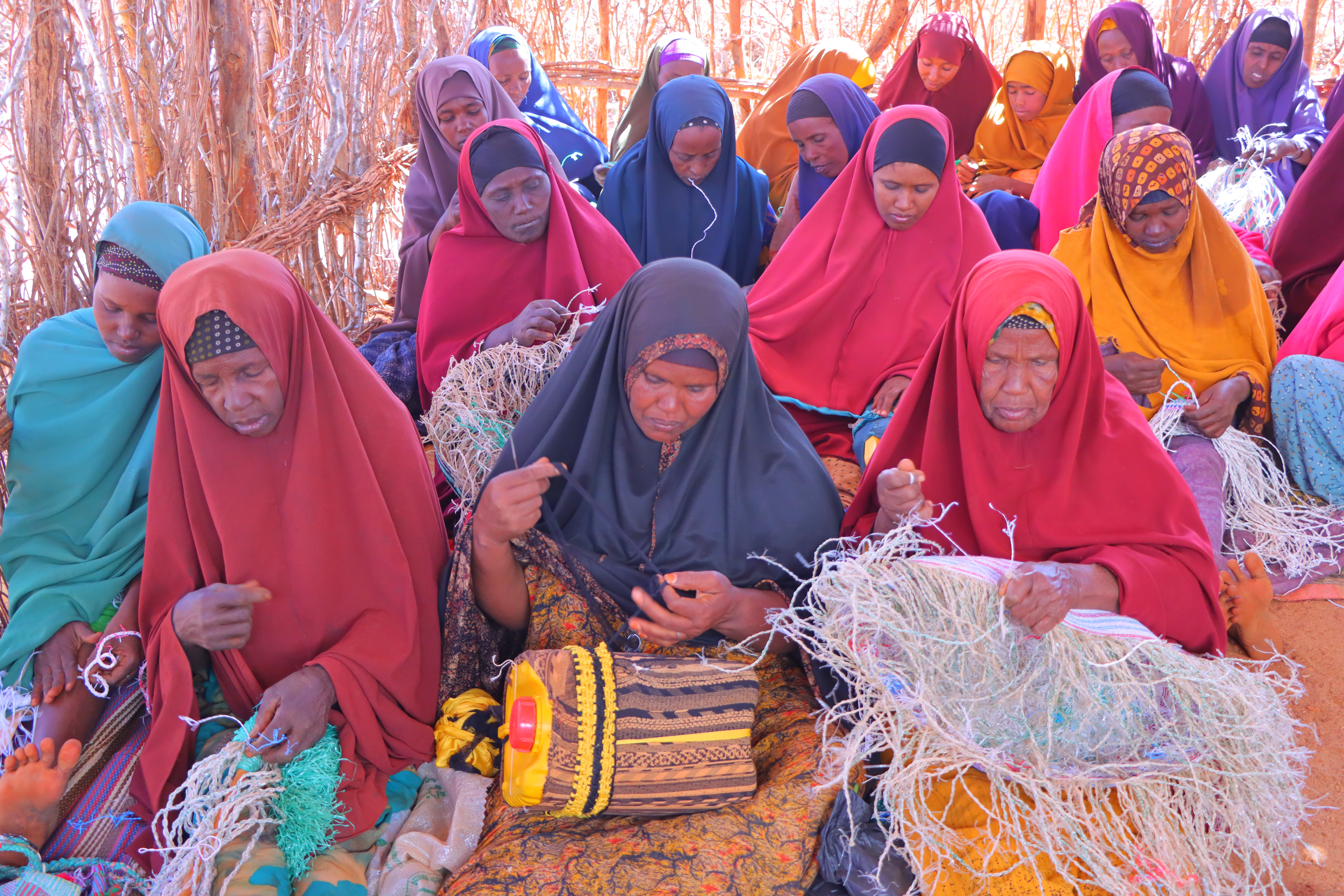
When weaving does not provide enough income, Ambiya turns to other jobs.
“When there is not enough food for the day, I go to the market in search of any available work,” she said. “Some days I wash clothes for people, and other days I clean potato sacks for shops, earning just enough to help us survive.”
Despite the challenges, Ambiya remains proud of her craft.
My life depends on art and weaving, not carpentry. This is my passion, and I believe it will provide what I need.
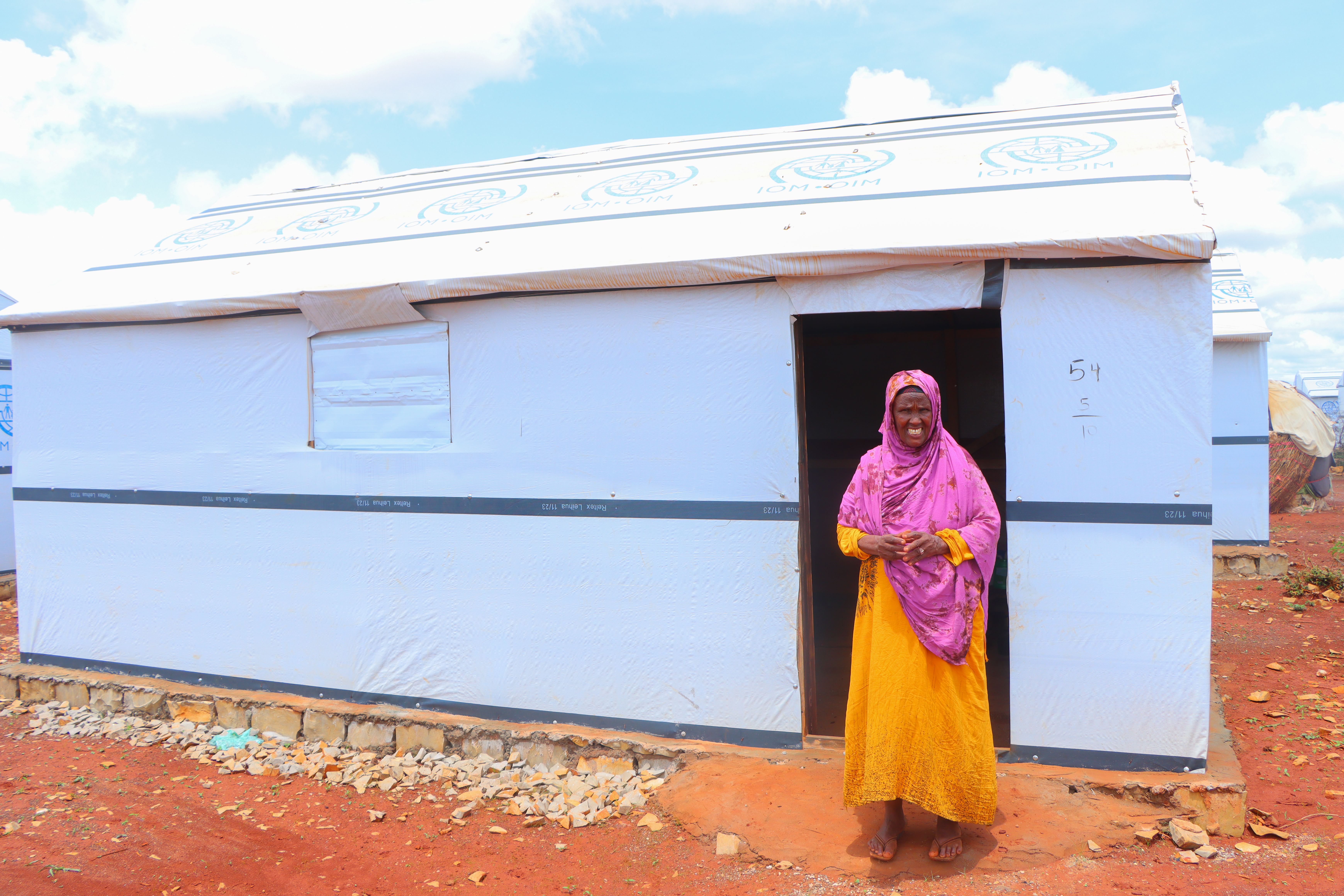
Through ShelterBox’s partnership with Juba Foundation, Ambiya’s family received a new shelter and essential household items, including blankets, solar lights, sleeping mats, maintenance training and tool kits to support their recovery.
“Receiving the shelter transformed our lives,” Ambiya said. “After spending years living in a fragile makeshift shelter, we finally had a safe home and a chance to start over. We sincerely thank those who made this possible.”
The shelter has given the family more than protection from the weather. It has provided privacy, security and peace of mind.
“I can leave to look for work and return home peacefully, knowing our belongings are safe,” Ambiya explained.
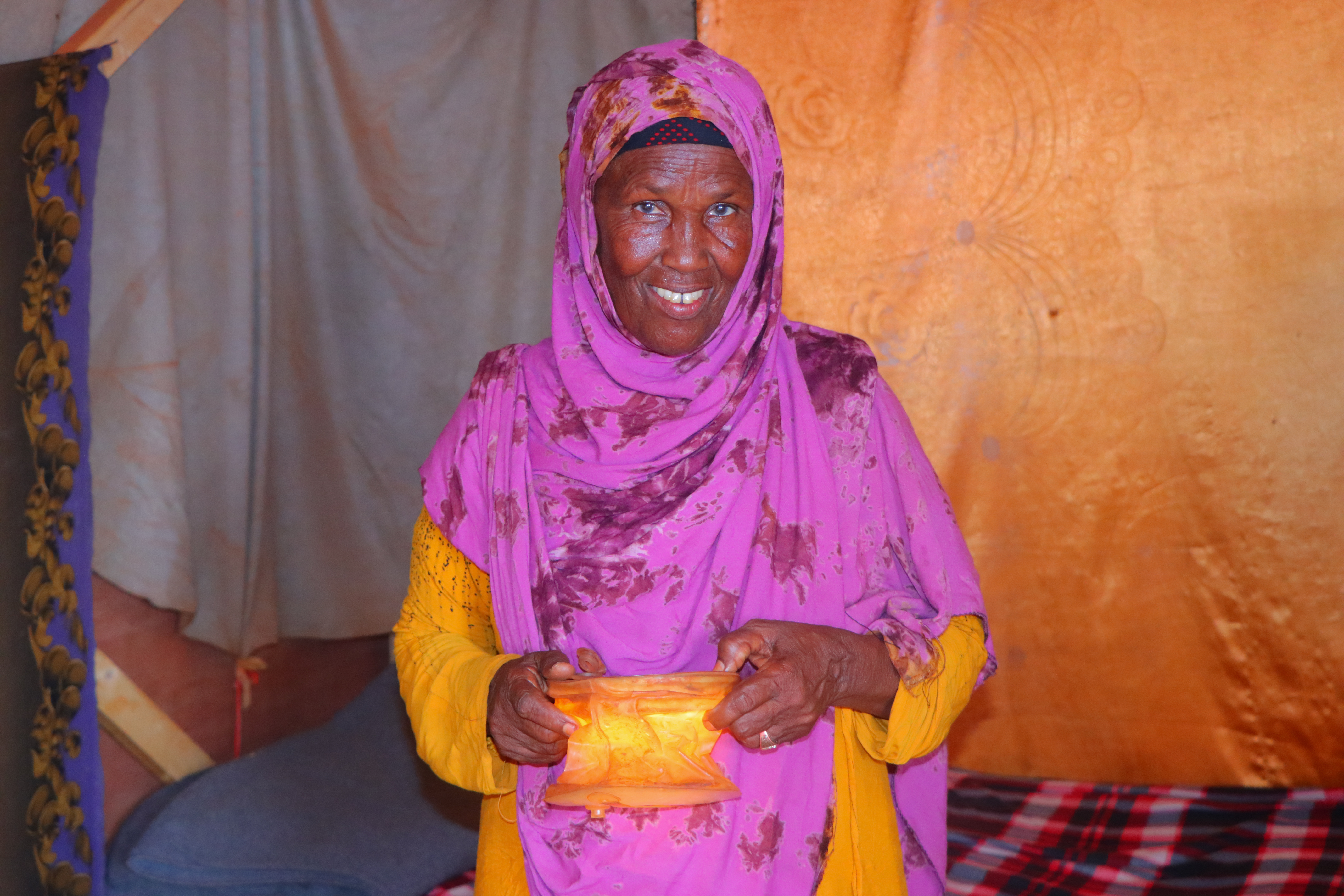
For Ambiya, one of the most significant changes has been the sense of permanence that came with having a shelter of her own.
For years, displacement meant never knowing how long they would be able to stay in one place. Now, she can think beyond the immediate challenges of each day and focus on the future of her family.
I no longer fear losing my home. The house is mine, and the plot is mine. Only death can separate me from it.
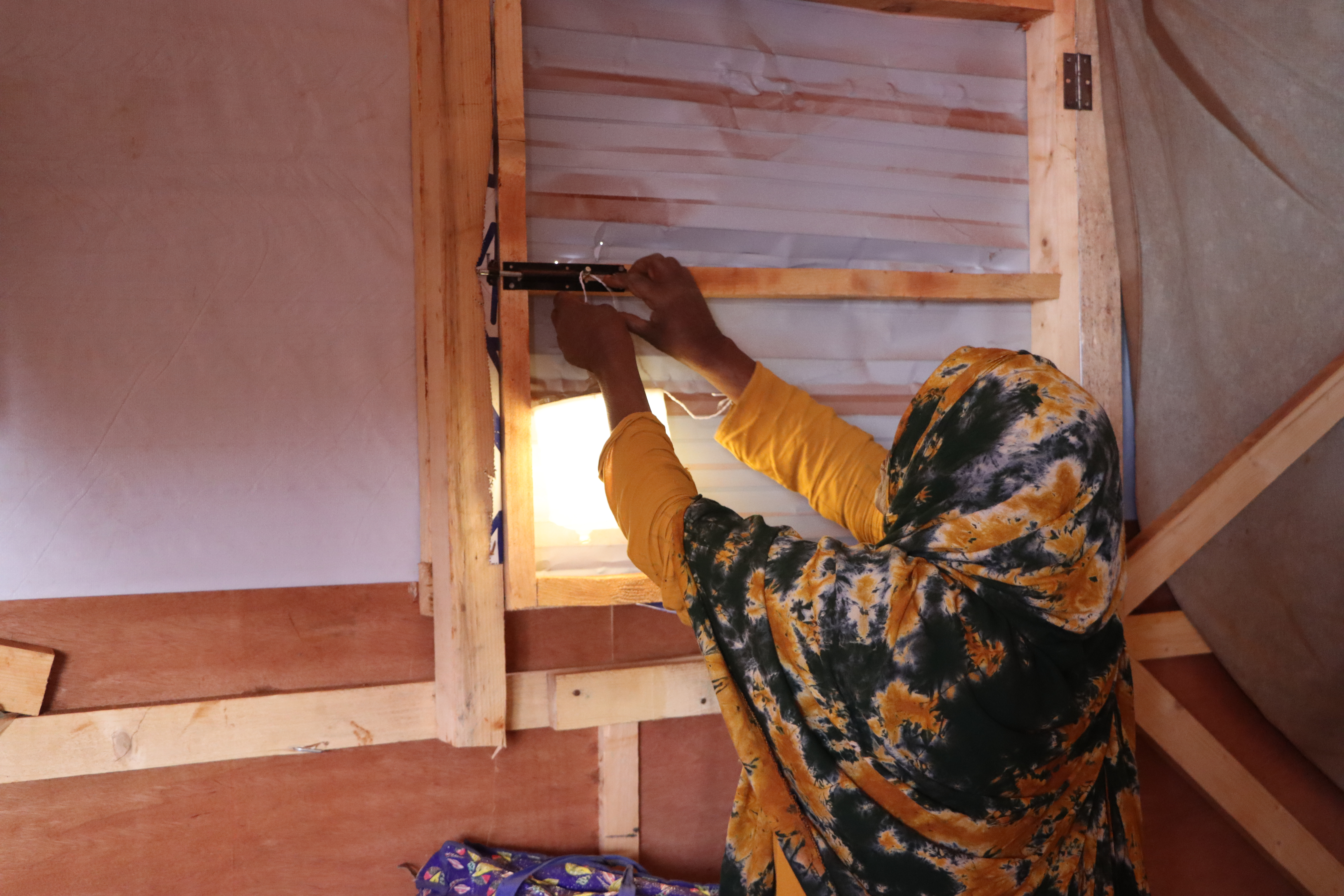
Ambiya hopes to strengthen both her livelihood and her home, creating a more stable future for her grandchildren.
“With access to proper materials, we could establish a small business producing baskets and other traditional handcrafted products,” Ambiya said.
She would also like to continue improving her shelter. “With financial support, I would improve my shelter by creating two separate rooms, installing an iron sheet roof, and removing the plastic sheets to make the house stronger and safer,” she explained.
Recent rainfall has also brought hope after years of drought. “The rains have finally come, bringing an end to the drought,” Ambiya added. “This means we can return to farming and have a chance to earn an income to support our families.”
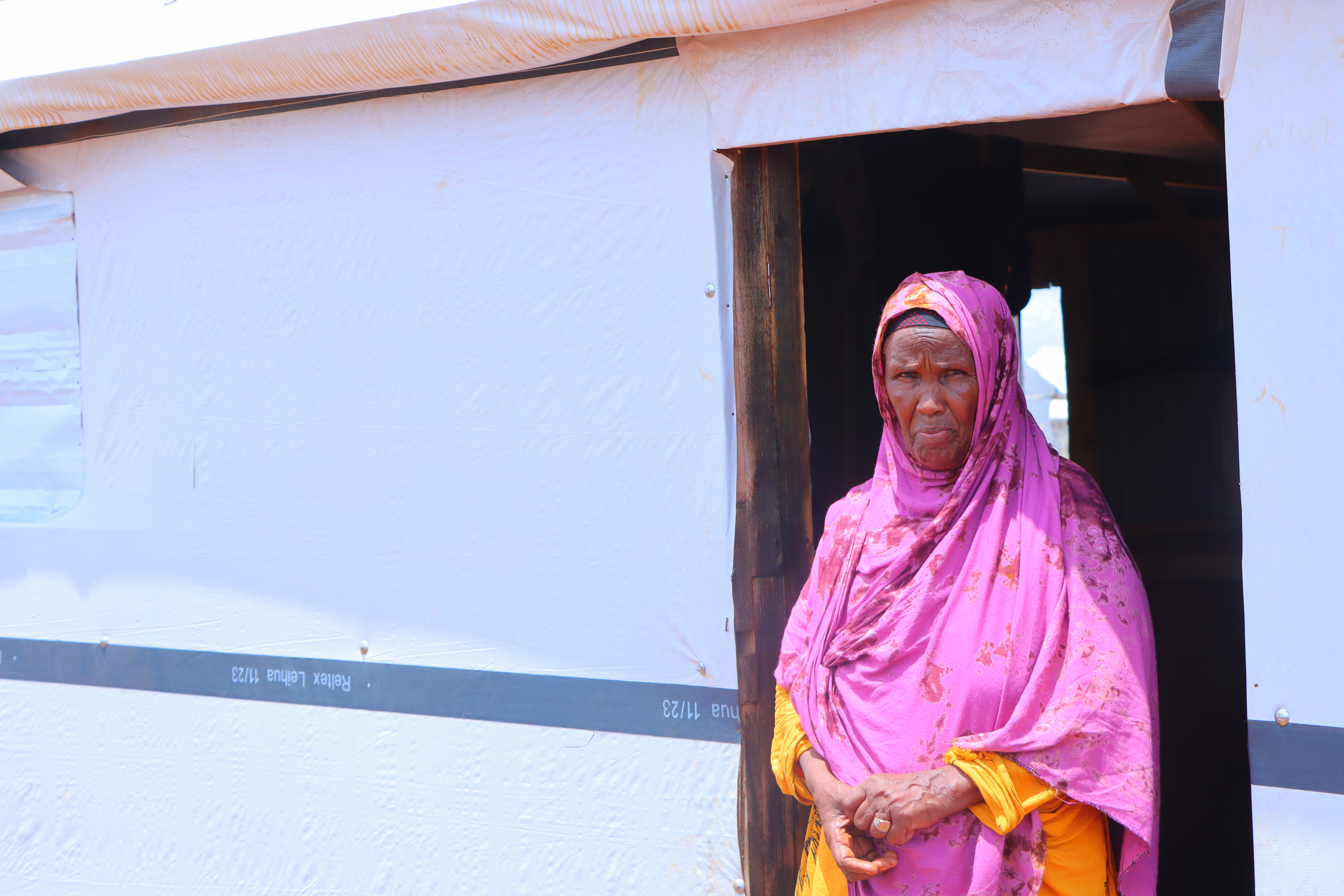
Above all, Ambiya hopes for opportunities that will help families like hers become more self-reliant.
“Our hope is to find someone willing to invest in us or help create sustainable livelihoods,” she explained. “It is difficult to wake up every morning searching for work, only to return home empty-handed. We want the opportunity to earn a stable living and build a better future for our families.”
Reflecting on the support her family received, she added: “Juba Foundation and ShelterBox changed our lives by giving us a safe home. Before, we lived in a hut not fit for human living. We are truly grateful. Thank you.”
Today, Ambiya and her family have greater security than they have known for years. While challenges remain, they now have a stronger foundation on which to build their future.
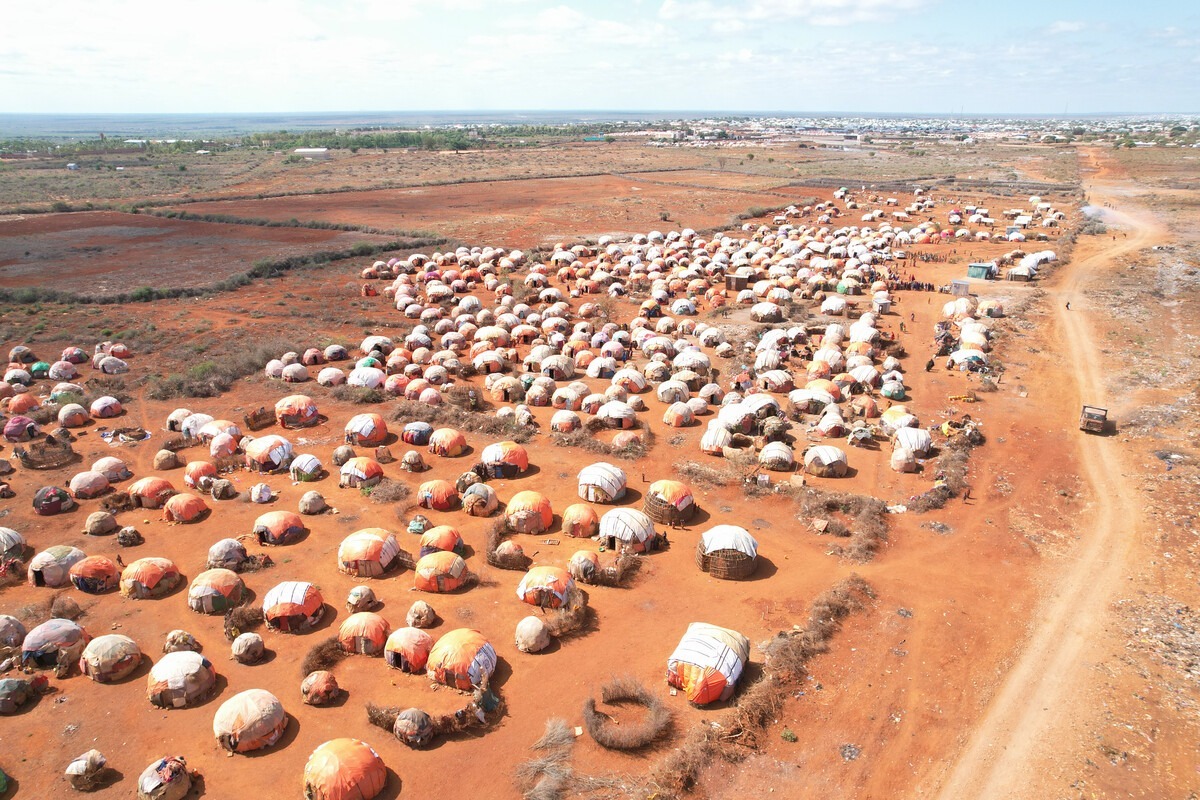
Ambiya’s story is one of many across Somalia, where families continue to face the combined impact of conflict, displacement and climate shocks.
Years of drought, followed by floods and failed harvests, have made it increasingly difficult for communities to recover and earn a living. Many people remain displaced, living far from the homes, land and livelihoods they once relied on.
Learn more about the crisis in Somalia and how ShelterBox is supporting displaced families.
Somalia crisis explained