Rethink disasters
We all need to rethink disasters and work together to break the cycle. Learn more about the causes of disaster and how ShelterBox is scaling up to meeting the growing need for emergency shelter.

Somalia is on the eastern coast of Africa – within the Horn of Africa – overlooking the Arabian Sea. It shares borders with Djibouti, Ethiopia and Kenya. Somalia’s climate is typically hot, shaped by monsoon winds and sporadic rains. It is increasingly impacted by climate change.
Get updates to your inbox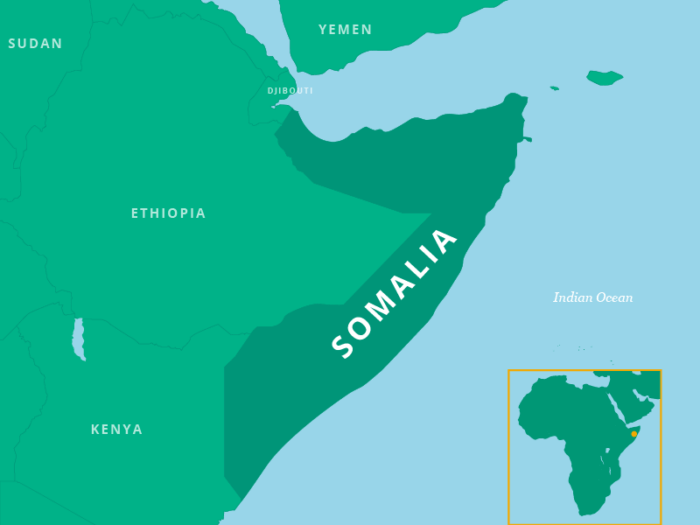

Somalia is on the eastern coast of Africa – within the Horn of Africa – overlooking the Arabian Sea. It shares borders with Djibouti, Ethiopia and Kenya. Somalia’s climate is typically hot, shaped by monsoon winds and sporadic rains. It is increasingly impacted by climate change.
Somalia faces a devastating mix of conflict, climate disasters, disease, and poverty. Over 5.9 million people need assistance, and 3.5 million are already displaced – many more than once. These overlapping crises are making it near impossible for families to find safety or rebuild their lives. There is also an extreme shortage of shelter.
Decades of violence, including civil war and attacks by armed groups like Al-Shabaab, have torn the country apart. Almost 1 in 2 people in Somalia are affected. Families live in overcrowded camps or makeshift shelters without clean water, food, or healthcare. Evictions are also common because people lack legal rights to the land they settle on.
Somalia is one of the most climate-vulnerable countries in the world. From 2020 to 2023, it endured the worst drought in 40 years, followed by devastating floods and a severe locust outbreak. These disasters are tracked in Somalia climate maps and climate graphs, which underscore the urgency of the crisis.
Another long drought is expected in 2025, with below-average rains already reported. People still recovering from past disasters are now bracing for the next.
To make matters worse, humanitarian funding is shrinking. Over 60% of aid groups in Somalia rely on U.S. support, and many have had to cut staff. Other donors in Europe are also reducing support.
What causes displacement?Lighter than usual rains in 2024 mean crop production was poor.
Limited water is available, which is linked to La Nina conditions.
The drought meant that millions of people are at risk of famine. Water sources have dried up, crops have failed, and livestock are dying.
Hundreds of thousands of people are leaving their homes and livelihoods behind.
They are on the move, covering vast distances, in search of food, water, and health services.
Unusually heavy rainfall triggered devastating floods in 2024, causing livestock deaths and damaging homes.
In the heavy Gu rains and flash floods, over 163,000 people were affected. The Gu rains are seasonal rainfall that occurs in Somalia from late March to June.
In late 2023, heavy flooding forced over 706,000 people to leave their homes.
This spread waterborne diseases because as families couldn’t access clean water and proper sanitation.
Heavy rain continues to damage communities and cause sudden floods.
Conflict continues to be a major reason why people are being forced to leave their homes.
The Federal Government is still fighting Al-Shabab in Southern Somalia. And more recently, IS-Somalia in Northern Somalia.
Resources have become scarcer. Displacement of people has also caused issues with land ownership and water supply.
Clan tensions have also worsened. This led to significant clashes and displacements in 2024.
Politically the context is changing. Somalia became the 8th country to join the East Africa Community bloc. This has a focus on trade, economy and peacekeeping. Somalia also became a member of the UN security council for 3 years.
The Federal Government state is progressing a one person one vote in 2025. This is to move away from the inequality of clan and state-based systems. However, this is not universally popular.
It is likely to increase tensions between states, clans and central government in 2025.
Food prices are rising in many drought-affected areas leaving families unable to afford basic food items. The cost of food has dramatically increased.
This is due to flooding, climate change induced droughts and conflict. People are having to sell their homes and possessions to survive.
Due to the above factors, mass displacement is frequent.
An estimated 3.8 million people in Somalia are displaced. They are living in over 3700 informal sites.
In 2024, 154,000 people were forcibly evicted. In 2025, we anticipate displacement will be on a similar scale.
The overwhelming majority of people who were displaced cannot return any time soon.
The demand for basic services and shelter, particularly in new settlements, is very high.
This is a question that becomes more urgent every year. Somalia has suffered decades of conflict, but that’s only part of the story. People are being forced to flee their homes by both violence and extreme weather. Some escape fighting only to be hit by droughts or floods in the places they sought safety.
Resources like land and water are running out, and this is fuelling more conflict amid political change. For generations, families relied on livestock and seasonal farming. Now, Somalia’s climate changes have disrupted rainfall patterns and decimated grazing lands. Persistent drought has left families fighting for access to water and land where their animals can graze.
Between 2020 and 2023, Somalia suffered extreme drought, the worst in 40 years, followed by flooding and a massive locust invasion. These shocks wiped out crops and killed livestock, leaving families with no way to earn a living.
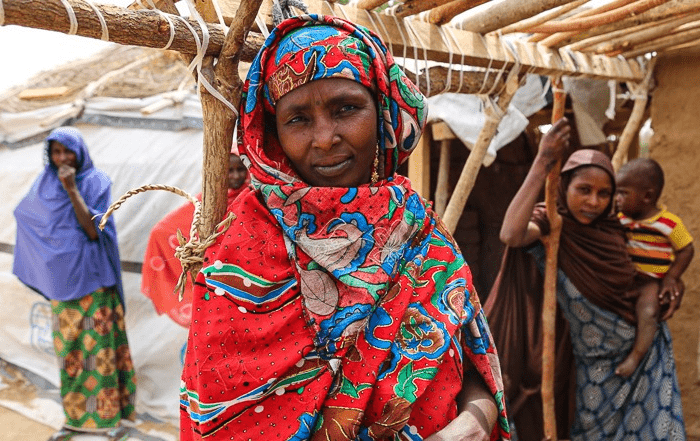
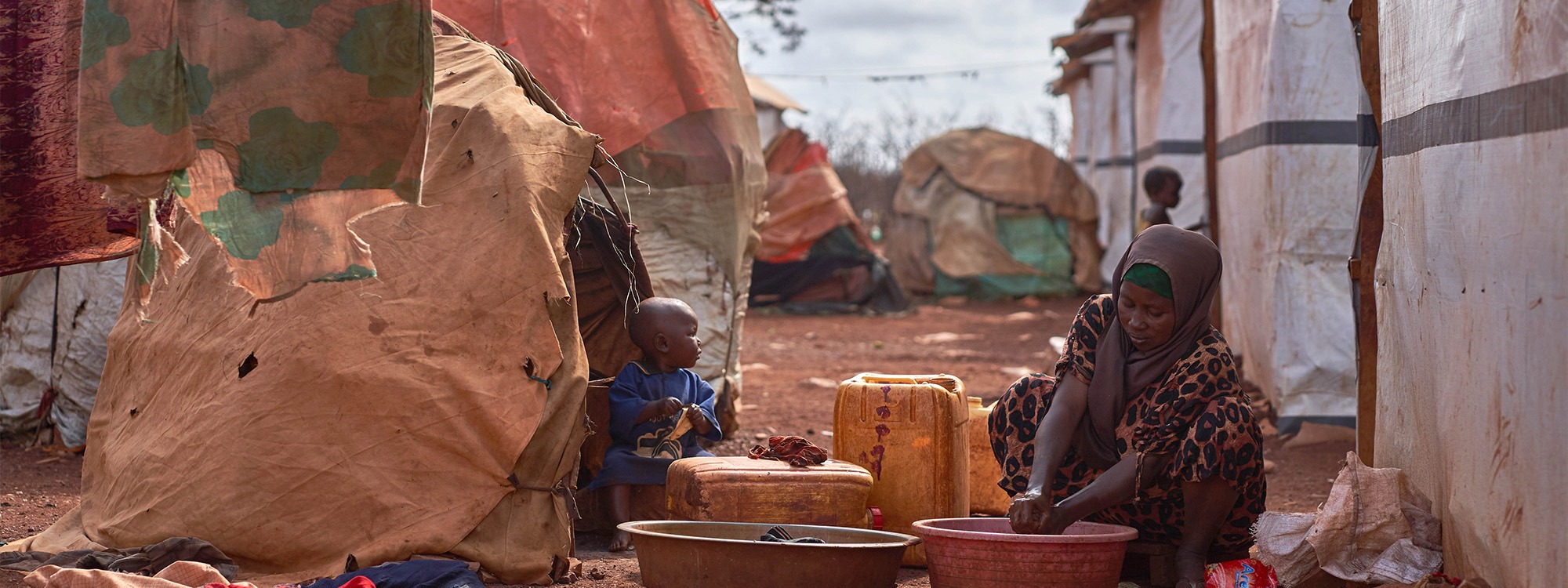
People are now living in makeshift shelters built from sticks, tarpaulin, scraps of metal – whatever they can find. Overcrowded and informal camps are vulnerable to disease outbreaks. Land tenure disputes are also rising. In 2024 alone, tens of thousands were evicted.
Meanwhile, armed groups like Al-Shabaab have used drought conditions to tighten control. They’ve blocked aid and charged communities for basic resources like water and firewood. The burden falls heaviest on women and children, who remain at risk of exploitation and violence.
Women and children mostly live in displacement camps, as men either stay home or are forbidden to leave by armed groups. This leaves women at high risk of sexual violence, and children at risk of being taken as child soldiers. In the camps, people are desperate. With few options, some are turning to the only work available – joining armed groups as paid fighters.
The crisis continues as heavy rains continue to cause flash floods, and another long drought is expected.
Despite everything, Somalia contributes less to global carbon emissions than the U.S. emits in three days. The country pays a high price for a crisis it did little to cause.
Learn about Climate and Conflict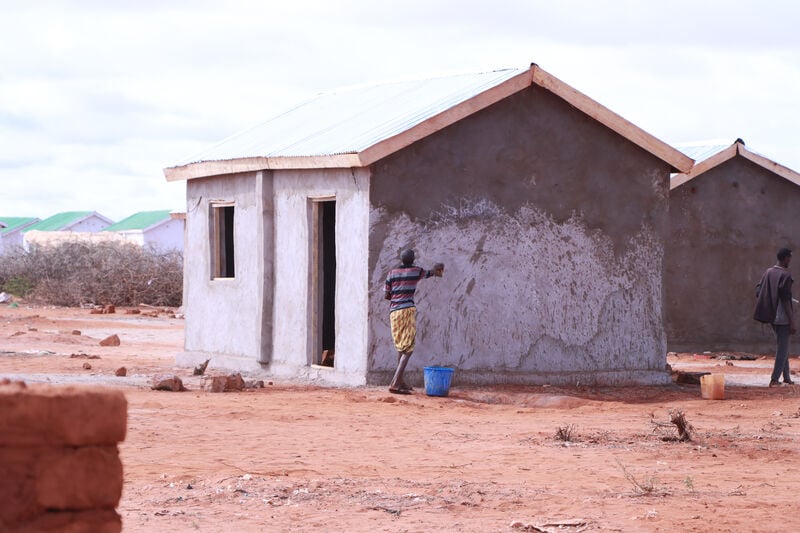
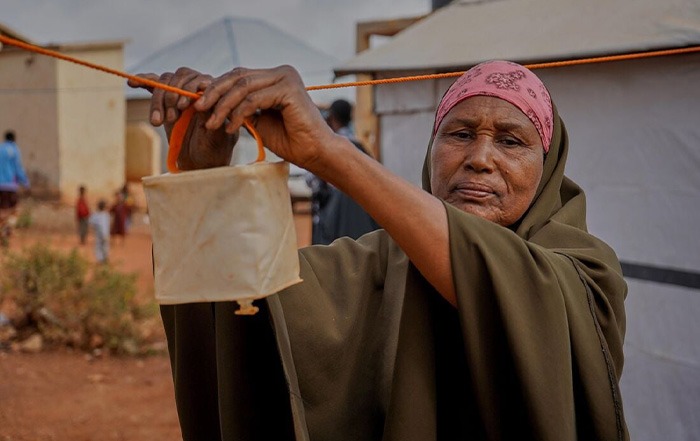
Since 2023, we’ve worked with Juba Foundation supporting tens of thousands of people displaced by drought, flooding, and conflict in Somalia with shelter and other essential items like solar lights, cooking sets, water carriers, mosquito nets, and sleeping mats.
We supported people in Baidoa with Shelter Kit shelters, with two-year tenancy agreements on private land. In Dollow, we supported with durable, mudbrick shelters and up to fifteen-year tenancy agreements on government-owned land.
In flood affected communities, we have supported with emergency kits and household items.
In December 2024 we launched a three-year project with Juba Foundation to support 35,000 people with emergency shelter kits, transitional shelters, and durable homes on raised bases with corrugated iron roofs and cement-coated mudbrick walls. The project offers paid work for camp residents. Hundreds of shelters are already complete, with space for latrines and clean water stations.
We’re building stronger, more climate-resilient shelters in a way that protects the environment. Shelters are being constructed to withstand Somalia’s harsh climate, with high daytime heat, cold nights, and increasingly unpredictable rains.
We’re focusing on long-term solutions to improve safety, stability, and people’s ability to adapt.
In Dollow, we’re building mudbrick shelters coated with cement for insulation. These shelters stay cooler during the day, warmer at night, and are designed to handle seasonal flooding. They also include windows and lockable doors for privacy, and enough space for families to gather.
In Baidoa, simple timber-frame shelters can be upgraded over time. We use imported timber to prevent deforestation. Shelters are built on raised stone plinths to reduce flood risk.
People on the move often face eviction from the land they seek refuge on. That’s why, with Juba Foundation, we’ve worked with landowners and local authorities to secure land rights for displaced people. People are guaranteed tenancy agreements for at least two years. This means they don’t have to worry about being evicted and can start to rebuild their lives.
Community members are also trained and paid to build mudbricks and perform light repairs using distributed toolkits.
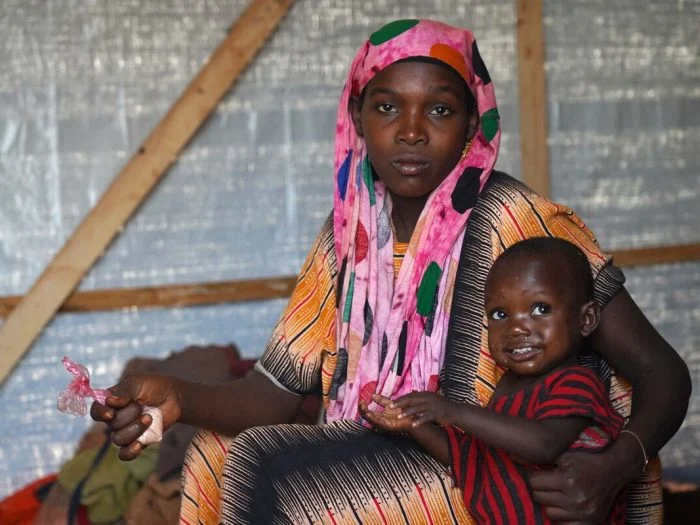
We supported people like Faay and her family to feel more secure in their new home.
“Like many other women in this camp I became a mother at a very young age. As a result, I was faced with lots of challenges and significant responsibilities. When I look at the beautiful house that I have been given, I have a sense of faith in a better future and even a better hope for my child.”
Donate now. Your gift will ensure we can continue to support families with shelter and essential items, in Somalia and around the world.
Stay informed – get updates on the impacts of conflict and climate and learn about ways you can support them.
Share this information – raise awareness of the growing link between climate change and conflict.
Donate Now