Shelter kits
Our shelter kits provide communities with the tools they need to start rebuilding their homes and their lives.
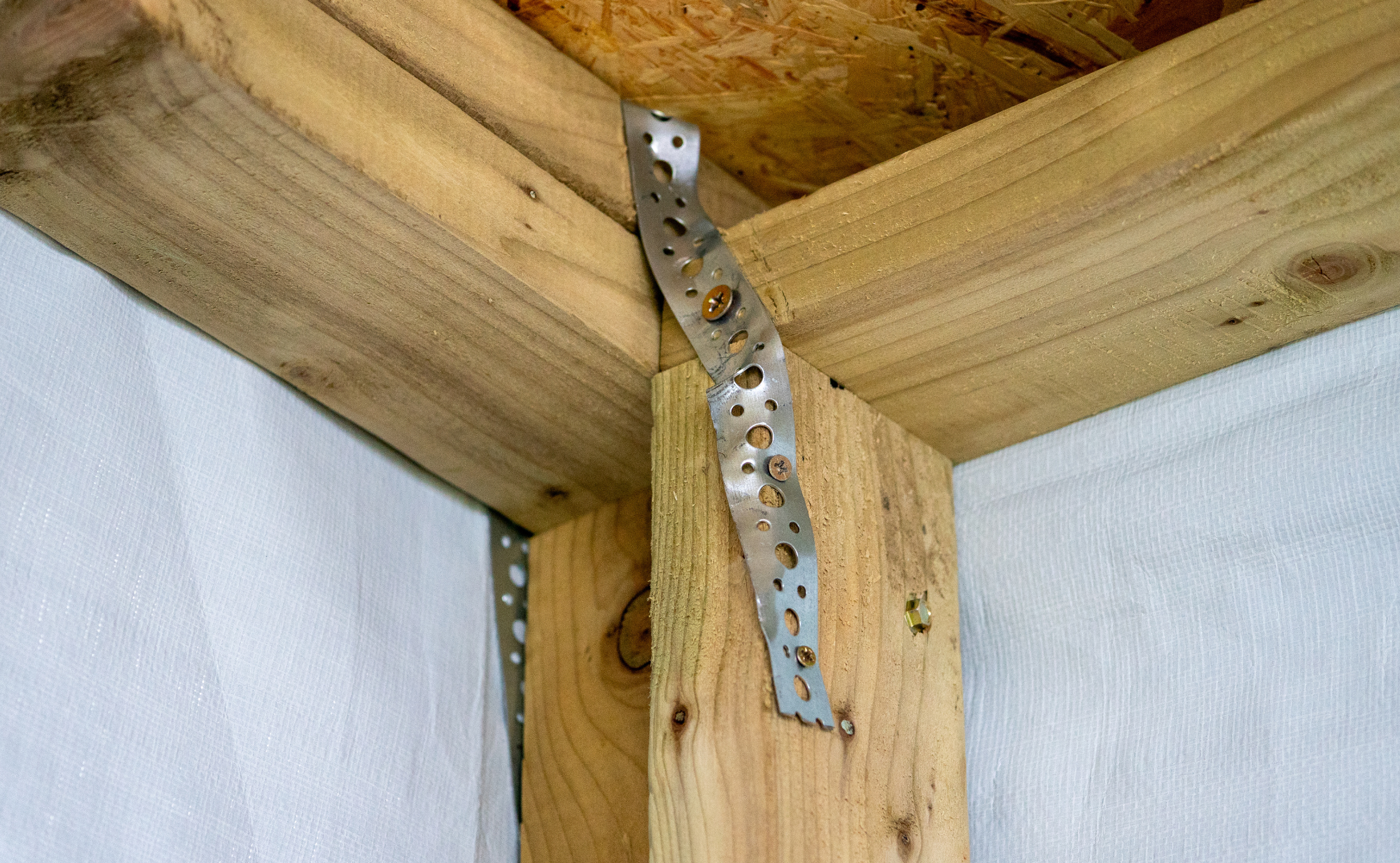

Storm strapping, commonly known as ‘hurricane strapping’ or ‘typhoon straps’ are metal strips used to strengthen key connection points in a shelter, primarily where the roof meets the walls or columns.
During high winds, these connections are often the weakest part of a structure. As wind passes over the roof, it creates uplift pressure. This force can pull the roof upwards and cause structures to quickly collapse.
Storm strapping reinforces these vulnerable points. By fixing the roof securely to the rest of the structure, it helps transfer wind forces through the frame instead of allowing it to be torn apart.
It is a simple and effective way to improve the strength and durability of shelter, making it more resistant to future storms.
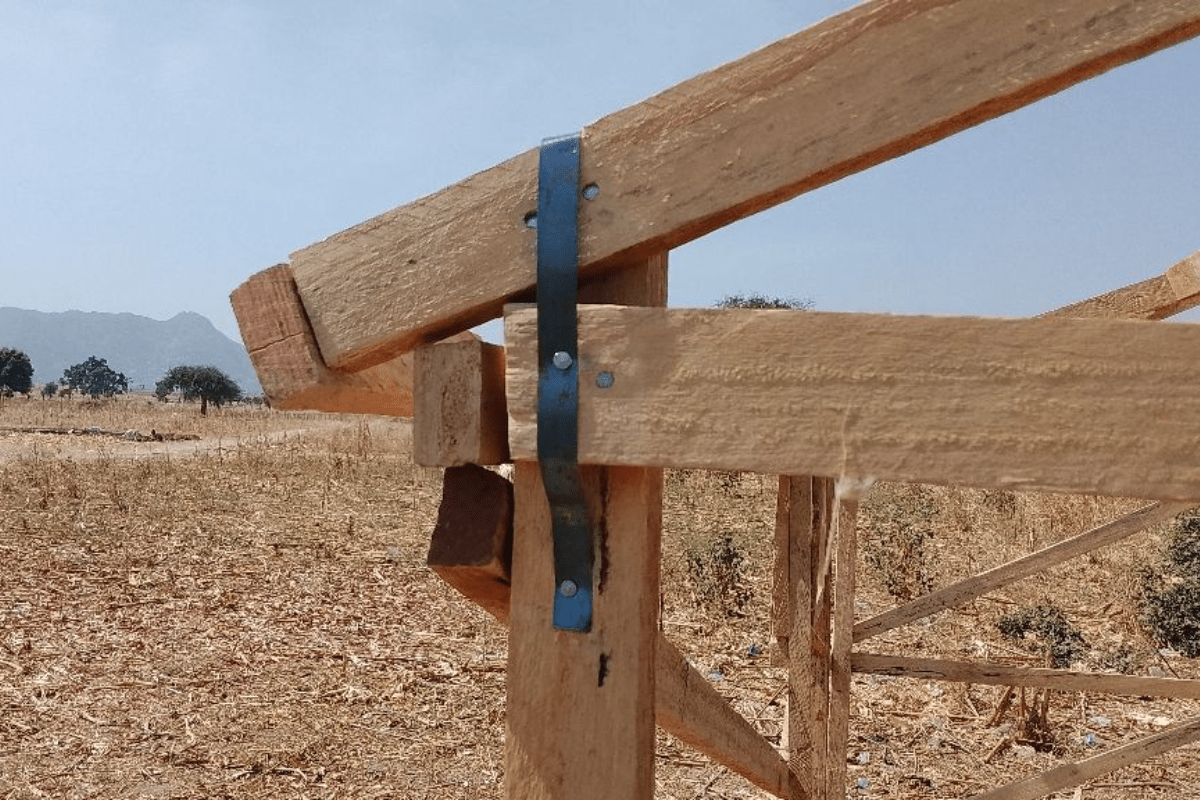
Storm strapping is a relatively small intervention that can make a significant difference.
The metal straps are applied at specific junctions in a building or shelter, primarily where the roof meets the walls or supporting columns. These reinforced connections reduce the likelihood of roofs being torn away during storms and prevents wider damage to shelter.
For families, a stronger, stable shelter means greater safety and fewer losses. Belongings are protected, disruption is reduced and reassurance is provided as storms approach.
Storm strapping is usually supplied in rolls of galvanised steel. It can be cut to length and often comes with pre-punched holes to make fixing easier.
Straps are placed over key joints and secured using nails, typically in a zigzag pattern to maintain the strength of the timber. This creates a continuous connection between the roof and the rest of the structure. The process does not require specialist tools. With nails, a hammer and basic guidance, people can install strapping effectively.
When applied during responses, storm strapping significantly improves a shelter’s resistance to severe weather, making it more stable, durable and longer lasting than structures without it.
Storm strapping is designed to work in challenging environments, where materials must be both reliable and easy to use.
The straps are often made from galvanised steel, helping them resist corrosion in humid and coastal areas where storms are most common.
Strapping is commonly used in responses where shelters need strengthening due to ongoing high winds. It can be added during construction or repair, without the need for complex rebuilding.
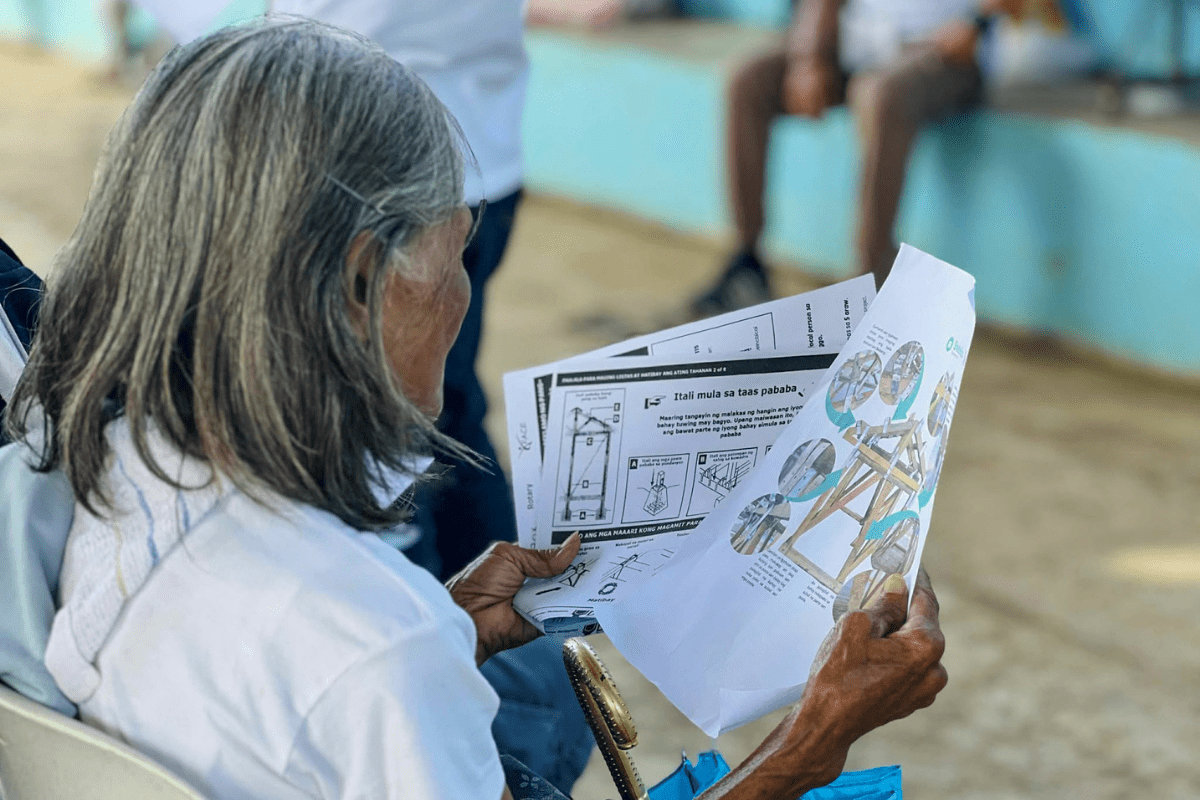
With simple training, people can apply the same techniques again in future, supporting ongoing maintenance and strengthening over time.
Storm strapping is a low-cost way to make a meaningful difference. For around $13, strapping can strengthen key structural connections and improve the durability of a shelter. This makes it a practical option in emergencies, where support needs to be both effective and scalable.
A small addition can help reduce repeated damage, protecting shelter, belongings and the effort families put into rebuilding.
Donate Today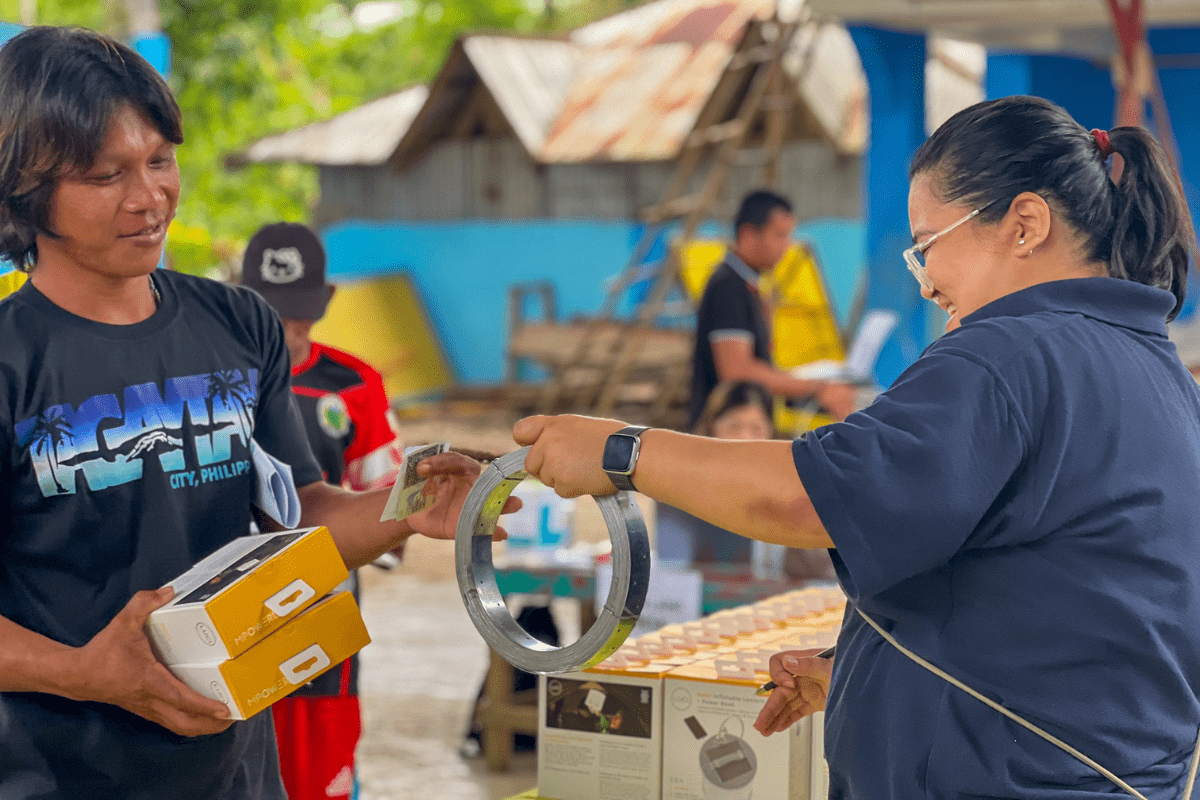
Straps are typically distributed and applied during responses where structures are experiencing extreme weather, like continuous strong winds. This means that it is a frequently distributed item in hurricane and typhoon responses, which is why it is sometimes referred to as ‘typhoon straps’ or ‘hurricane strapping.’
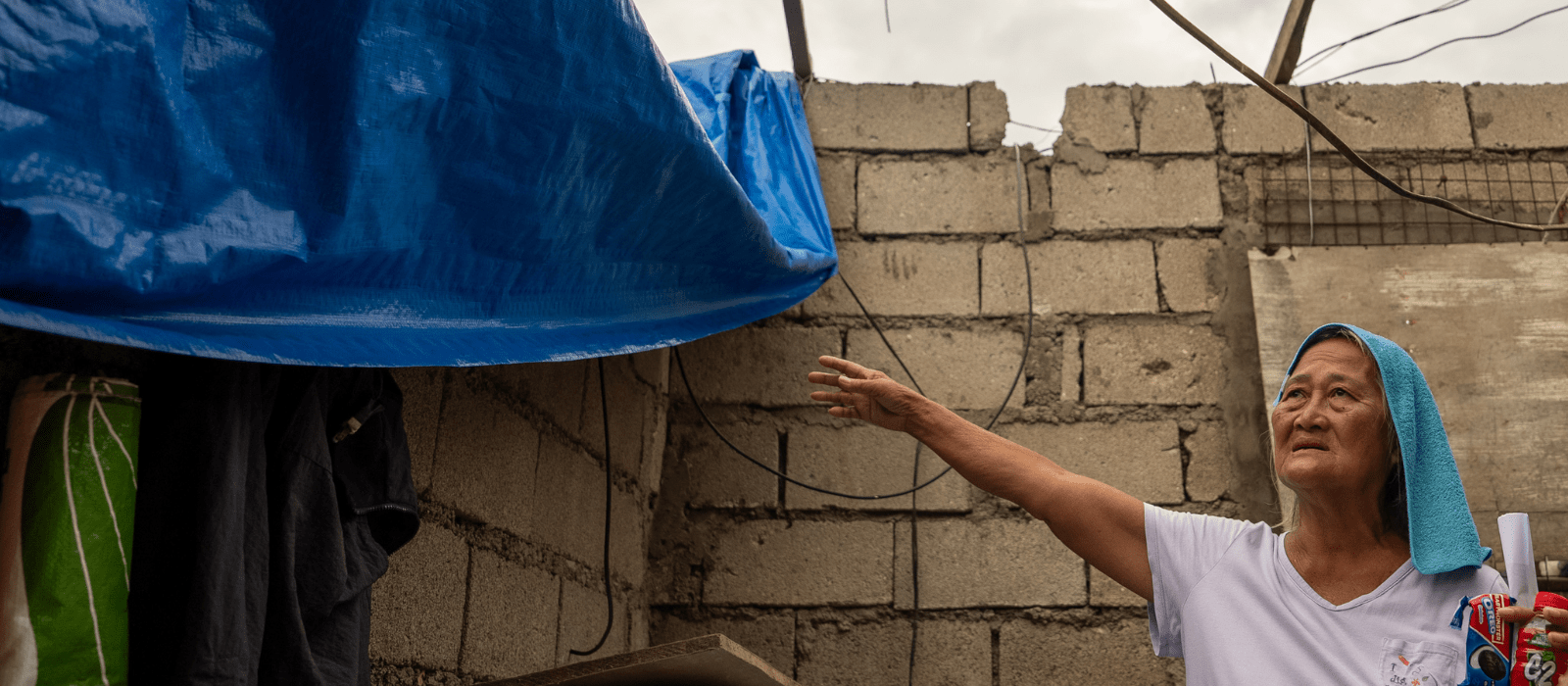
The Philippines experiences frequent tropical storms, bringing destructive winds and heavy rainfall year after year. When Typhoon Bualoi (locally known as Opong) struck the Philippines in September 2025, ShelterBox worked closely with partners Face Inc and Rotary to support thousands of people in Mobo.
Support included emergency shelter materials, tools, typhoon strapping and practical training. Families learned how to secure roofs to their shelters, helping them rebuild more safely and withstand future storms.
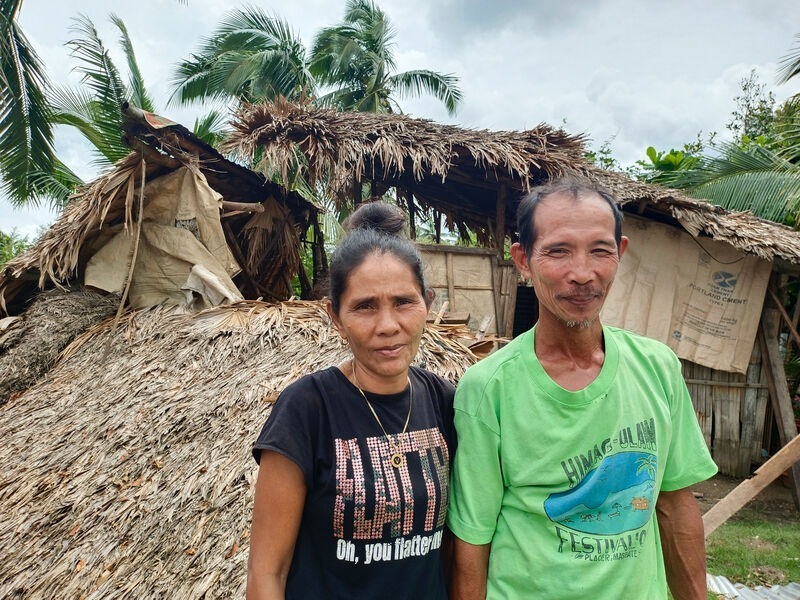
After evacuating their children to safety, Rodulfo and his wife, Mary, stayed behind to protect their belongings.
“Around 4:30 AM, as the winds intensified, our house collapsed. Many of our belongings were blown away, especially since we live near the coastline.”
Although they managed to save a few possessions, the family lost many essentials, including blankets, water carriers and their children’s school supplies and uniforms.
“Life here has always been challenging, and Typhoon Bualoi made things even harder. This was the strongest typhoon I’ve experienced in my 21 years.”
Support, including typhoon strapping and shelter materials, is helping families like Rodulfo and Mary rebuild more safely and prepare for inevitable future storms.
As disasters become more extreme, hit the same places more often and last longer, communities can be hit by extreme weather repeatedly. While we cannot prevent future storms, we can support people to prepare for them.
Strengthening shelter reduces the impact of repeated extreme weather. Small improvements, such as securing roofs with strapping, help shelters withstand future storms and reduce ongoing loss.
At ShelterBox, we’ve been utilising strapping during responses in different ways for nearly eight years. We have been on a journey to reach a position where strapping can be pre-positioned in locations forecasted to experience extreme weather as well as applying it reactively in the field when a disaster strikes.
When disasters strike without warning, emergency shelter can be the difference between life and death. Our ongoing preparedness work will help us be ready and become even more efficient and effective.
Strapping is currently stored in our Cebu warehouse in the Philippines, and we have plans to pre-position straps in regions most at risk during periods, such as Atlantic Hurricane Season, which runs from June – November.
By storing supplies closer to disaster‑prone areas, we can respond faster and reach communities sooner when storms hit.
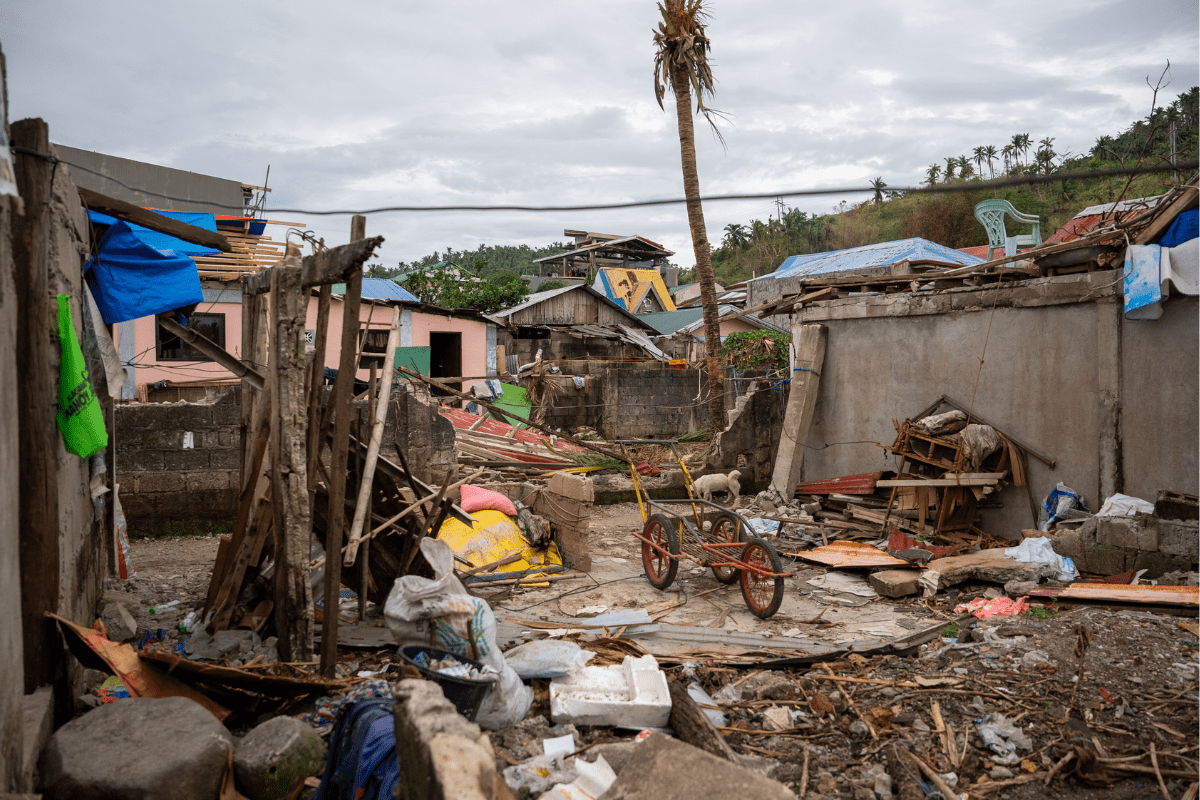
Safe shelter provides protection, privacy and a space to recover after disaster.
When shelter is repeatedly damaged, families lose materials, time and resources with every storm. Over time, this makes recovery harder.
Strengthening shelter helps break this cycle. By investing in stronger shelter, families are better able to recover, rebuild and protect what matters most.
With your support, more families can strengthen their shelter before the next storm.
Storm strapping typically comes as a roll of metal that can be cut to the required length. It often includes predrilled holes to make fixing easier.
Strapping is applied at key junctions in a shelter, primarily where the roof meets the walls or columns.
By reinforcing these connections, it helps prevent roofs lifting in high winds. When installed correctly, it creates a stronger overall structure that is less likely to fail during a storm.
Yes. Strapping needs to be placed in specific locations to be effective, so basic training is important.
However, the process is straightforward. Once demonstrated, it can usually be applied without repeated instruction.
No specialist tools are needed for installing storm strapping.
Strapping can be installed using nails, a hammer and a suitable surface such as timber. Simple techniques, like spacing nails in a zigzag pattern, help maintain the strength of the material.
The strength of a shelter depends on how well its parts are connected.
Strapping significantly increases the resistance of shelters in bad weather conditions compared to those without it. When applied during responses, structures that include strapping are reported to have improved stability, durability and longevity.
Storm strapping is used in areas affected by strong winds, including hurricanes, typhoons and cyclones, which is why it is sometimes referred to as ‘typhoon straps’ or ‘hurricane strapping’.
Strapping is commonly included in emergency shelter responses where structures need strengthening quickly.
ShelterBox has used storm strapping in responses for nearly 8 years, including during Typhoon Bualoi/Opong in the Philippines.
We are working to expand its use by pre‑positioning supplies in high‑risk areas and integrating it into preparedness planning, as well as emergency response.
This supports our wider focus on ensuring shelter and essential support reach people quickly.
ShelterBox has responded to more than 100 hurricanes, typhoons and cyclones, supporting over 80,000 people.