“The road was cracking”

On 30 September 2025, a 6.9-magnitude earthquake struck the northern region of Cebu Island.

In an instant, roads split apart, homes collapsed, and families fled into the darkness. Aftershocks rolled across San Remegio, Bogo City, Tabogon, and surrounding coastal communities.

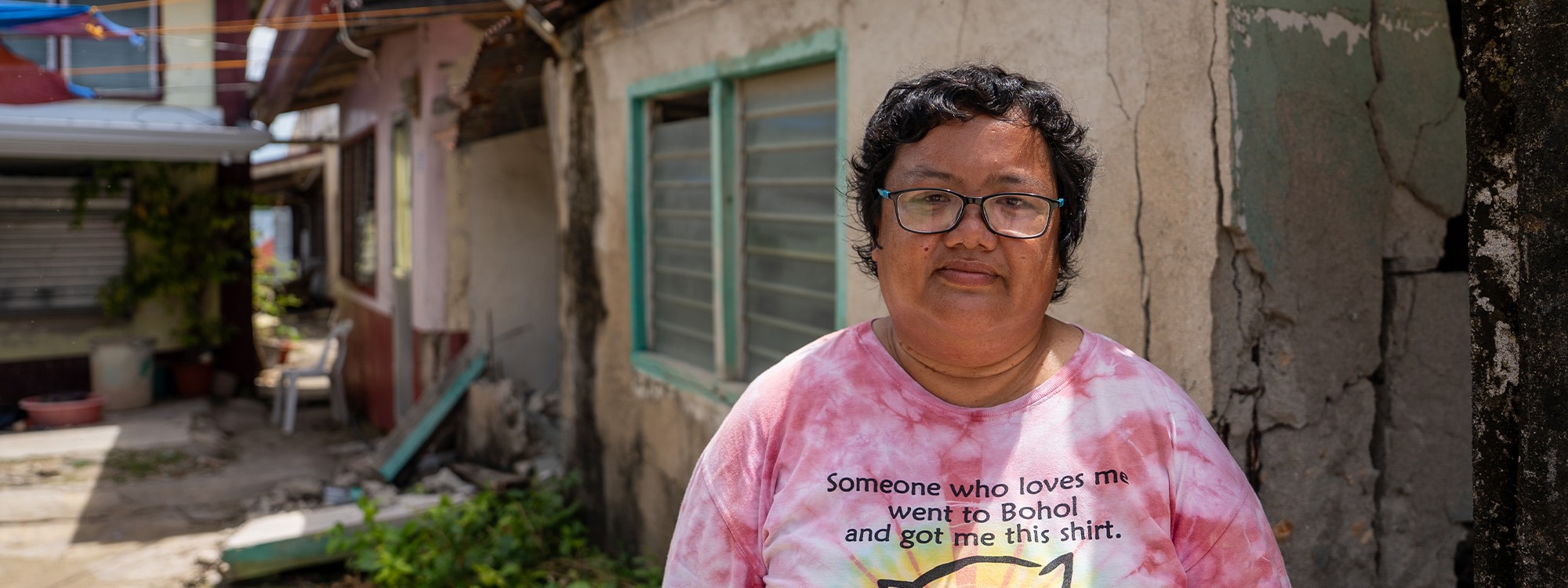
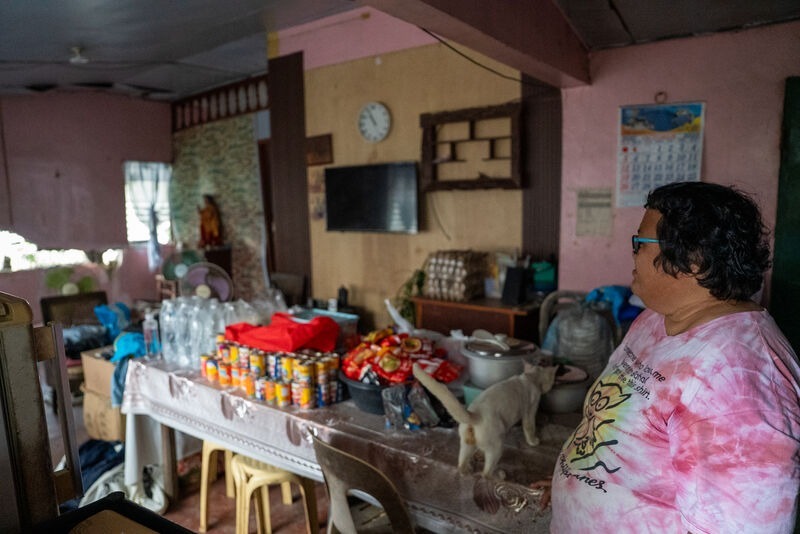
When our teams visited the affected areas, we met Rochen, who has lived in Cebu her whole life with her father, brother and uncle.

Her experience echoes the journey thousands of families have taken in the weeks since the earthquake – sudden fear, urgent escape, and the long process of piecing daily life back together.

Icon Info
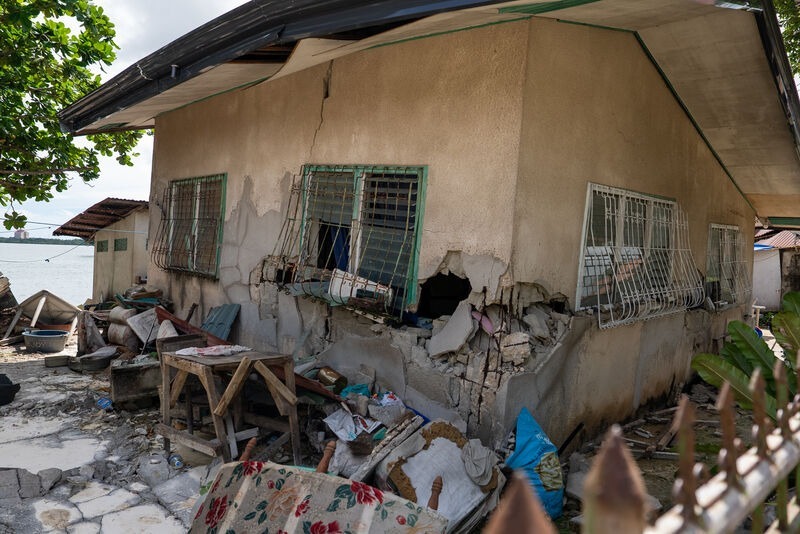
The outside of Rochen's home.
Hide

“It was getting stronger and stronger”

The shaking began late at night.

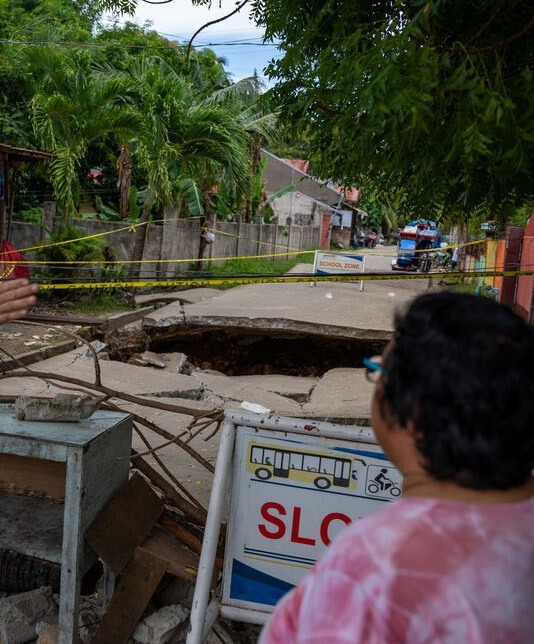
“It was exactly 10pm,” Rochen recalls. “It started light, then it was getting stronger and stronger. When we got out of the house, the road was cracking.”

Nearby, a deep well overflowed with mud, sending water through homes.

“There was a deep well near my sister’s house, it overflowed with mud. Some of my neighbours too, their houses split and there is water with mud coming from the house, the water was up to our waist.”

With the danger of rising water, cracking roads and crumbling houses, people made the decision to find safe ground. “There were also blackouts, for around 5 seconds, it’s totally black so we could not see anything. Our urge was to climb to the high area, where there is an open space.” Rochen points to a store where we are sitting. “The owner of this store had solar lights, he lit the road so the people who were passing could see.”

“We stayed there for almost three nights without proper sleep, because there was an aftershock every minute.”

Icon Info
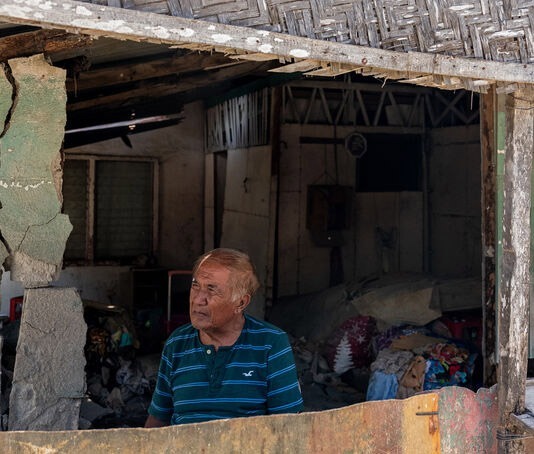
Rochen in her destroyed home.
Hide

Living with damage and uncertainty

Rochen’s house was totally destroyed, leaving it completely unsuitable and unsafe.

“There is a big crack. The flooring is split. When there is high tide, it’s like we’re on a boat.”

Her family is now scattered between places where they feel safe. She worries about her uncle, who refuses to leave the damaged house. “We are staying away, but my uncle did not want to leave the house. So, we send him some food, breakfast, lunch, dinner and some snacks.”

She describes how everyday life feels different now.

“Before, I wasn’t afraid to sleep. Now I hardly sleep because I keep feeling movement.”  “After the earthquake our lives, our dreams, are destroyed.”

Surviving the earthquake was only the beginning. Like many people across northern Cebu, the days that followed were intense. Coping with disruption, anxiety, and the challenge of finding a safe place to sleep.

Icon Info
Rochen's family member in their home.
Hide

“We have to think and plan”

Even with so much uncertainty, Rochen remains determined.

“Every night when I go home, the reality sinks in. We have to forget, we don’t have to be emotional, we have to think and plan.”

“My hope is to re-build the house for my family and someday we can go back to where we had our home. That was the home of our grandparents, so we would love to go back.”

Her optimism, even after losing so much, reflects the strength of communities across northern Cebu. Families continue to adapt, support one another, and take steps toward stability after an emergency that changed everything in minutes.

ShelterBox’s support across northern Cebu

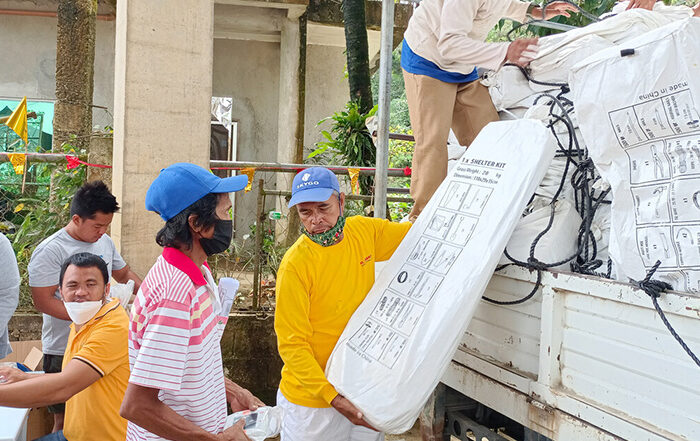
We have now completed distributions of emergency shelter and essential items to thousands of families in San Remegio, Bogo City, and Tabogon. Working with local communities, local authorities, and Rotary partners, aid reached people in both rural villages and more urban centres.

Because every community faces different barriers after a disaster, we prepared flexible shelter packages.

Many people we supported were elderly, caring for young children, or living with disabilities – so items were tailored to help families protect themselves, stay dry, and regain stability.

Supporting people with transitional shelters

Some families were not permitted to return to their original land because it lies on a fault line. Many are fishers or rely on nearby coastal infrastructure for their income, so staying in the area is vital.

For those with safe access to land, ShelterBox provided:

  • corrugated iron sheets
  • hurricane strapping
  • cash assistance to help hire skilled labour

These materials help families build safer, transitional shelters. They can stay near their work, so they can keep fishing, mending nets, and earning money while they recover.

With distributions finished, the team will now monitor and evaluate the response by revisiting the families who received support.

Icon Info
A destroyed road by Rochen's home.
Hide

How you can help 

Families urgently need safe shelter and essential household items after disasters like the Cebu earthquake.  

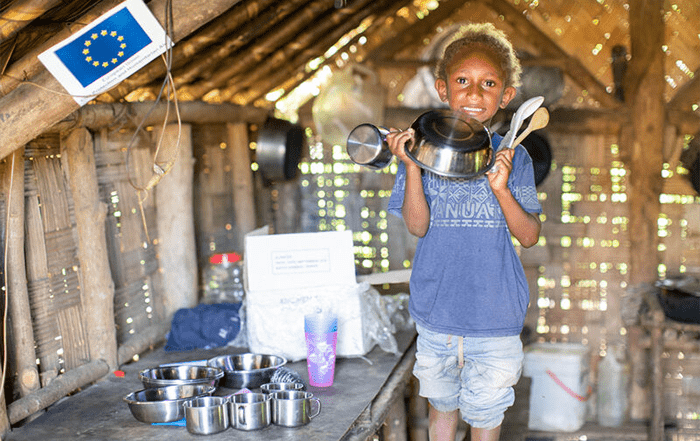
Your support today can help provide tarpaulins, rope, kitchen sets, solar lights, blankets, sleeping mats, and mosquito nets – practical tools families use every single day as they face hardship far from home. 

Donate a Global Gift