Ethiopia crisis explained
Conflict, climate change, and economic instability have left over 21 million people in need of humanitarian aid – more than half are women and girls.
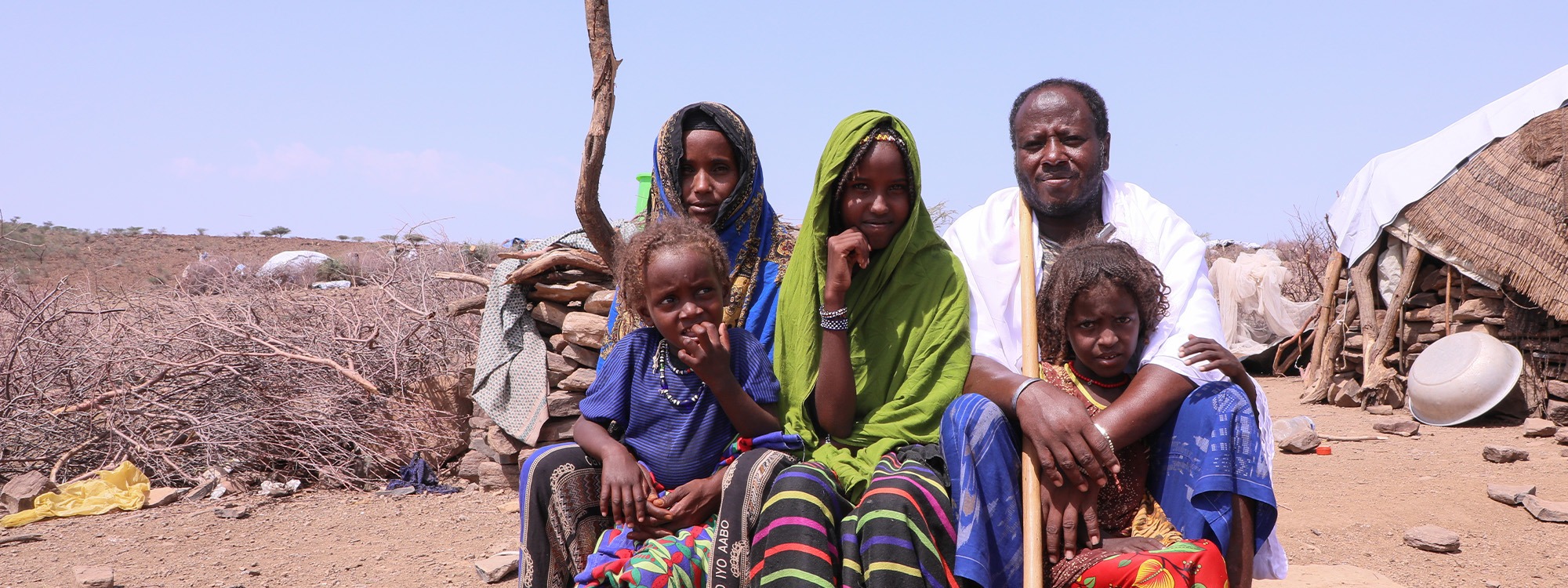
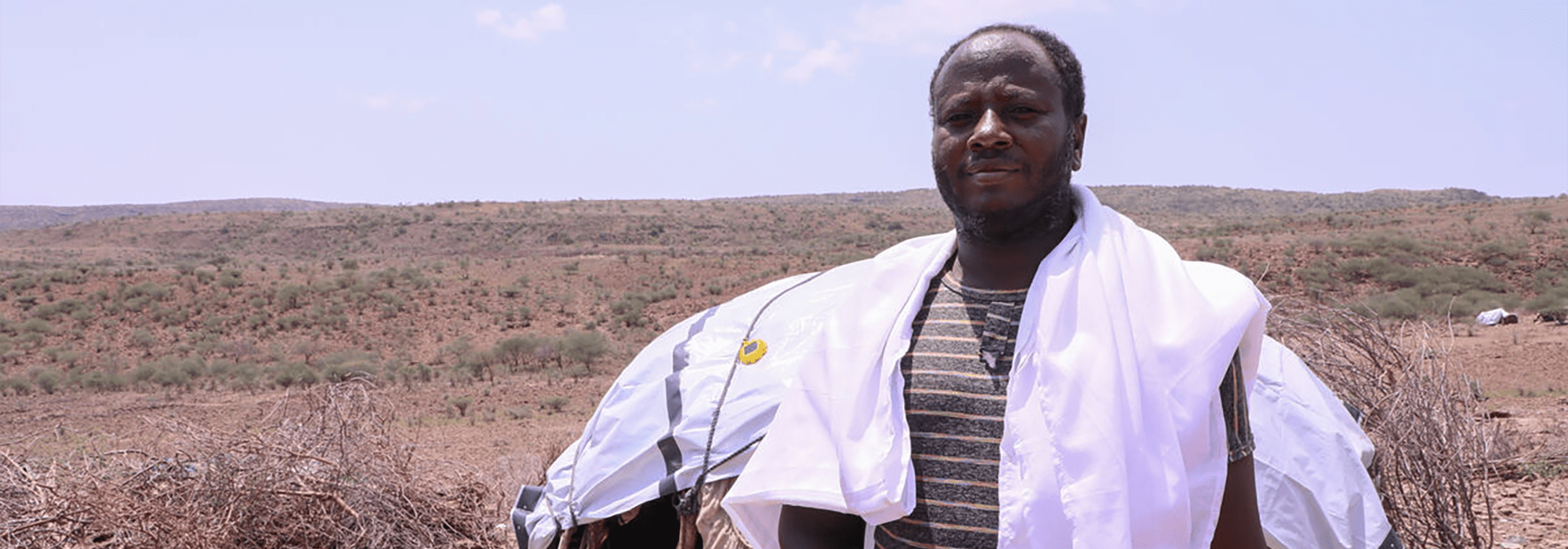
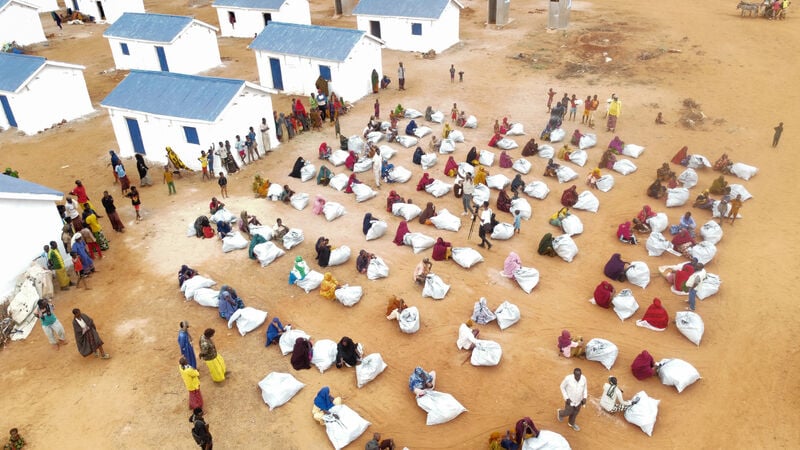
Kadir has been supported as part of our sixth project in Ethiopia which has helped him, and 7,000 households displaced by climate aggravated drought and conflicts with emergency shelter and household items.
Each family has received a shelter kit package that contains; tarpaulin, rope, sleeping mat, mosquito net, high thermal blanket/bed sheet, kitchen set, wash basin, jug, solar light, jerry can and NFI Bag.
We are continually improving to tailor our support to meet the needs of the most vulnerable populations effectively. In this project, we provided Kadir, and many other households with disabilities, with a more tailored package of aid, including mattresses instead of sleeping mats to provide more comfort.
Some households also received cash assistance to cover the cost of labour and local materials needed to construct the shelters.
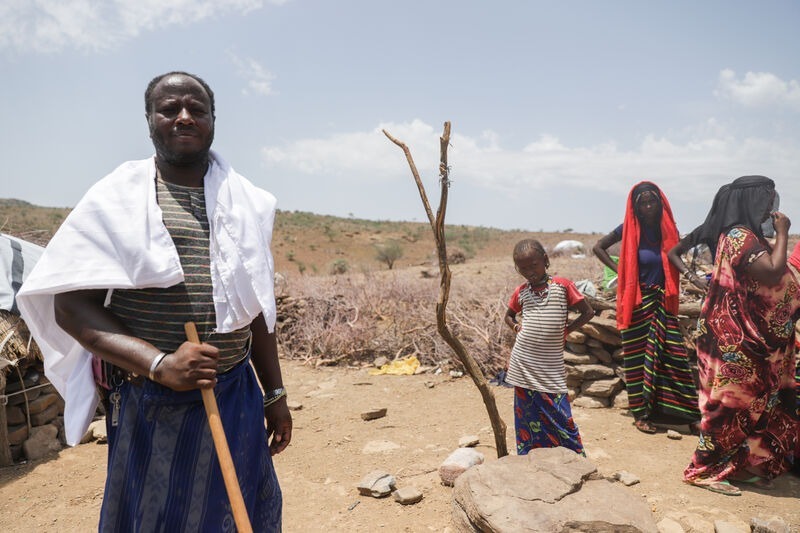

“My name is Kadir. I am 41 years old. I am a father to five kids. Three girls and two boys.”
Kadir and his family live in a very remote settlement in the Afar region of Ethiopia. This location is over a two-hour drive away from the main road and local amenities (local market, shops, etc). As the community here do not have cars, this is a very remote place which comes with extreme challenges for the nomadic farming community.
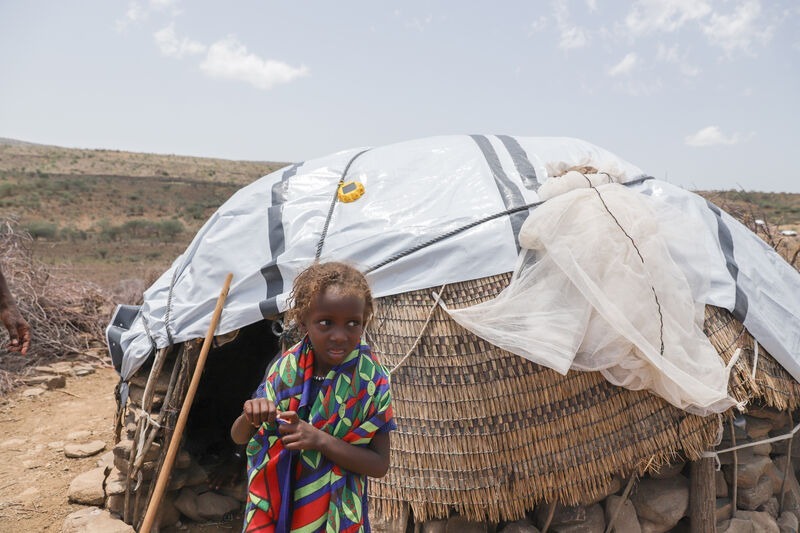
Kadir and his family have been displaced several times over the years. He told us:
Previously, we left our place of origin due to conflict.
Intercommunal violence is common in the Afar region. As the climate crisis is causing a lack of water and resources across the land, nomadic farmers and forced to move around to find more fertile land for their animals. If one community encroaches onto another’s patch of land, this can cause violent conflicts between farmers.
Kadir continues, “we were lacking water there, so we came here because they have access to water from a water truck.”
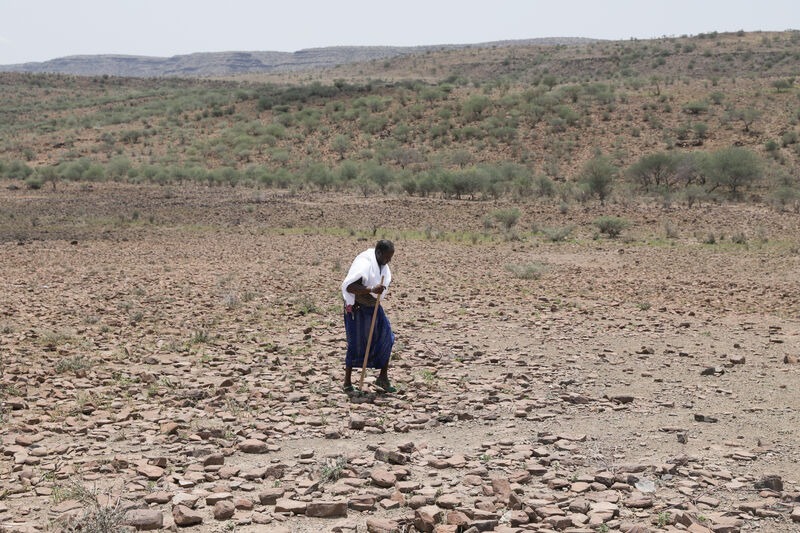
Kadir reflects,
“Our life was better before; we had a proper house and land that provided grass for our livestock. I had five cows, a camel, and more than twenty goats. I lived in a traditional house, but we left because it was damaged by sunlight.
“I lost most of my livestock and came here with some of my goats before becoming empty-handed. I felt broken and worried about providing for my family, but support has given me hope.”
Despite fleeing in search of greener land, Kadir and his family were unable to escape the effects of the climate crisis,
“We have been displaced twice before, and this is the third time. After we arrived here, we faced harsh weather with intense sun and heavy rain, it was horrifying.
“Previously, the land was suitable for livestock and we had regular rainfall. Now, the situation has changed and there has been no rain during the rainy season.”
The changing climate causes extreme problems for farmers like Kadir,
“We tend to our goats and occasionally visit the market to sell them and purchase supplies for the family.
“As pastoralists, we have been significantly impacted by the drought, which has drastically reduced our livestock numbers and made movement increasingly difficult.”
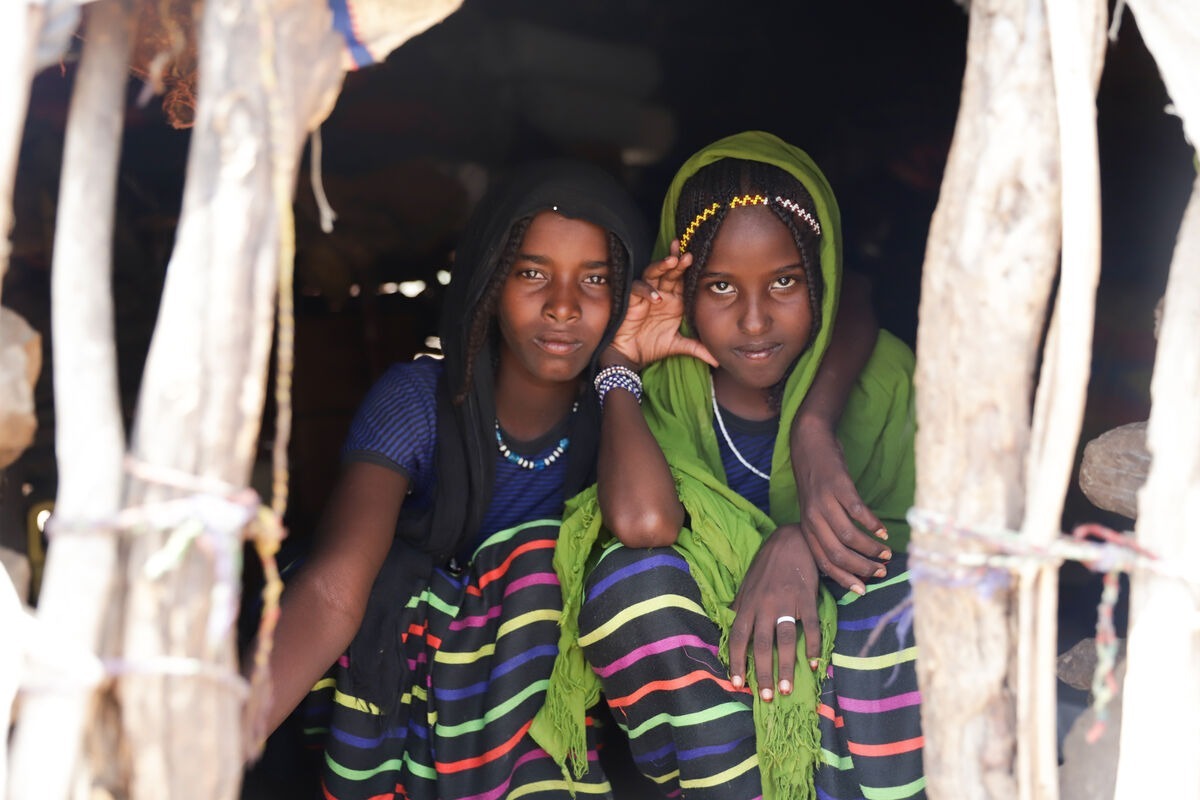
As well as facing farming challenges, Kadir has also experienced illness leading to long-term problems with his health. He explains,
“I experienced illness that began in my back and subsequently caused pain in my leg. This condition persisted for a year, resulting in disability in one of my legs. I am unable to undertake continuous journeys due to my disability. I must take breaks during my travels to manage my condition that persists into the night.”
Living in such a remote location means Kadir often relies on the help of his fellow community, “while others typically take two to three days to reach here, I require five days due to my condition. The community helps me by bringing flour from the market, by selling my goats.”
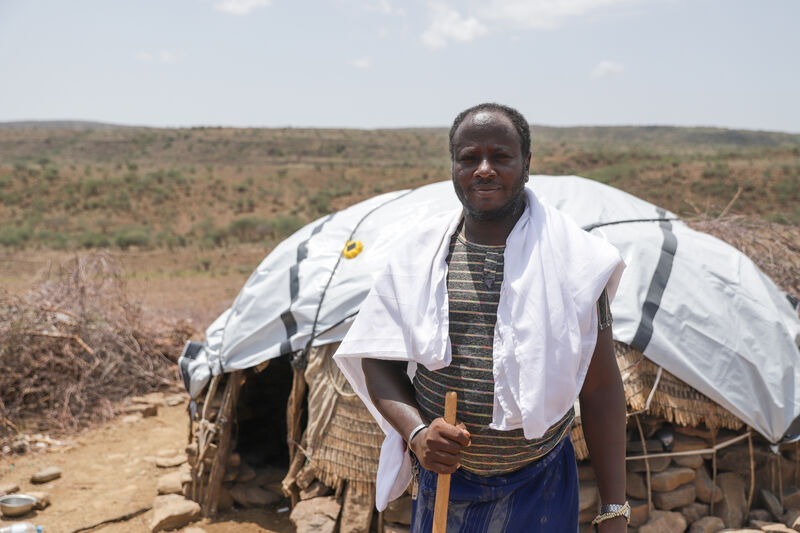
As we are continuously aiming to improve our support for the most vulnerable people, in project six we created a tailored disability and inclusion aid package. This meant that Kadir received a mattress for extra comfort in his new home and received two smaller jerry cans (instead of one large) so it is easier to carry.
Kadir also received shelter support, including tarpaulins, tools, and a series of household items.
Kadir explains,
“I am truly grateful for the support, especially for the tarpaulin shelter. It protects us from heavy rain, even though it can become hot during sunlight. The solar lamp and the plastic sheet are the aspects of the support that I appreciate the most.
“I am also pleased with the two smaller jerrycans, which are more useful than one large jerrycan as it is far easier to carry for my children and I. Before receiving support, I slept on the hard floor, which worsened my back problems. Sleeping on a mattress has significantly improved my condition.”
Donate todayWe ended the interview by asking Kadir if he believed the world knew about the severe droughts which are happening in his home region of Afar, Ethiopia, and what he would like to share with those who might be unaware. He responded,
“People need to see the area in person to understand its problem. I’ll tell them the current issues when I meet them. People talk about the problems they have, the possible ways to solve them, and exchange thoughts whenever they see each other in-person.”
He continues: “The lack of rain has left no food for animals. Unfortunately, we cannot bring food home from market unless we sell the livestock. We don’t farm here [because] the land is not good for farming and water is scarce.”
“It requires seven or eight people to fetch water from the bore hole. The water source is also low on water, and we need water to farm and feed our animals. We spend the whole day from dawn to dusk getting water for the livestock. Watering only 10 goats require 2 – 3 hours because of the bore hole’s length, one challenge is the lack of water access, and another is drought.”
“During drought, there is no food for animals and then they die. Raising cattle requires having livestock foods, otherwise it is impossible. As pastoralists, we depend on our livestock for food.
“When there is not enough food, we must sell our livestock to buy food for our families. But sometimes it is not enough to feed everyone, and we have no market nearby. These are the issues and situation we face. We appreciate everyone’s donations and welcome visits.”
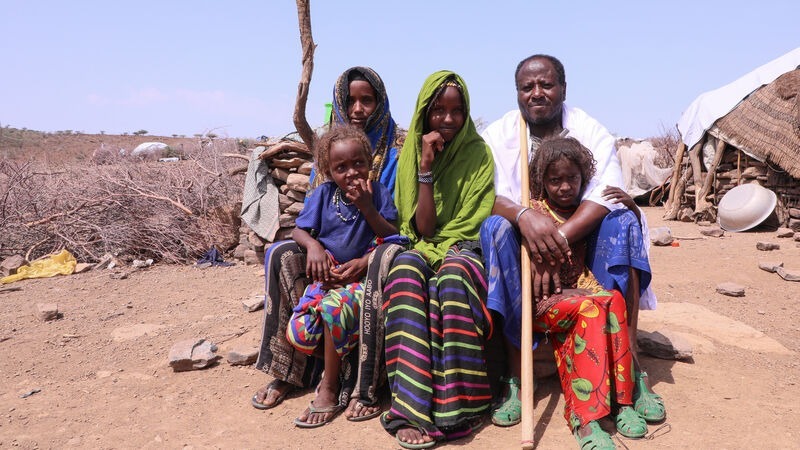
Kadir concluded by saying,
“ShelterBox has provided shelter to shield us from the sun’s heat, kitchen set for preparing food and water, and solar for illuminating the night and mattress for sleeping. We are very grateful for ShelterBox support and for their visit with all these materials.”
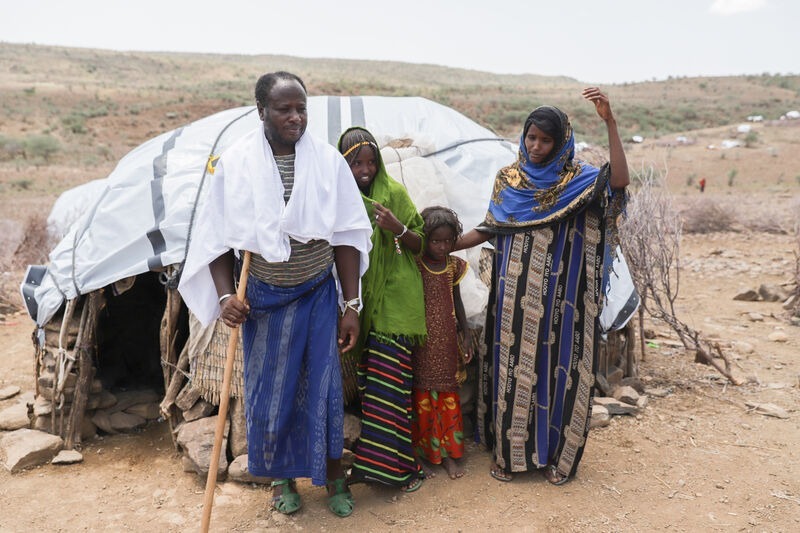
This End of Year, give a gift that goes beyond the ordinary.
ShelterBox’s global gifts offer a meaningful way to support families displaced by disaster. Whether it’s a blanket to keep warm, a solar light to brighten dark nights, or a full shelter kit, your gift helps people like Kadir rebuild their lives with dignity and hope.
Each gift comes with a certificate you can share with loved ones, making it a thoughtful present that truly makes a difference.
Buy a global gift