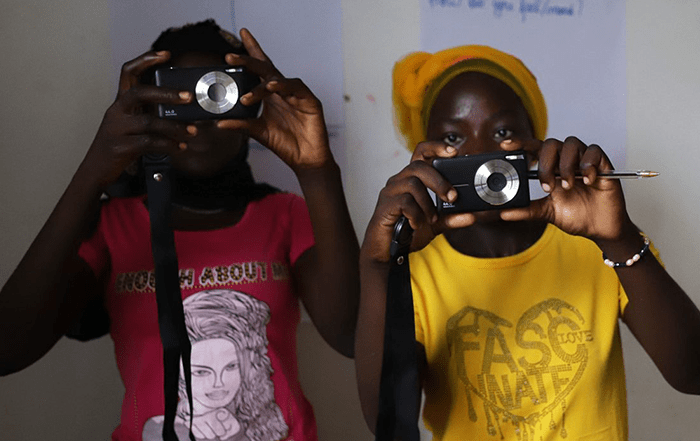
Cameroon storytelling project
Learn more about how we co-created a campaign with members of the Minawao Refugee Camp community in Cameroon

In Cameroon, people are fleeing conflict and being moved again by climate related disasters.
The Lake Chad Basin, which includes parts of Cameroon, Nigeria, Chad, and Niger, is facing a complex crisis. It’s not just one problem, but a combination of conflict, poverty, and climate change that’s making life extremely hard for millions of people.
Since 2009, when the armed group Boko Haram began fighting the government in Nigeria, violence has spread across borders into neighbouring countries like Cameroon. More than 2 million people have been forced to leave their homes from armed attacks, often carrying only what they can, crossing into areas already struggling with long droughts and flash floods.
At the end of 2024, the Far North region was affected by the worst flooding in decades. It affected hundreds of thousands of people.
Minawao camp in the Far North of Cameroon was opened in 2013 for refugees fleeing violence in Nigeria. Built for 35,000 people, today more than 75,000 people live there with many more living just outside the camp. Some have been
there for more than eight years.
Over three million people urgently need humanitarian support. But the crisis is chronically underfunded, making it harder to deliver the support that’s needed.
Donate Today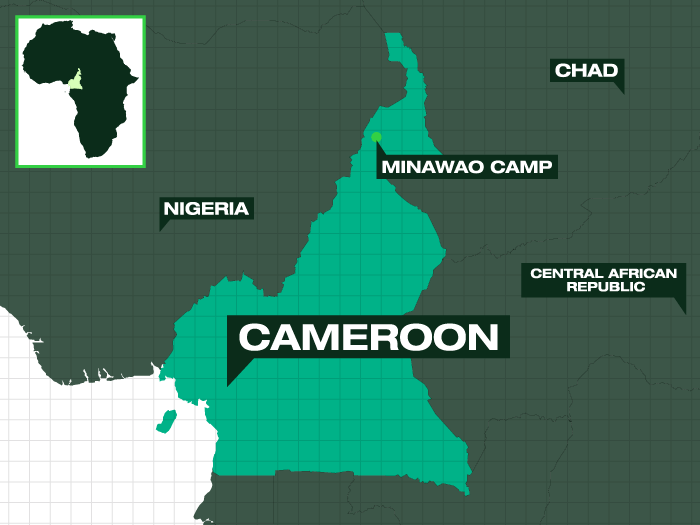
Cameroon shares borders with six countries. It is bordered by Nigeria, Chad, the Central African Republic, Equatorial Guinea, Gabon and the Republic of Congo.
Minawao Camp lies in the extreme north of Cameroon, close to the Nigerian border.
Cameroon is an incredibly diverse place, with over 200 different languages and one of the highest literacy rates in Africa. But when Boko Haram led an insurgency in Nigeria in 2009, Cameroon was affected as violence and displacement spread across the border.
Today the crisis has become more complex, with extreme poverty, underdevelopment and climate change adding to the violence that has forced millions of people from their homes. Millions are in extreme hardship and dependent on humanitarian aid to survive.
The Lake Chad Basin – which includes parts of Cameroon, Nigeria, Chad, and Niger – is facing a complex crisis. It’s not just one problem, but a combination of conflict, poverty, and climate change. This is making life extremely hard for millions of people.
In 2009 the armed group Boko Haram began fighting the government in Nigeria. Violence has since spread across borders into neighbouring countries like Cameroon.
More than two million people have been forced to flee their homes due to armed attacks. People often only carry what they can, crossing into areas already struggling with long droughts and flash floods.
Minawao Camp in the Far North of Cameroon was opened in 2013 for refugees fleeing violence in Nigeria. Built for 35,000 people, today more than 75,000 people live there, with many more living just outside the camp. Some have been there for more than eight years.
Over three million people urgently need humanitarian support. Yet the crisis is chronically underfunded, making it harder to deliver the support that’s needed.
At the end of 2024, the Far North region was affected by the worst flooding in decades.
Support people affected by crisis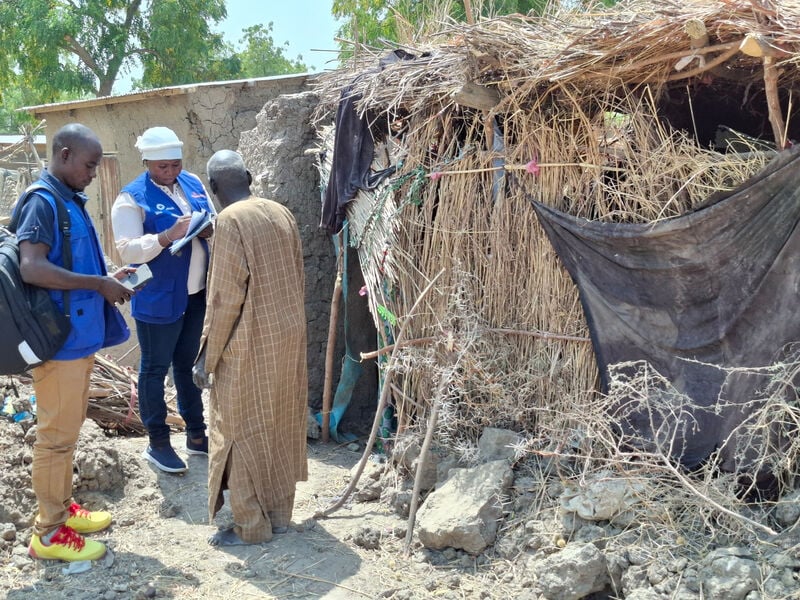

In Cameroon, many people are displaced because of a powerful mix of conflict and climate crises. These two crises are happening at the same time, making life harder. People are fleeing violence in Nigeria only to be displaced again by extreme weather.
Long droughts are drying up farmland, making it very difficult to grow food. When the rain does come, it often brings floods that wash away homes, roads, and crops. The Far North was affected by the worst flooding the region had seen in decades at the end of 2024, affecting hundreds of thousands of people.
Lake Chad, once a vital source of water and food, is shrinking. This makes it harder for people to fish, farm, or raise animals. People are losing their livelihoods. When there’s not enough food, water, or farming land, tensions rise – sometimes leading to more conflict.
People are being displaced again and again, with no stable place to call home. More than two million people have been forced to leave their homes. Children are especially at risk from exploitation. This includes being taken by armed groups as child soldiers or young brides.
The link between climate and conflict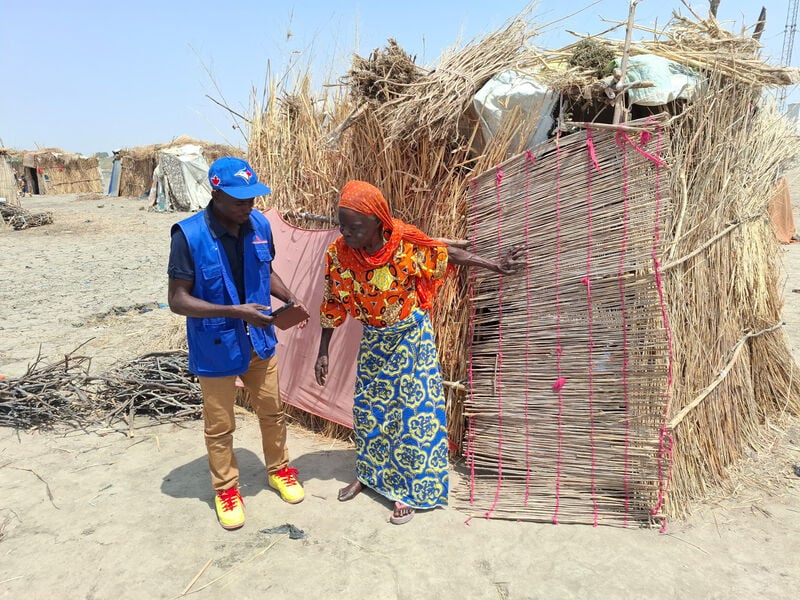
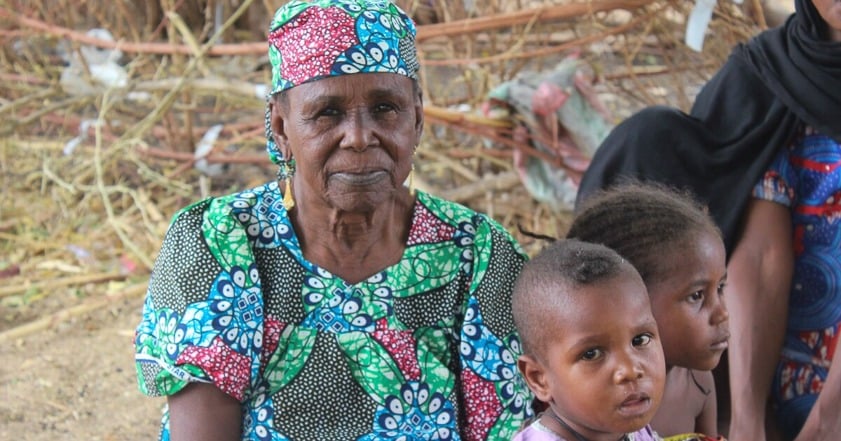
Minawao camp is located 40 miles east of the Nigerian border. Since 2013, the number of refugees living here has doubled. Nearly 60% of the total refugee population in the far north are living in Minawao camp. Official statistics suggest around 75,000 refugees are living at the camp, but it’s expected that number is much higher. People have come here from Nigeria, to escape the jihadist terrorist organization, Boko Haram.
Although people may have survived extremist attacks, people have endured profound losses—their loved ones have been killed, their homes reduced to ashes, and their means of livelihood destroyed. Most people here have been living in displacement camps for between three – eight years. Kidnappings, extreme flooding and violence within Cameroon is also very common.
Global aid cuts have been making people’s lives harder in the camp, with little food availability, limited access to shelters and rising tensions within the area.
We’ve supported over 250,000 people in and around Minawao refugee camp, with shelter and emergency aid. We are one of the main providers of shelter in the Far North region of Cameroon.
We began with tents and household items in 2015, later providing tarpaulins and rope so families could repair their shelters.
Working with our new partner, Public Concern, we are providing a range of emergency shelters and durable shelters.
Newly displaced people, both within Minawao Camp and outside the camp, are being supported with emergency tents and emergency shelters. We’ve also provided household items like mosquito nets, sleeping mats, soap and kitchen sets.
People who have been displaced for longer need different support as they look to reconstruct their shelters into more durable structures. To support them with this, we are providing Shelter Packages with a range of construction materials including tarpaulin, wood, nails and cement.
We’re also supplying Community Tool Kits which include reusable items like hammers, nail pulls and brick moulds. These are shared between households. These items can improve both the physical and emotional wellbeing of families who have already been through so much.
We’re working with Public Concern to make shelters in Cameroon’s Far North more resilient to extreme weather.
This project will support displaced families with emergency shelter, shelter repairs, essential items, and a small number of mudbrick shelters.
We have implemented small but important changes to the design of the shelters to improve living conditions. This includes better ventilation and ways to reduce temperature inside shelters, so families can stay cooler during the heat and more comfortable overall. To reduce costs and our carbon footprint, we’re aiming to source materials locally wherever possible.
Support our workWe’re working with Public Concern to make shelters in Cameroon’s Far North more resilient to extreme weather. We’re planning small but important changes to the design of the shelters. This will improve living conditions. Adding better ventilation and ways to reduce temperature inside shelters means families can stay cooler during the heat.
After the severe floods in 2024, we also helped build local flood defences using empty sacks and supplied tools for the community to use. This was to protect newly built shelters and host communities.
We’re now preparing to respond faster when future floods hit. Together with Public Concern, we’re pre-positioning emergency supplies.
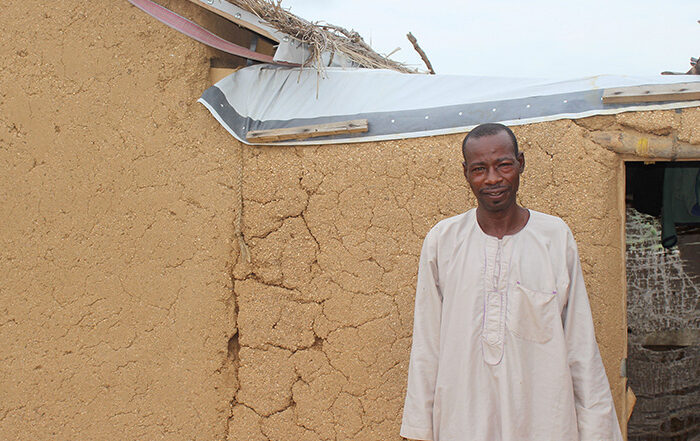
We’ve had feedback that makeshift shelters and emergency shelters are degrading quickly due to adverse weather conditions. That’s why we’re working to improve the quality and durability of the shelters we provide, so they last longer and offer better protection.
One way we may do this is by extending the eaves (the part of a roof that meets or overhangs the walls of a building). This will help protect shelters from water damage during heavy rains.
To reduce costs and our carbon footprint, we’re aiming to source materials locally wherever possible.
Donate today – you can help us bring hope and relief to those who need it most. Every donation counts. Giving helps restore dignity, safety and hope to those who have lost everything.
You can also stay informed, and share on social media, to raise awareness about the crisis people are facing in Cameroon.
Donate Now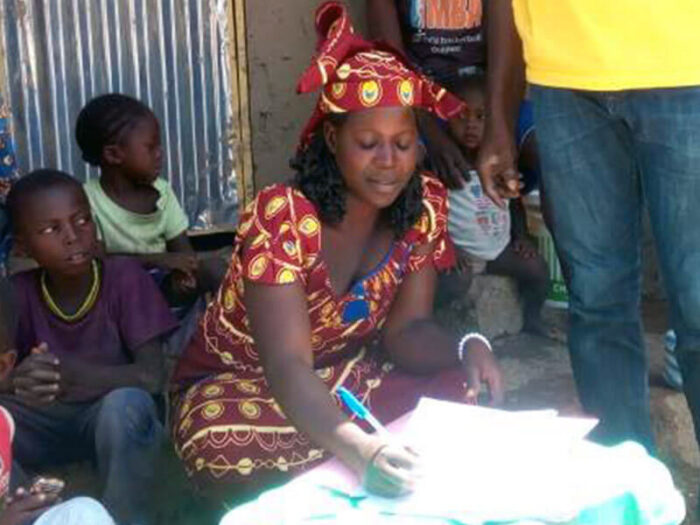
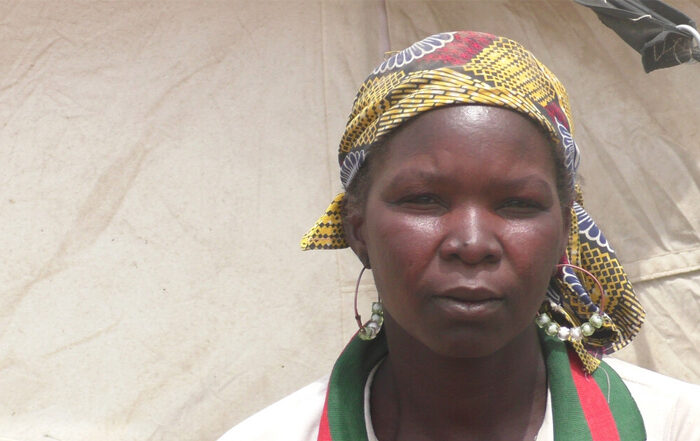
“My husband and I were at home entertaining the children, when suddenly we heard gunshots and people started running everywhere. My husband told us to go with a neighbour, then people started quickly leaving the village, especially the women and children, but I could not see him.”
“I was afraid, and the children did not stop crying as we ran. I just followed the others without knowing where we were going.”
“That was the last time I saw my husband.”
“My home makes me feel something that I cannot explain. In my shelter I can recover in my own privacy, and I have the feeling of security for all of us. My children also recovered some peace and freedom. They can play and sleep well whenever they want.”

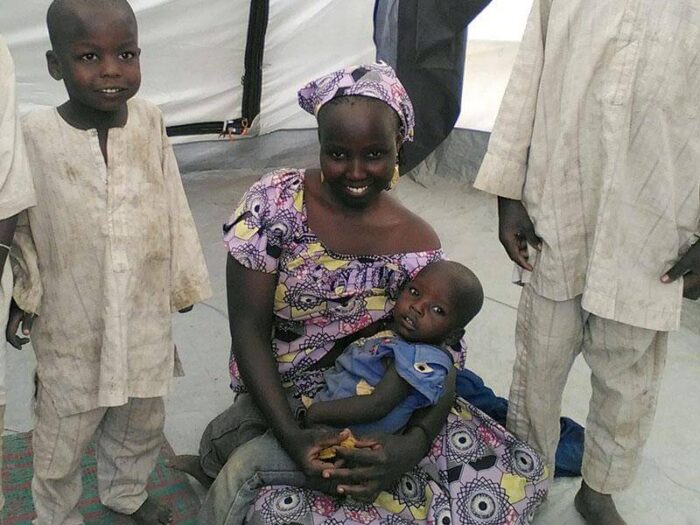
25-year-old Modu is originally from Nigeria. She now lives with her four children in Minawao Camp.
When Boko Haram destroyed her village, Modu fled with her neighbours. In the chaos, she lost her husband and hasn’t seen him since. She still lives in the hope that she will one day see him again.
Weeks after fleeing their home, Modu and her children eventually made it to Minawo Camp. Their first days inside the collective centre were not easy – Modu couldn’t sleep at night and they were living in incredibly overcrowded conditions.
Modu received a ShelterBox tent, as well as a kitchen set, mosquito nets and other essential items.
“Life has become so much better. I still miss my husband, but I feel highly relieved. We finally have some privacy in our own home.”