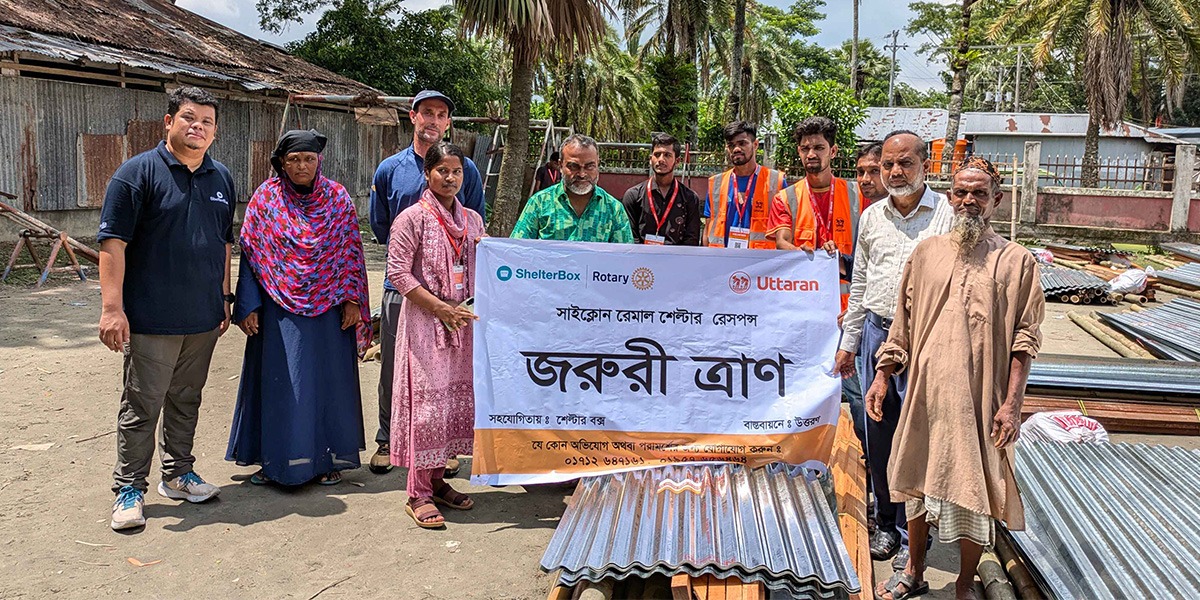
Across Bangladesh, climate-related disasters and urban fires continue to threaten homes, livelihoods, and entire communities. Through a strong partnership with local organization Uttaran, ShelterBox has been able to respond quickly, effectively, and sustainably, delivering not just emergency shelter, but long-term resilience.
ShelterBox and Uttaran first met in January 2024 on a preparedness visit to Dhaka. Since then, we have implemented three emergency shelter projects together, and Uttaran continues to play a critical role in ensuring responses are locally led and community driven. Already, our partnership is transforming recovery efforts across the country.
A Country on the Frontlines of Disaster
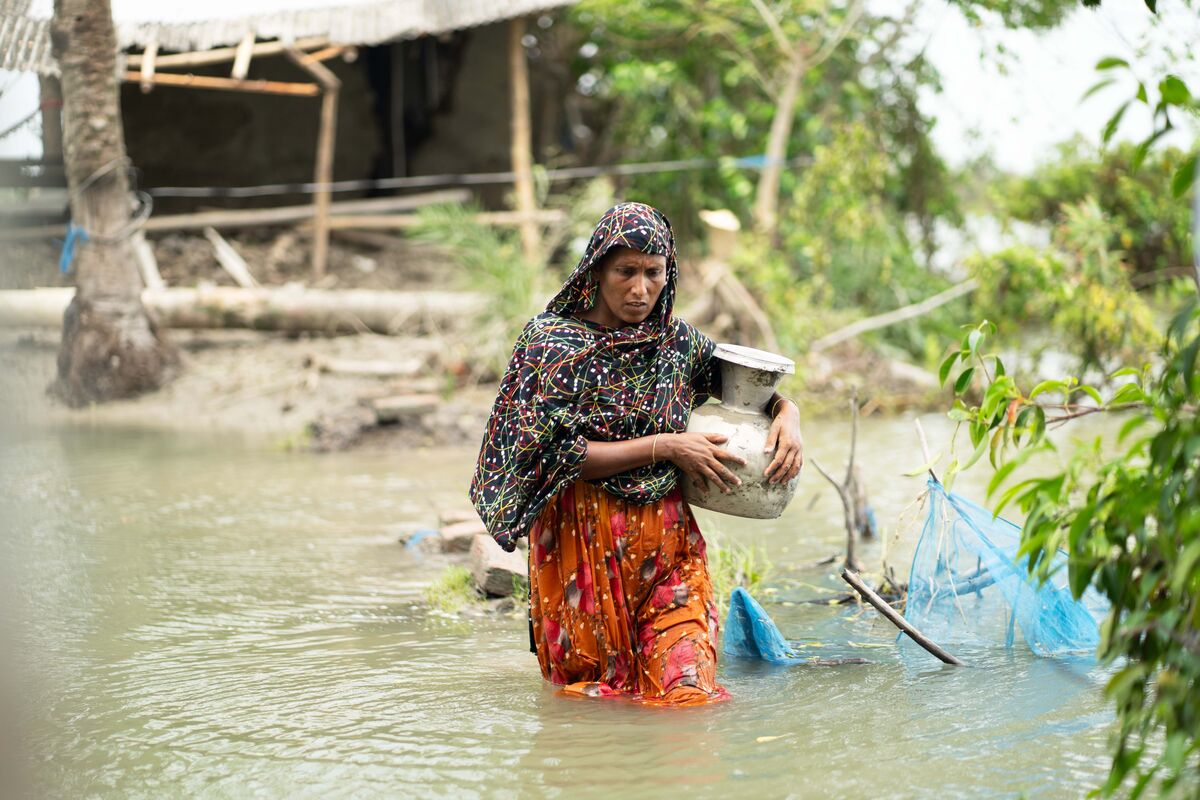
Bangladesh’s low-lying geography makes it especially vulnerable to flooding and cyclones. Millions of people are affected each year, often losing homes built from fragile materials such as bamboo, mud, and corrugated metal.
Recent major events include:
- Severe flooding in 2024 affecting over 5.8 million people, with more than 500,000 people displaced
- Cyclone Remal (2024), which destroyed or damaged around 170,000 homes
- Urban fires in Dhaka (2025–2026), leaving thousands of families homeless
What Aid Looks Like on the Ground
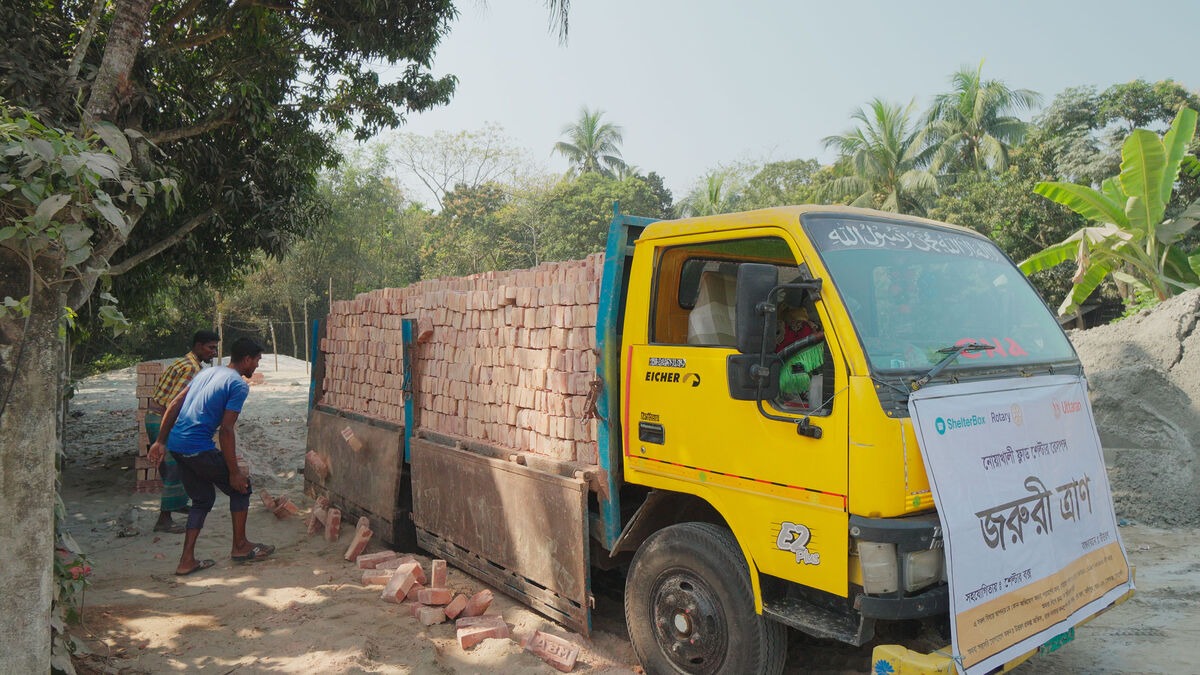
In each of these crises, ShelterBox and Uttaran have worked side by side to support affected communities. Together, we supported households with a needs-based package, such as:
- Materials to reinforce or rebuild homes, including bricks, bamboo, timber, and corrugated iron
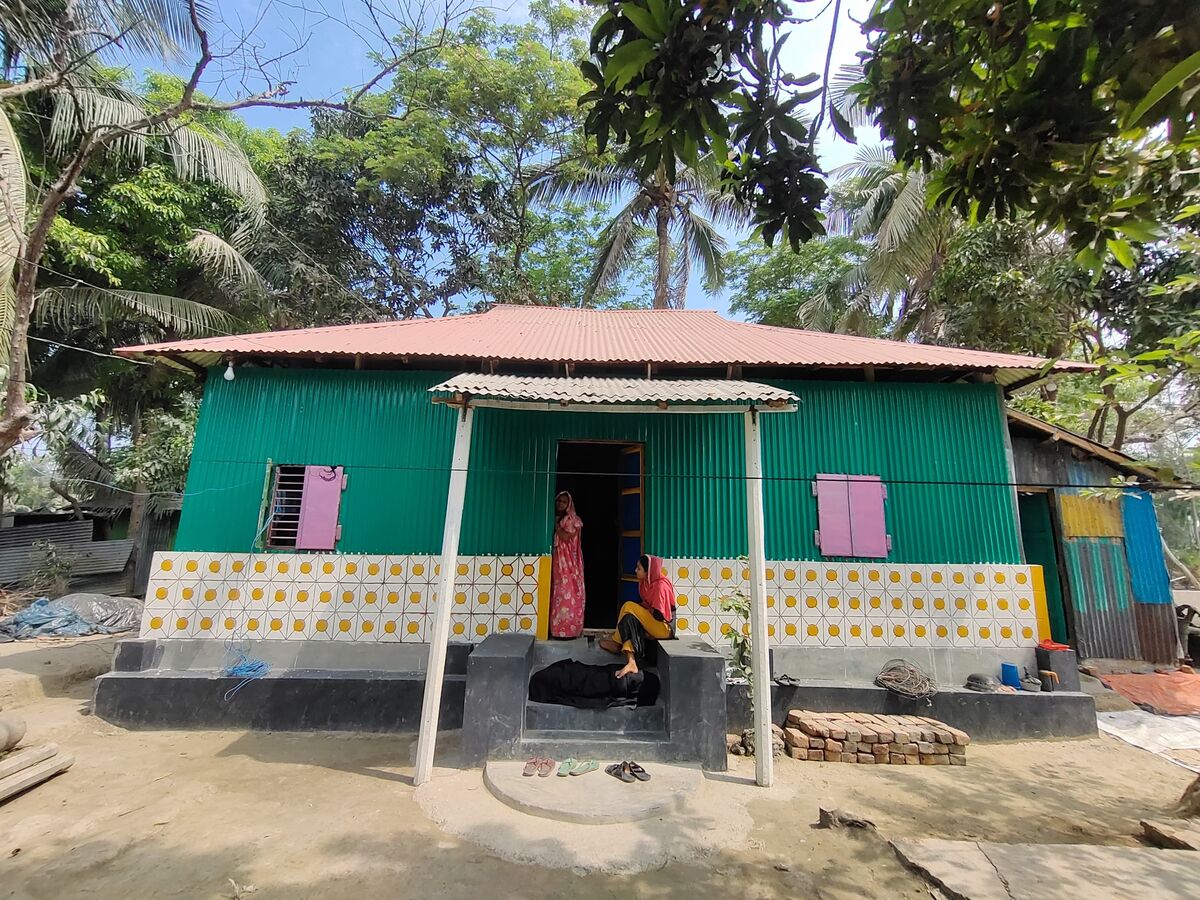
- Construction of raised plinth foundations to protect homes from future floodwaters
- Cash assistance to help families purchase materials and meet urgent needs
- Community-level fire safety awareness was also delivered as part of the Dhaka response.
The results were powerful:
100% of participants reported improved dignity and protection from the elements
Building Long-Term Resilience
What sets these responses apart is the focus beyond immediate relief.
Together, ShelterBox and Uttaran are promoting disaster-resilient housing design, training local builders and carpenters in climate-resilient construction, and empowering communities to lead their own recovery.
This approach helps break the cycle of rebuilding and ensures families are better protected against future disasters. As climate change continues to intensify disasters in Bangladesh, this collaboration remains essential – delivering not just shelter, but the ability to rebuild and recover stronger for the future.