
Every year on World Humanitarian Day, we pause to honour the extraordinary individuals who often risk their lives to support communities in times of crisis.
This year, we spotlight the security challenges faced by those delivering aid in some of the world’s most volatile environments. As the nature of global threats evolves, so too must the strategies and courage of those responding.
In this blog, Richard Nixon-Eckersall, ShelterBox UK’s Head of Security, shares his reflections. He discusses the risks, realities, and resilience that define humanitarian work today.
What security risks do humanitarians face when working in these environments?
“The latest figures for 2025, from the International NGO Safety Organisation (INSO) show that it’s getting more dangerous for aid workers in some places.
The level of risk depends on the country. Sometimes, people working to help others are attacked on purpose. Other times, they are caught up in incidents by accident because of the context they are working in.”
This includes local humanitarian staff, like our PARC colleagues in Gaza, who face daily risks not just at work, but in their own communities. Some have been killed while going about their day-to-day lives, while finding food for their families or during airstrikes whilst at home.
What message is important to share about the reality of working in high-risk environments?
“ShelterBox team members recognise the risks associated with our work. We work together to do our best to keep those risks as low as possible. Safety is the most important part of everything we do – both for the people we support – and our team.
Sadly, the reality of humanitarian work means we often face hazards and threats. These place our team members and our partners in potential danger. When this occurs, our experienced teams are able to fall back on training. They assess situations to make decisions to stay safe.”
We recognise that our national partners regularly face even greater risks. Unlike international staff, they live in high-risk areas. Many colleagues both live and work in communities directly affected by conflict or disaster, where security risk is part of daily life. Their courage, expertise and commitment are extraordinary.
What are some of the most frequent or emerging security threats faced by humanitarian workers globally?
“When supporting in places hit by earthquakes or floods, there are many, changing threats. But now, the safety situation is evolving. New threats from technology are becoming a big risk for aid workers, and they keep changing.
Risks like road accidents, kidnapping and getting sick remain. But now, teams also have to deal with things like cyber-attacks (including deep fakes), improvised explosives, and drones.”
This year alone, our local humanitarian partners have faced a range of serious threats, from being forced to flee alongside communities during insurgent attacks, to being caught in violent assaults while delivering aid, or even while at home.
As we mark World Humanitarian Day, Richard’s insights remind us that behind every aid delivery is a complex web of risk, planning and resilience.
At ShelterBox, we remain committed to prioritizing the safety of the communities we serve, our partners and team. This includes rigorous training for our teams, clear communication protocols, and tailored security processes informed by local context and experience.
Today, and every day, we honour all those who work alongside communities in crisis, often facing immense risks to deliver support. Their commitment deserves our continued solidarity and recognition.
Sign up to our Newsletters for ShelterBox updates.
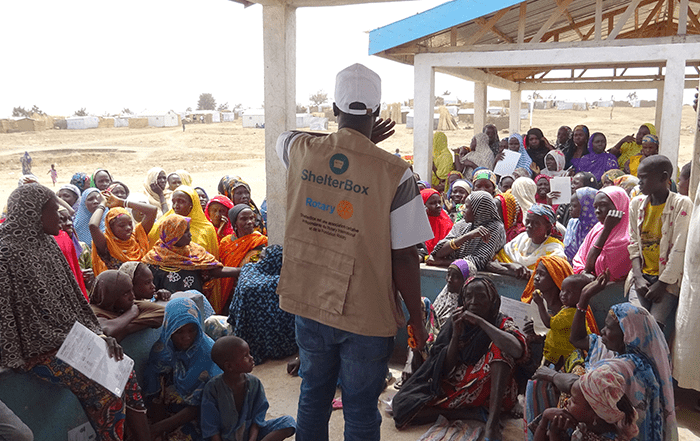
The heading image features the ShelterBox team and partners in Somalia during a deployment.


