In this blog, Claire Leeson, ShelterBox programme manager for Cameroon, shares what’s happening on the ground in Cameroon. She discusses how ShelterBox is adapting to extreme conditions, and why this work, often invisible to the wider world, matters so deeply.
You’re heading to Cameroon soon – what’s the situation on the ground?
Every disaster and conflict is different, so at ShelterBox we try to tailor our aid to each response, so people get the support that is appropriate for their context and circumstances.
The situation in Cameroon is difficult at the moment. ShelterBox works in the Far North of the country, which is an area that is currently affected by multiple crises.
If you look at a map of the Far North of Cameroon, which in French is called the Extreme Nord, it is a tiny triangle of land nestled in between Nigeria to the west, and Chad and Central African Republic in the east. This geography is a huge factor in why so much is happening there at the moment.
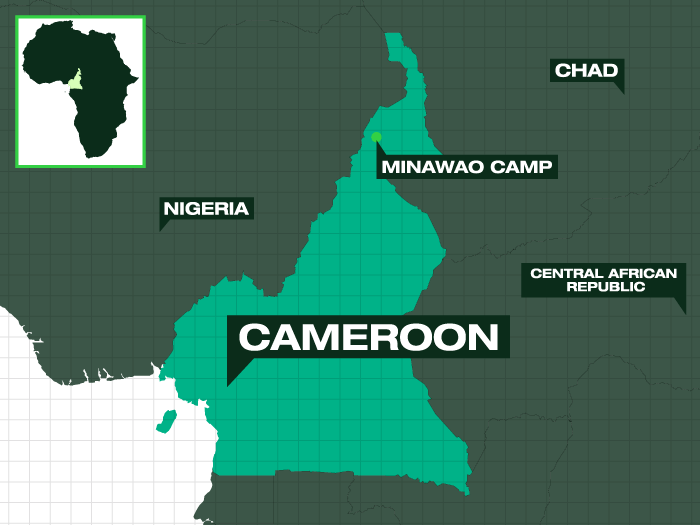
To the west, in Nigeria, there has been a long running conflict by organized armed groups, many of which are based along the border with Cameroon. Many refugees that are fleeing this conflict come across the border into Cameroon and are in dire need of assistance.
To the east of the Far North, in the Central African Republic, there has been a long lasting situation of intercommunal violence and armed conflict, which has resulted in many displaced people cross the border into Cameroon to find refuge, who are equally in dire need of assistance.
In addition, climate change is having a huge impact in the Far North. In recent years there have been repeated episodes of drought and flooding. In fact, in the summer of last year, the Far North experienced the worst flooding in decades, and over 350,000 people were affected or displaced.
This situation has led to increased competition over resources, such as land, food and water, and has resulted in further tension and conflict, leading to further displacement internally as well.
So, the situation in the Far North is complex and has been lasting for a long time now, over a decade or more. However, it must be said that things are particularly acute at the moment, due to the recent funding cuts made by major international donors, and this of course has meant that the amount of services provided has dramatically decreased.
Why is it important for you to visit in person and what do you want to achieve?
In Cameroon, we work with a local organisation called Public Concern and have built up a fantastic relationship with them. These trips are so important because time spent in person is invaluable to strengthening and deepening the partnership.
A key part of our trip will be to carry out visits to communities that are affected by the crises, and to speak with people who have been recently displaced, so that we can build a better understanding of what they are going through right now. This will help us design a more effective project that really meets the shelter needs of people who have been recently displaced.
I also think it’s important to go to be able to bear witness, and to see for ourselves what the situation is, so that we can communicate it to ShelterBox’s supporters, and anyone who is interested in our work – and in doing so raise the profile of what is happening there.
Why is Cameroon being called the world’s most neglected displacement crisis?
Yes, so this came from a report that was recently published by the Norwegian Refugee Council.
They describe a neglected displacement crisis as having three specific elements to it; these are, that there is a lack of political will to find a solution, there is a lack of media attention covering the crisis and ensuring people are aware of it, and finally there is a lack of international aid or assistance, meaning there is little financial support provided to meet the acute humanitarian needs.
Cameroon, very sadly, was ranked as the world’s most neglected crisis in 2024. The research carried out by the Norwegian Refugee Council shows that.
And sadly, media coverage given to the situation has been very limited – which is why we are so grateful for the opportunity to talk to you today about what is happening there.
Political engagement to resolve the crises is described as non-effective, meaning there is very little effective political activity seeking to address these issues.
The percentage of humanitarian funding received fell far short of what was required, the amount of funding received in 2024 was only 45% of what is required, meaning there remains a huge amount of unmet need.
This is a complex multifaceted crisis that is largely overlooked by the international community. The longevity of the crisis (and our response) means the context and the needs are continually changing. ShelterBox are the main provider of shelter in the Far North of Cameroon.
What are conditions like in Minawao refugee camp?
The situation is very challenging for the residents of Minawao refugee camp. The camp was established in 2013 to provide safety for the thousands of Nigerians who were fleeing violence from the organised armed group Boko Haram. This means that some of the residents of the camp will have been there for ten years or more, which is a difficult situation to be in.
The residents of Minawao face extreme poverty, underdevelopment and are suffering the effects of climate change, and most of the population relies on humanitarian aid to survive. Sadly, we hear that since the beginning of 2025, life-saving humanitarian assistance – such as food aid, medical assistance and shelter – have been even more limited than usual, primarily due to the funding cuts that have affected the whole humanitarian sector. So, the situation at the moment is particularly acute.
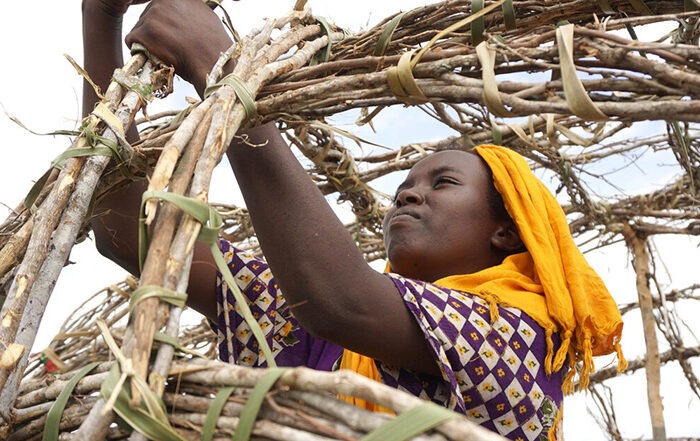
In terms of shelter, when families first arrive in Minawao camp they are provided with an emergency shelter, which is made primarily of tarpaulin and wood, and which although it is quite a basic structure, it provides a family with a private space in which they can regroup and hopefully start their recovery. Many people will have experienced significant trauma after losing their homes, their livelihoods, and fleeing terrifying violence, therefore this shelter is a significant step in their recovery.
However, as I’ve mentioned, due to the length of time that the crisis has been going on for, most families will likely be displaced for some time. These emergency shelters do degrade over time, meaning families will need to upgrade and reinforce over time, something which is difficult for many if they lack the resources to do so.
How is ShelterBox adapting to Cameroon’s extreme weather?
Overall, heavy rains and extreme heat are both issues that we are actively looking into ways to mitigate.
In Cameroon, it is currently the rainy season, and we are just about to start a new project. We are working with our partner to introduce things like longer eaves on shelters to allow water to run off away from the walls, protecting from water ingress. We have previously done this in places like Chad and Somalia, and it has been very effective.
We are also looking for ways to address the issue of extreme heat in Cameroon. We are hoping to be able to replicate some of the things we have done in other settings. Some examples of adaptations that we have made in other countries are:
- In Somalia, we have made design changes to emergency shelters such as adding extra windows on each face of the building to increase crossflow of air to reduce internal temperatures
- We have been building more durable mud brick shelters which are also more thermally stable
- We have also added extra bracing and are now using stronger timbers in emergency shelters to make shelters last longer and more resistant to heavy rains
- In Burkina Faso, we have recently completed a trial of shade netting that is placed over shelters to lessen internal heat gains. Temperatures have been measured over a multi-month period and these shade nets have been found to notably reduce temperatures inside the tent. We are really excited about this, and hope to be able to put this in place in other settings.
So for Cameroon, while we may not be able to introduce all of these modifications, we plan to work with our partner during our visit to identify which adaptations can be added.
What keeps you motivated to continue this work, especially in places so often overlooked?
For me personally, one of the things I love most about the work that we do at ShelterBox is having the opportunity to meet people from across the world and building connections with people who are living in such different contexts to ourselves.
I find it a huge privilege and honour to be able to travel to countries like Cameroon and Burkina Faso, to work with our partners there on projects which are so meaningful and have the potential to make such tangible differences in people’s lives.
Knowing the situation in Cameroon, and the sheer scale of the shelter needs, and knowing that we have an opportunity to do something to alleviate it, however small, is hugely motivating, and gives the work that we do a real sense of purpose.
How can people support ShelterBox or get involved in helping communities like those in Cameroon?
There are plenty of ways that people can support the work we do around the world. From sharing what we’re doing with friends, family and work colleagues, to fundraising, volunteering, and donating. It all makes the work we do possible.
It all helps us be ready to respond to the next disaster. We rely on donations to deliver the emergency shelter aid people need to begin rebuilding their lives after disaster.
We appreciate not everyone will be able to donate, but every donation, however small, can make a difference.
Closing reflections
The crises in Cameroon may be underreported, but they are not invisible. Thanks to ShelterBox’s local partners, donors, and supporters around the world, families displaced by conflict and climate change are receiving not only shelter – but dignity, safety, and support.
Claire’s return from the Far North brings renewed urgency and insight to ShelterBox’s mission. Her words remind us that compassion doesn’t always make the headlines, but it does make a difference.
Together, we can keep that difference going.
For more ShelterBox updates on programmes, news and key discussions in the movement, sign up to our Newsletters.
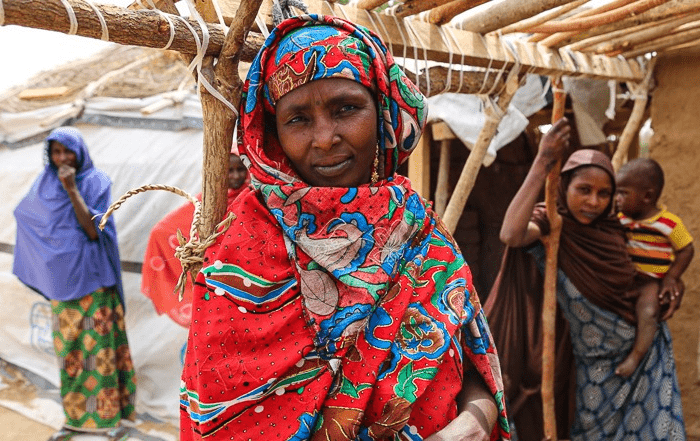
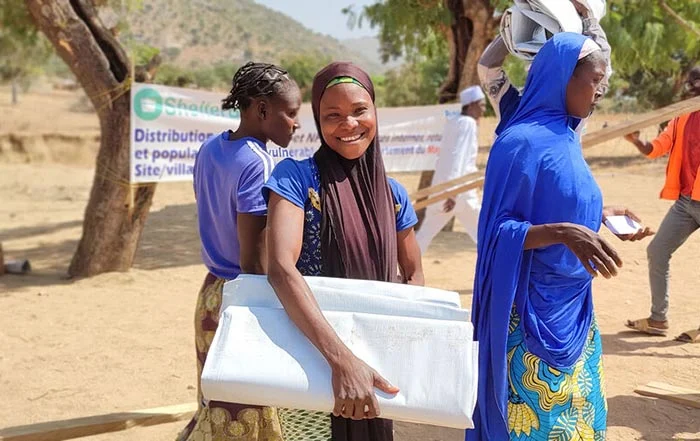
The heading image captures a woman holding emergency aid items during ShelterBox aid distributions in Cameroon.