
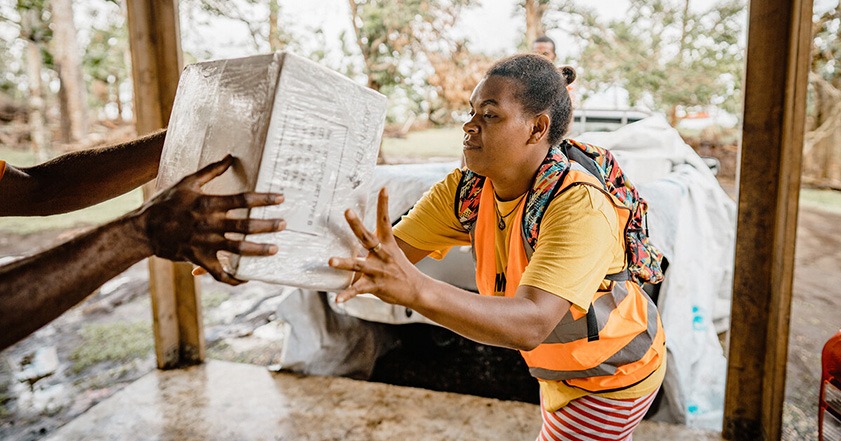
In the era of coronavirus, the challenges of transporting aid around the world are greater than ever. In this article from 2020, our Logistics Co-Lead Rachel Hall, explains how we get aid to disaster-affected communities.
1. Shipping boxes and aid items separately
At ShelterBox, we are committed to continual improvement. So, over the years our aid range has developed and evolved to provide better solutions for people. We now find that some of the items, like certain types of tents, no longer fit in the boxes. But that doesn’t mean we stop providing the very best items we possibly can. The box is still a central part of who we are – the most important bit is that we provide the emergency shelter items that people need to help them recover.From my logistics perspective, shipping boxes and stock separately rather than pre-packed has other huge advantages. An empty box with items separated will clear customs much more easily and takes up much less space in a shipping container. In fact, packed boxes take up more than 30% more space (in metres squared) than items packed separately. That means we can ship items in higher volumes at a lower cost, ultimately resulting in us being able to support more people.2. Prepostioning aid around the world
For ShelterBox, prepositioning is a crucial part of our supply chain. This is the term we use for storing aid items in strategic locations around the world.It helps to make the supply chain more efficient and makes it quicker and cheaper to move the aid to where it is needed when responding to a disaster. We currently have prepositioning locations in Europe, the Middle East, South America and Asia.Located on the Pacific Ring of Fire, the Philippines is one of the world’s most disaster-affected countries. Earthquakes, floods and volcanoes are common, and we’ve responded there more there than anywhere else. That’s why we created ShelterBox Operations Philippines – our only other operational office outside of Cornwall. We now store aid there too so we can respond to disaster events quickly, ensuring aid reaches the families who need it.3. Managing aid logistics
Our Logistics and Procurement team constantly monitor stock levels in each of our storage locations. After stock is dispatched to a response, we place orders to replenish the warehouse immediately.There are many considerations when it comes to prepositioning aid, including:- Manufacture times
- Transit times
- Frequency of stock use
- Space and container optimisation.


