Aid items
Discover more about the aid items that help people rebuild their lives after disaster
Nafissa stands outside her new semi-durable shelter, running her fingers over the solid bricks that now protect her and her children. For the first time in months, she feels a sense of security.
“We are the survivors,” she says. “Those who fled the war to find refuge in Chad.”
 Nafissa stands with her son outside her semi-durable shelter.
The war in Sudan took everything from Nafissa – her home, her safety, her loved ones.
One night, at 1 a.m., Nafissa gathered her four children and fled, walking for hours until they reached a small river to rest. From there, they kept moving, seeking safety in another village.
“We built small shelters to shield ourselves from the sun,” she remembers. “That’s when humanitarian workers arrived and brought us here, to Chad.”
Having been driven out of Sudan, Nafissa and her family endured the long journey to seek refuge in Chad.
For Nafissa, survival has come at a painful cost. Once a cook in Sudan, before the war she suffered severe burns in a gas fire, leaving her unable to work for months. As a single mother, left with no financial support, she had to find a way to keep her family afloat.
“My whole body is burned,” she says. “I have no way to provide for my children. I am both a father and a mother. Before, I was the one looking for food, trying to keep us alive. But when I became sick, even my family abandoned me.”
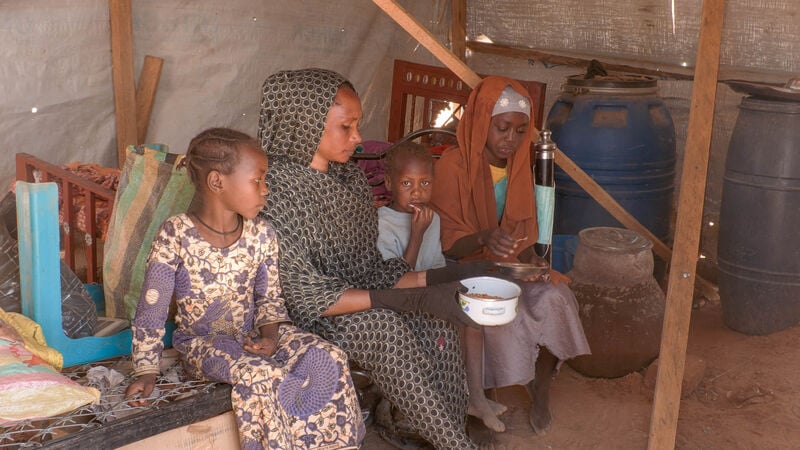
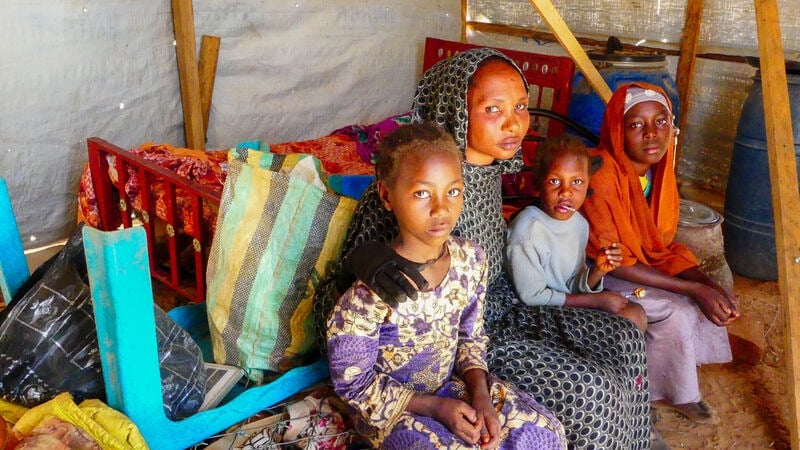
Safety in Chad is complicated. The camp is a place of refuge, yet there are still many dangers that affect people, especially for women and young children. “Here, as women, we face a lot of difficulties,” Nafissa explains.
“Some women have been attacked while searching for firewood or water. We have no choice – we must provide for our families, but every trip outside the camp carries risk.”
Violence against women seeking safety is common. Across the world, more than 60 million women and girls who are forcibly displaced, face high risks of gender-based violence.
Among the many challenges, menstruation became another difficult burden. Without income, Nafissa was unable to afford sanitary pads.
The lack of proper menstrual care made her vulnerable to infections and other health risks.
“Before ShelterBox and Help Tchad, I had no choice but to use cloth scraps, which were uncomfortable and unhygienic. Since receiving sanitary pads, my situation has changed. For the first time, I could manage my period safely, without fear of infections… During these months, I was able to save some money that I normally spent on sanitary pads.”
The aid provided by ShelterBox and our partners, Help Tchad – including soap, toothpaste, medicines, and sanitary products – gave Nafissa some relief.
Yet the completion of her new semi-durable shelter marked a true turning point. “Before [the semi-durable shelters were built], our tarpaulin [Nafissa’s pervious shelter], was torn. Thieves would steal food and kitchen utensils. The structure barely held together, and termites and insects would invade our space. During the rainy season, the roof collapsed.”
Now, with her brick shelter, Nafissa can live a little easier. “I am very happy. Before, I couldn’t leave my home because thieves could come at any time. Now I can go out, attend funerals, weddings – just live without constant fear.”
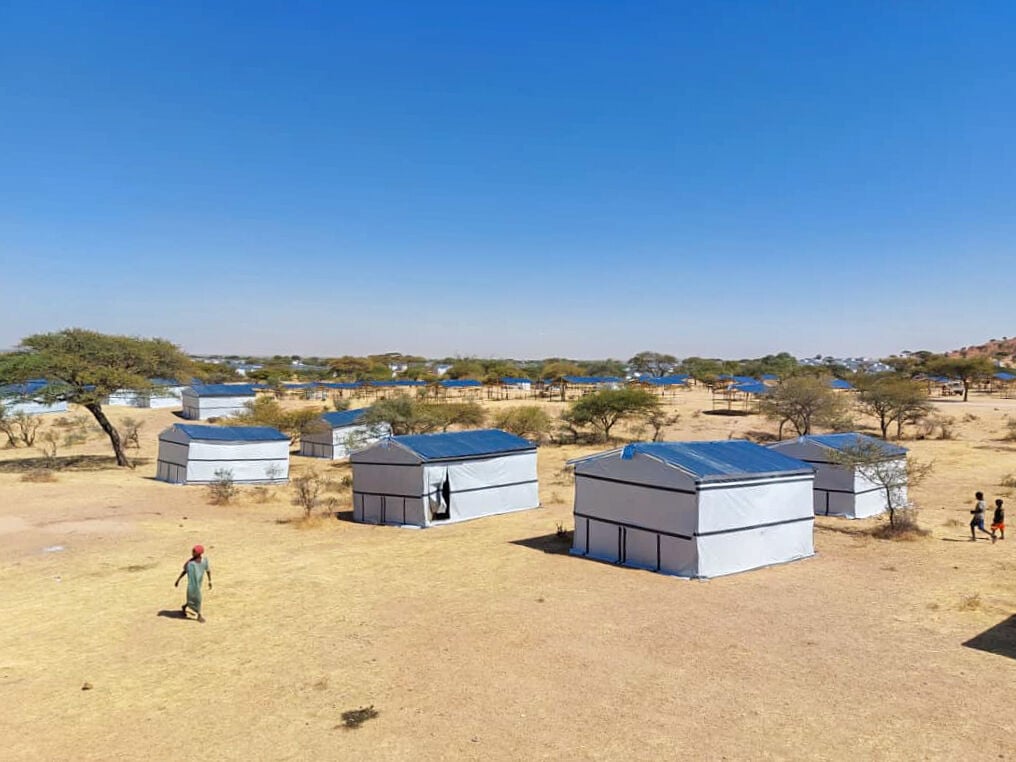
Nafissa and her family still face extreme challenges. A stable shelter and household supplies allow a small sense of recovery. So Nafisa and her family are able to look towards rebuilding their lives.
The conflict in Sudan has caused the biggest humanitarian crisis that the world has seen in recent years. As of April 2025, it has displaced 13.6 million Sudanese people, one third of the population. Just under one million of those displaced, have found refuge in Chad. Where they have been given emergency shelter and are settling in large communities. Many are struggling to begin re-building their lives under current living conditions.
ShelterBox, together with our local partner Help Tchad, are working to transform current emergency shelters into semi-durable shelters. This helps to alleviate the stresses of daily life for those living in camps and allows people the opportunity to begin building a resilient future for their families.
Learn about ShelterBox's response